
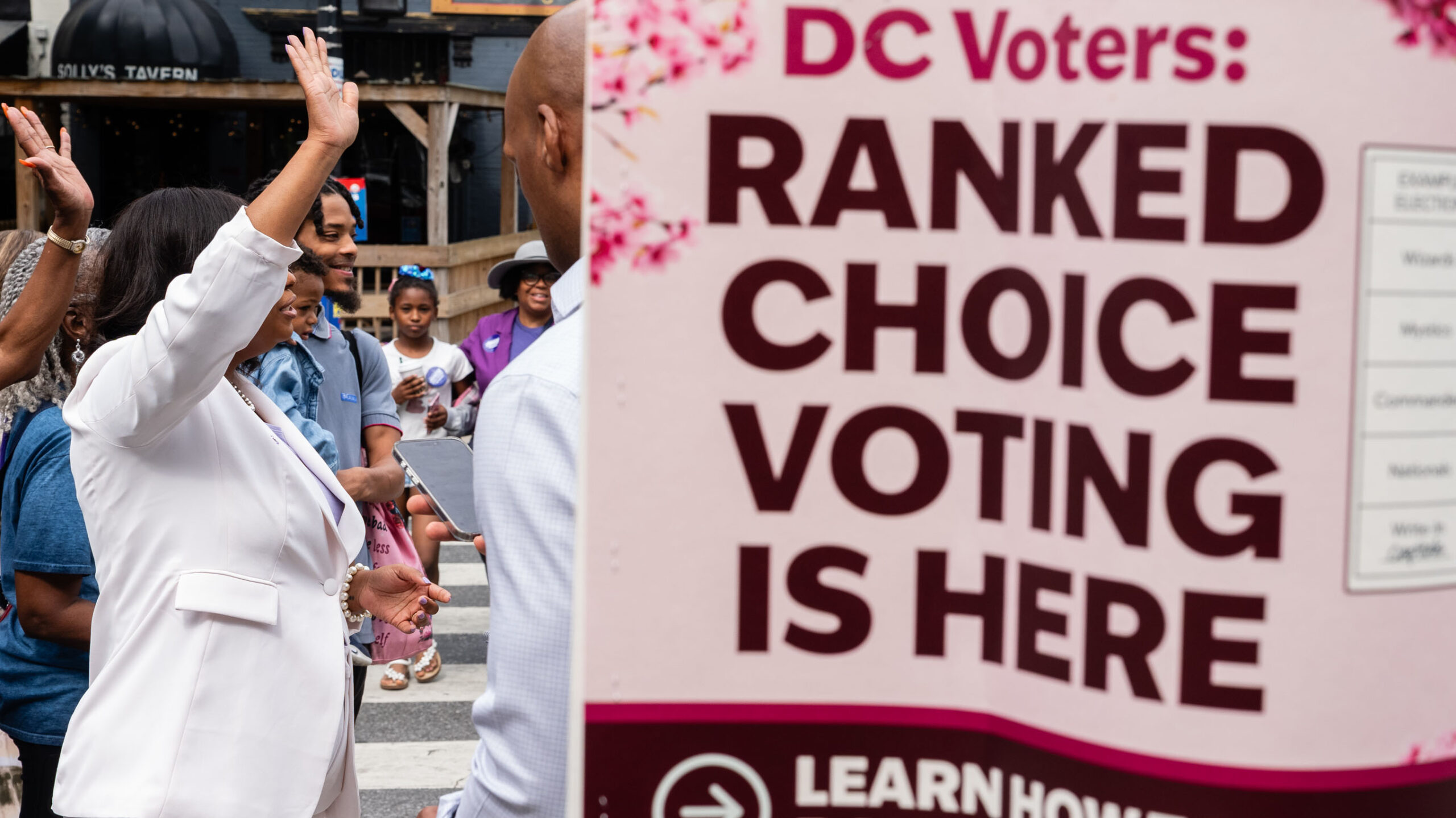
While it appears unlikely the Democrat mayoral primary in the District of Columbia will go to a second round of vote tallies, a winner hasn’t been called as of Wednesday afternoon despite one candidate holding a majority of the vote.
The race would likely have been called for Janeese Lewis George, a D.C. councilmember who is aligned with the Democratic Socialists of America, if the city had not adopted ranked choice voting in a 2024 ballot initiative.
The nation’s capital applied ranked choice voting for the first time in its local races, a system where voters rank a first, second, and third choice. If no candidate gets 50% or more, another round of counting commences in which the lowest‑ranked candidates are eliminated. Rounds continue until one candidate reaches a majority.
By early Wednesday, with almost two-thirds of the vote reportedly counted, George had 52% of the vote. Her nearest opponent was Kenyan McDuffie with 36%. Other candidates received 3% or less, according to The Associated Press. The winner will replace outgoing three-term Mayor Muriel Bowser.
Because D.C. is an overwhelmingly Democrat city, the party primary is usually the de facto deciding factor for who wins the general election.
In another important D.C. race, Councilman Robert White Jr. won the Democrat primary for D.C. delegate to the House of Representatives, putting him in a position to replace the 18-term Del. Eleanor Holmes Norton.
TRENDING ARTICLES



White captured a decisive 63% of the vote, beating his nearest rival, Brooke Pinto, who won 21%, according to The Associated Press.
Ranked choice voting was also used in the primary in New York City in 2025, where Zohran Mamdani, also a member of the Democratic Socialists of America, won a clear majority to avoid a second round of voting. The city first tried it in 2021, and the results of the Democratic mayoral race were delayed by 14 days due to widespread absentee voting and multiple rounds of ranked choice vote counting, even as it appeared then-candidate Eric Adams was in the lead.
As of March, 17 cities, counties, and states use ranked choice voting for local elections, according to FairVote. Alaska and Maine are the only states to adopt it statewide.
FairVote and other proponents contend that ranking candidates will produce a more consensus candidate and reduce division. They also contend it is less likely a candidate getting a small plurality in a crowded primary will win without a broader appeal.
Ranking votes can take longer and risk longer lines at the polls. Lengthier ballots are also more expensive to print and mail, according to the Honest Elections Project, which opposes the system. The group has also argued that complicated ballot tabulation can lead to errors, pointing out that Oakland, California, officials failed to detect a tabulation error and certified the wrong winner in a 2022 ranked choice voting school board race.

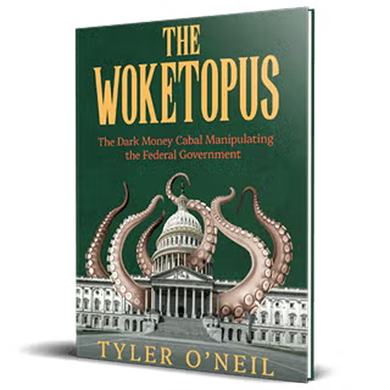
Read the first chapter of The Woketopus right now for FREE
Today, even with President Trump’s victory, leftist elites have their tentacles in every aspect of our government.
The Daily Signal’s own Tyler O’Neil exposes this leftist cabal in his new book, The Woketopus: The Dark Money Cabal Manipulating the Federal Government.
In this book, O’Neil reveals how the Left’s NGO apparatus pursues its woke agenda, maneuvering like an octopus by circumventing Congress and entrenching its interests in the federal government.
You can read the first chapter of this new book for FREE in this eBook, The Woketopus: Chapter One using the secure link below.




The Daily Signal depends on the support of readers like you.
RELATED ARTICLES





Don’t miss the

Don’t miss the signal