Supreme Court Deals Massive Blow to the Deep State, Reversing 90-Year Precedent in Humphrey’s Executor
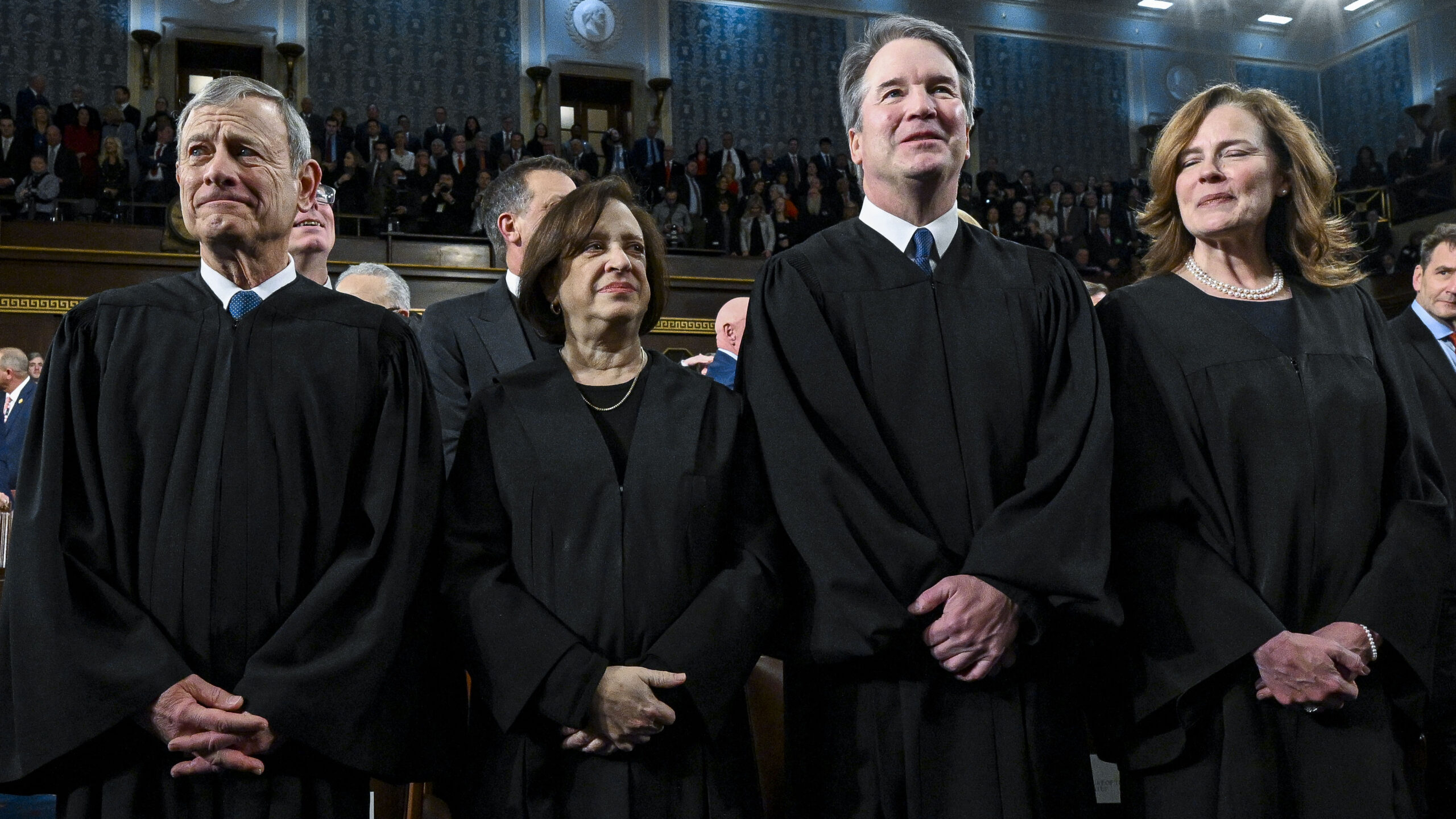
The Supreme Court ruled 6-3 to strike down the 90-year-old precedent in Humphrey’s Executor that insulated deep state actors when even the president sought to fire them.
“Nearly 250 years ago, the Framers decided to vest ‘[t]he executive Power’ in one person—‘a President of the United States of America,’” Chief Justice John Roberts wrote in the majority opinion. “The choice was not made lightly.”
Roberts noted that “several delegates to the Constitutional Convention pushed for a multimember council instead of ‘unity in the Executive magistracy,’ which they feared would serve as ‘the foetus of monarchy.’ But unity won out.”
“Our Constitution’s drafters knew from experience that a ‘plurality in the executive’—the model in use by most States at the time—not only ‘diminishe[s]’ the ‘activity, secrecy, and dispatch’ necessary to ensure ‘good government’ but ‘tends to conceal faults and destroy responsibility,’” he added.
Roberts delivered the opinion of the court, which Justices Samuel Alito, Neil Gorsuch, Brett Kavanaugh, and Amy Coney Barrett joined in full. Justice Clarence Thomas joined every part of the opinion except one, while Justice Sonia Sotomayor filed a dissent, joined by Justices Elena Kagan and Ketanji Brown Jackson.
🚨MASSIVE BLOW TO THE DEEP STATE
In Trump v. Slaughter, the Supreme Court rightly ruled, 6-3, that the president of the United States can fire executive branch officials. This undermines the deep state.
🧵1/4 pic.twitter.com/VauHrjOVcN— Tyler O'Neil (@Tyler2ONeil) June 29, 2026TRENDING ARTICLES



Roberts wrote that executive officers “were to serve as envoys of the president, not his equals. … Because these officers were subject to the president’s superintendence, they had to be removable by him at will.”
The chief justice noted that Alexander Hamilton, one of the authors of the Federalist Papers, wrote that the “unity” of the executive branch would be “Destroyed” if it were vested “ostensibly in one man, subject in whole or in part to the control and co-operation of others, in the capacity of counselors to him.”
“But that is precisely what would occur if the president’s so-called assistants could exercise his power against his wishes,” Roberts noted.
The Supreme Court did not just uphold all of President Donald Trump’s hiring decisions, however. Roberts wrote the 5-4 opinion in Trump v. Cook, holding that Trump could not fire members of the Federal Reserve Board without cause.
In a Truth Social post, Trump noted a “BIG WIN confirming Presidential Power in our Country to remove Executive Branch Officers and Agency Appointees, or Representatives, under Article II.”
“This Decision was long sought by United States Presidents, dating all the way back to the 1930s,” the Trump post continues. “It is such an Honor to be the sitting President who won this Historic and Unprecedented Ruling, one of the most important ever given with respect to Presidential Powers.”
The Dissent
Sotomayor, an appointee of President Barack Obama, noted in her dissent that “Congress and the president together have decided that some government functions should operate at a distance from partisan politics.”
She echoed the spirit of the “progressive” movement, stating that “the wisdom of the centuries has taught that some decisions should depend not only on who is in office—much less on who is disfavored or owed a favor by those in office—but also on judgment, expertise, and the public good.”
Sotomayor accused the court of discarding a “democratic regime” in favor of “one that distorts the structure of government to fit the majority’s theory of unitary, total executive control.”
The progressive movement claimed that scientific experts, not political officials, should make policy decisions and should be insulated from political changes. The court’s ruling illustrates how such a policy can undermine the logic of America’s constitutional form of government.
Deep State Ramifications
This ruling will weaken bureaucrats’ ability to undermine a president’s agenda from within the administrative state. This sort of “deep state” threat notably emerged in the first Trump administration, but arguably persisted under President Joe Biden, especially when members of his own administration opposed his policies on Israel.
An RMG Research poll last year found that 75% of Washington, D.C.-area federal employees who made at least $150,000 a year and who voted for Kamala Harris in 2024 would disobey a lawful Trump order if they considered it bad policy.
Trump v. Slaughter involved Trump’s ouster of Federal Trade Commissioner Rebecca Slaughter, but it will affect other federal boards and commissions with members appointed by Republican and Democrat presidents.
The so-called independent boards and commissions have members appointed by Republican and Democrat presidents who, in theory, operate without political concerns. They serve for a set term, regardless of whether a new president of a different party assumes office during that term.
Slaughter’s lawyer argued that independent commissions have existed in some form since the 1790s and added that such bodies don’t operate with unchecked power, since members are appointed by the president and confirmed by the Senate.
The Federal Trade Commission Act of 1914 prohibited the president from firing a commissioner for any reason other than “inefficiency, neglect of duty, or malfeasance in office.”
In Humphrey’s Executor v. United States (1935), the high court ruled that Congress could enact laws limiting the power of a president to fire executive officials of an independent agency.


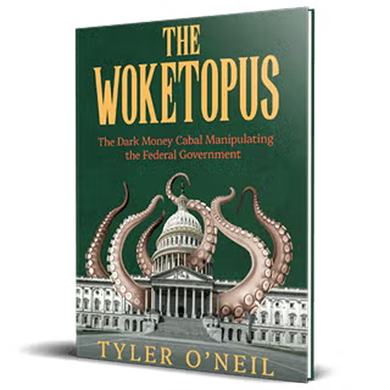
Read the first chapter of The Woketopus right now for FREE
Today, even with President Trump’s victory, leftist elites have their tentacles in every aspect of our government.
The Daily Signal’s own Tyler O’Neil exposes this leftist cabal in his new book, The Woketopus: The Dark Money Cabal Manipulating the Federal Government.
In this book, O’Neil reveals how the Left’s NGO apparatus pursues its woke agenda, maneuvering like an octopus by circumventing Congress and entrenching its interests in the federal government.
You can read the first chapter of this new book for FREE in this eBook, The Woketopus: Chapter One using the secure link below.
TRENDING ARTICLES


The Daily Signal depends on the support of readers like you.
RELATED ARTICLES


Don’t miss the

Don’t miss the signal