
The Supreme Court determined in an 5-4 ruling that states can continue counting ballots that arrive after Election Day.
Justice Amy Coney Barrett authored the majority opinion, joined by Chief Justice John Roberts and the three Democrat appointees on the court.
The case of Watson v. Republican National Committee involved Mississippi’s policy of counting ballots that arrive up to five days after Election Day. At least 17 states and territories and the District of Columbia count ballots that arrive late, with at least two allowing them to arrive up to two weeks after Election Day. The case is named for Mississippi Secretary of State Michael Watson, a Republican who oversees state elections.
President Donald Trump’s 2025 executive order on election integrity included a provision that would deny federal election funding grants to states that continue counting ballots arriving after Election Day.
“Although most voting in our country’s early days occurred in person—making casting and receipt simultaneous—that was not true of the electoral college,” Barrett wrote in the majority opinion. “… The Constitution requires the “day on which [the electors] shall give their votes” to be “the same throughout the United States.” But it says nothing about the day for receipt, and, of course, 18th-century modes of transmission did not offer same-day delivery. The Constitution therefore envisions a system in which receipt is necessarily divorced from voting, and it sets the crucial, uniform day as the day of voting, leaving receipt to happen down the line. The federal election-day statutes follow the same pattern: They set when the people “shall give their votes,” … but leave open when those votes must be received.”
In his dissent, Justice Samuel Alito disagreed, noting that no one challenged mail-in voting, but asserted federal law req
TRENDING ARTICLES



“That requirement is met in a jurisdiction with mail voting or early voting provided that the critical act occurs on election day: the completion of the collection of the ballots that embody the electorate’s collective choice,” Alito wrote. “That is what took place when all voting was done in person, and compliance with the election-day statutes demands that the same occur in a modern election. … Election day is a specified date, not a span of multiple days. The election-day statutes require that federal elections occur on that date.”
RNC Chairman Joe Gruters called for Congress to act.
“If we want fair and secure elections, Election Day should mean exactly what it says, which is why this decision makes it even more imperative that Congress pass the SAVE America Act,” Gruters said. “Democrats are inviting chaos at the ballot box by allowing elections to drag on for days and weeks after voters cast their ballots. Republicans are not going to be deterred by this decision, and the RNC will keep fighting to have elections end on Election Day as Americans want.”
The counting of late-arriving ballots by states does not break along party lines.
Illinois and Utah count ballots arriving up to 14 days after Election Day, according to the National Conference of State Legislatures, as long as the ballots are postmarked by Election Day. Alaska and Maryland allow ballots postmarked by Election Day to be counted up to 10 days after the election.
California, the District of Columbia, New York, and Oregon count ballots arriving seven days after the election. New Jersey counts ballots arriving up to six days post-election, while West Virginia’s grace period is five days.
Nevada and Ohio count to four days after Election Day, while Kansas, Massachusetts, and Virginia count ballots arriving up to three days after Election Day.
Washington state law says that ballots received after the election with postmarks before Election Day are counted, but no deadline is specified for when they must be received, according to the National Conference of State Legislatures.
The 5th U.S. Circuit Court of Appeals ruled in October 2024 in the case from Mississippi that federal law requires mail-in ballots to arrive by Election Day. The ruling didn’t affect the election that year.
This story is developing and may be updated.

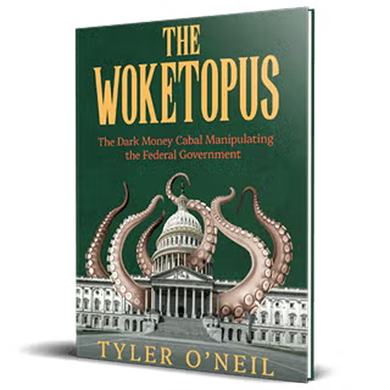
Read the first chapter of The Woketopus right now for FREE
Today, even with President Trump’s victory, leftist elites have their tentacles in every aspect of our government.
The Daily Signal’s own Tyler O’Neil exposes this leftist cabal in his new book, The Woketopus: The Dark Money Cabal Manipulating the Federal Government.
In this book, O’Neil reveals how the Left’s NGO apparatus pursues its woke agenda, maneuvering like an octopus by circumventing Congress and entrenching its interests in the federal government.
You can read the first chapter of this new book for FREE in this eBook, The Woketopus: Chapter One using the secure link below.


The Daily Signal depends on the support of readers like you.
RELATED ARTICLES




Don’t miss the

Don’t miss the signal