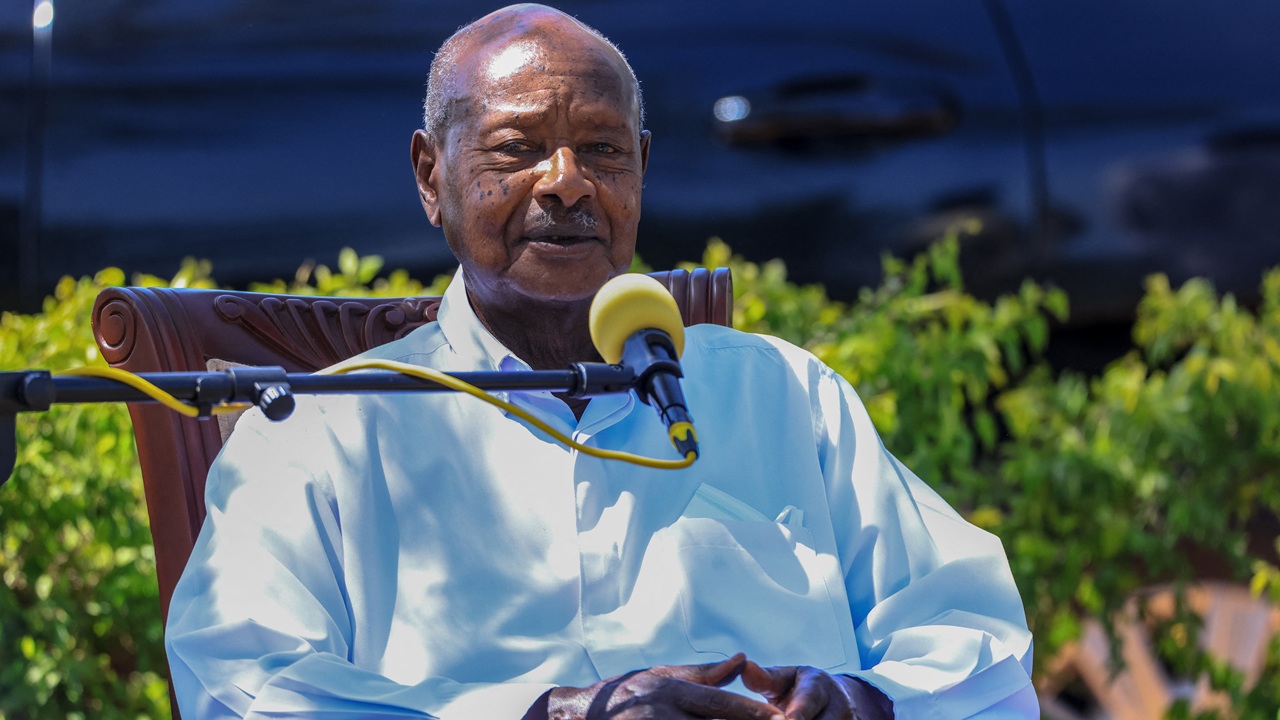
This week, Uganda’s Parliament is considering a bill that would profoundly erode religious freedom protections in the country.
The “Qadhis Courts Bill,” published in the Uganda Gazette on Feb. 27, has been presented as a measure to adjudicate family law disputes through Sharia law. In reality, the bill would establish a nationwide system of Sharia-based courts with jurisdiction over both Muslims and some non-Muslims—in certain cases even without their consent.
The proposed court system is not a reasonable religious accommodation. It risks undermining the principle that every citizen has the right to choose, practice, and change their religion without legal penalty.
The bill would create district and regional Qadhis Courts across the country, alongside an appellate Qadhis Court with nationwide authority. These bodies would adjudicate matters of marriage, divorce, child custody, and inheritance under Sharia law. While advocates present this as a limited accommodation for Muslim personal law, the structure of the bill points to something broader and more coercive.
One of the bill’s core problems is jurisdiction. It would grant Qadhis Courts exclusive authority over personal law matters involving Muslims, but it would also permit Muslims to bring claims against non-Muslims, including Christians, under the Sharia system. The court’s jurisdiction would also include individuals married under Muslim rites, potentially binding all members of interfaith families to religiously informed proceedings they did not freely select.
The structure of appellate review proposed in this bill is also concerning. Appeals would be heard by a special high court panel composed of one Muslim judge and four Islamic scholars, whose decisions would be final and not subject to further appeal in the ordinary courts. This appeals process would sharply limit the role of Uganda’s ordinary courts in safeguarding constitutional rights.
TRENDING ARTICLES



Uganda’s Constitution allows Parliament to establish Qadhis Courts for limited purposes, but it does not require it to do so. Crucially, the Constitution guarantees freedom of religion, equality before the law, and protections for young girls, including a minimum marriage age of 18. The bill does not clearly explain how these guarantees would be upheld where they conflict with traditional applications of Sharia law, particularly in areas such as marital age, inheritance, and custody.
Most notably, the bill is silent on the status of individuals who convert out of Islam—an omission with serious consequences, given that many interpretations of Sharia prohibit apostasy. Without explicit protections, the right to change one’s religion could be effectively curtailed in Muslim communities across the country.
Comparative analysis of similar courts in Kenya and Nigeria shows that some of these concerns can be managed—but only to a degree.
In Kenya, “Kadhis’ courts” are restricted to disputes in which all parties are Muslim and have consented to the court’s jurisdiction, with appeals proceeding through the ordinary judiciary. In Nigeria, systems vary by state, but non-Muslims can generally decline Sharia jurisdiction, and secular courts retain appellate oversight. Uganda’s proposal lacks these essential safeguards and fails to provide fully robust protections of religious freedom in line with the country’s constitution.
If adopted, the Qadhis Courts Bill would have a significant and widespread impact on religious freedom.
Interfaith families would find themselves caught between competing legal regimes, uncertain which rules govern their most personal decisions. Women and children connected to Muslim men through marriage would face disadvantages in custody, inheritance, and divorce if constitutional protections are not firmly enforced within the new courts. Converts would live in fear of prosecution. The new legal framework could subject more young girls to marriage without legal safeguards in a country already struggling to eliminate child marriage.
A vote against the Qadhis Courts Bill is not a vote against religious practice or accommodation. On the contrary, genuine religious freedom depends on voluntariness, equality, and the consistent protection of individual rights under the law—all of which the Qadhis Courts Bill would undermine.
Parliament should reject the Qadhis Courts Bill in its entirety. The country’s strength lies in a constitutional order that binds its citizens together under one standard of justice. Preserving that order is not a rejection of faith—it is the surest safeguard of freedom for all.
We publish a variety of perspectives. Nothing written here is to be construed as representing the views of The Daily Signal.

Read the first chapter of The Woketopus right now for FREE
Today, even with President Trump’s victory, leftist elites have their tentacles in every aspect of our government.
The Daily Signal’s own Tyler O’Neil exposes this leftist cabal in his new book, The Woketopus: The Dark Money Cabal Manipulating the Federal Government.
In this book, O’Neil reveals how the Left’s NGO apparatus pursues its woke agenda, maneuvering like an octopus by circumventing Congress and entrenching its interests in the federal government.
You can read the first chapter of this new book for FREE in this eBook, The Woketopus: Chapter One using the secure link below.
TRENDING ARTICLES


The Daily Signal depends on the support of readers like you.
RELATED ARTICLES




Don’t miss the

Don’t miss the signal