
Is the Honeymoon Between President Trump and the American Catholics Truly Over?
Summary
- In the midterm elections, 51% of American Catholics voted for Democrats and 49% for Republicans. In the 2024 election, Catholics voted 61% for the Republicans.
- Post-election analysis suggests that the midterm election was fundamentally an economic election, driven primarily by economic difficulties and the cost of living, rather than faith considerations.
- The conclusion is that the Catholic vote cannot be considered outright a religious rejection of Trump, nor a collective conversion to the Democratic Party.
The vote in the midterm elections on Nov. 3 reflects a divided Catholic community: 51% voted for Democrats and 49% for Republicans. In the 2024 presidential election, 61% of Catholics voted for Republicans and 39% for Democrats. This means American Catholics are no longer a sure electoral bet for the Republican Party.
Rather than a conversion of allegiance, the results signal an electorate returning to reckon with its own priorities, as noted in an analysis of the vote by Religion News Service (RNS), an American news agency specializing in religious news
The RNS analysis, combined with a survey conducted before the vote by the Center for Applied Research in the Apostolate (CARA) and a poll from the Pew Research Center, portrays an American Catholicism that is anything but homogeneous.
Moreover, these findings suggest that the relationship with President Donald Trump cannot be explained solely through religious affiliations or statements by the pope and U.S. bishops. They also suggest that the midterm election was fundamentally an economic election, driven primarily by economic difficulties and the cost of living—essentially, an election about inflation.
For that reason, we should not interpret the results as evidence that Catholics rejected the president on the grounds of values or faith.
TRENDING ARTICLES



The CARA study, conducted between May and June 2026 and involving 2,401 adult Catholics, had already identified voters’ priorities. The cost of living and inflation were identified as important issues by 73% of respondents, followed by unemployment (45%), poverty, hunger and housing emergencies (43%). Immigration placed fourth, at 41%.
These findings suggest that, even before the elections, there was strong concern among American Catholics about the material conditions of families and social inequalities.
However, the overall vote of 51% for Democrats and 49% for Republicans hides deep differences. The most evident differences relate to voters’ ethnic backgrounds. According to several exit polls, 56% of white Catholics voted Republican, while 65% of Hispanic Catholics voted for Democrats.
Among black Catholics, the Democratic vote reached 87%, although in this case, the sample of respondents was significantly smaller. Age and gender also influenced electoral preferences. Among Catholics younger than 30, 65% voted Democratic. Among Catholic men, however, 55% chose Republicans. Catholic women favored Democrats, with 54% voting for them.
Disapproval was even more pronounced among Hispanic Catholics: Only 18% approved of the president’s actions, while 78% rated his performance negatively. Among white Catholics, approval stood at 39%.
Therefore, the outcome of the midterm elections comes at the end of months of growing tensions between the administration and the Catholic Church: the pope’s concerns about the war in Iran, his positions in defense of migrants, and the interventions of various American cardinals and bishops.
However, it would be risky to attribute the change in voting solely to these tensions. CARA’s research also helps explain another aspect: There is no single political orientation among American Catholics.
Before the elections, 34% of respondents identified with Democrats, 32% with Republicans, and 34% identified as independents.
The differences were even more evident among ethnic groups: Among Hispanic Catholics, 43% identified with the Democratic Party, a figure that rose to 54% among black Catholics and dropped to 28% among non-Hispanic white Catholics. The ideological distribution was also substantially balanced: 33% identified as liberal, 31% as conservative and 36% as moderate.
It is within this plurality that the results of Nov. 3 should be interpreted. White Catholics continue to represent an important component of the Republican electorate, while Hispanic and younger Catholics tend to lean more toward Democrats. In the middle are voters who evaluate political choices in light of economic conditions, peace, social justice and the protection of human dignity.
The conclusion is that the Catholic vote cannot be considered outright a religious rejection of Trump, nor a collective conversion to the Democratic Party. Rather, it signals a composite electorate in which faith identity does not automatically coincide with political identity.
For the American Church, which has long sought to speak to diverse sensibilities without being absorbed by the partisan polarization into which the country has plunged, this may be the most important lesson of the midterm elections.
And so, what’s next? I suggest that prayer and fasting have something to do with it!

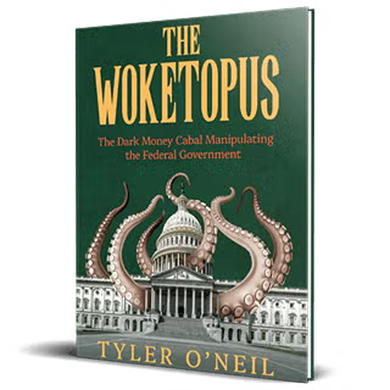
Read the first chapter of The Woketopus right now for FREE
Today, even with President Trump’s victory, leftist elites have their tentacles in every aspect of our government.
The Daily Signal’s own Tyler O’Neil exposes this leftist cabal in his new book, The Woketopus: The Dark Money Cabal Manipulating the Federal Government.
In this book, O’Neil reveals how the Left’s NGO apparatus pursues its woke agenda, maneuvering like an octopus by circumventing Congress and entrenching its interests in the federal government.
You can read the first chapter of this new book for FREE in this eBook, The Woketopus: Chapter One using the secure link below.

The Daily Signal depends on the support of readers like you.
RELATED ARTICLES




Don’t miss the

Don’t miss the signal