
Summary
- Nvidia CEO Jensen Huang resigned after affairs with an alleged Chinese spy and an Nvidia executive.
- Heritage’s Jeff Smith says the bigger scandal is Nvidia chips reaching China with almost no oversight.
- Smith says the Commerce Department has been “asleep at the wheel” on enforcing chip export rules.
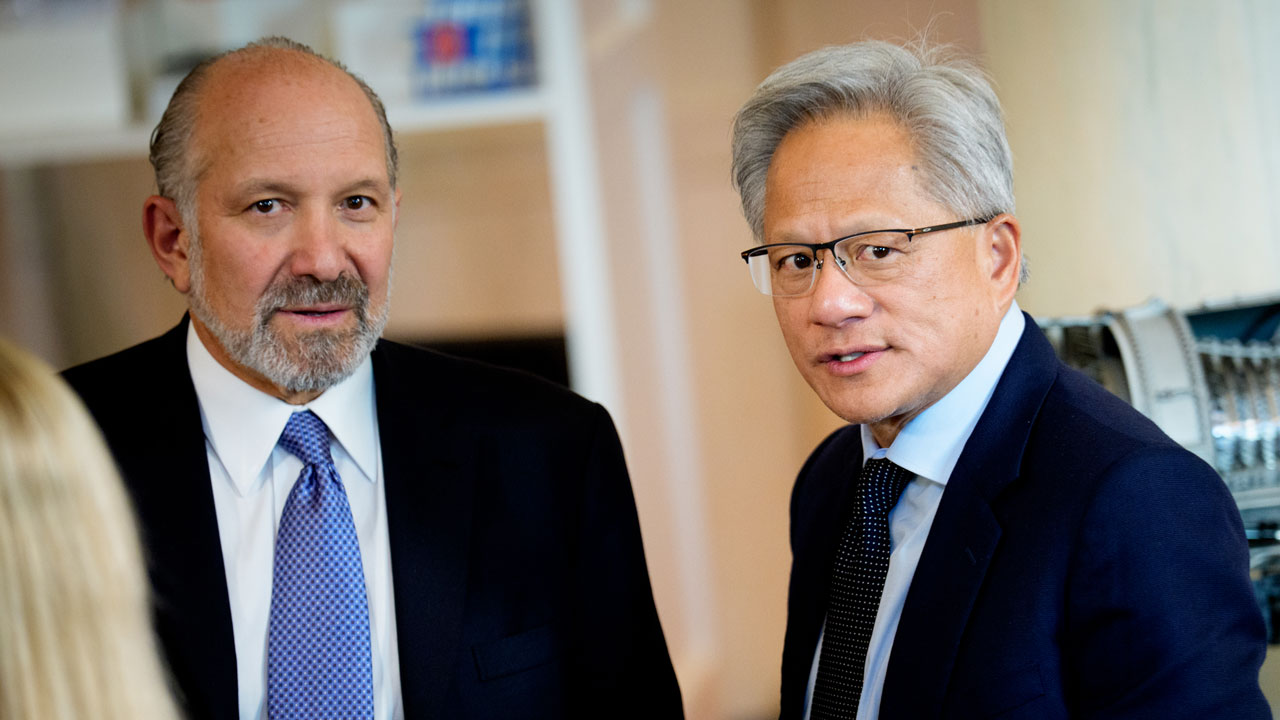
Within the span of a few days, Jensen Huang went from being one of the world’s most powerful men to an admitted adulterer and unemployed billionaire. His rapid fall will have profound consequences for Nvidia, AI, and our national security for years to come.
Most alarming, Huang used his power and influence to lobby his own government to relax export rules for selling Nvidia chips to China, an enemy of the United States.
Huang’s affair with Alice Huang, an alleged Chinese spy who doubled as an executive at a Singapore-based company called Megaspeed, raised serious questions about his motives. While it appeared Huang might survive the spy scandal, albeit with a damaged reputation, news of a second affair with an Nvidia executive was too much for his company’s board of directors. Huang resigned Thursday, capping a whirlwind week.
>>> CHINA EXPERTS REACT TO NVIDIA CEO’S ALLEGED AFFAIR WITH CHINESE SPY
The story shouldn’t end here, however. Just because he’s no longer running Nvidia doesn’t resolve the company’s troubling relationship with China.
TRENDING ARTICLES

“The much bigger scandal,” said Jeff Smith, director of The Heritage Foundation’s Asian Studies Center, “is what has been happening with these Nvidia chips and the degree to which they have been flowing to Chinese companies inside and outside China with almost no oversight or restriction from Nvidia and the U.S. government.”
Jensen Huang’s Fingerprints
Rewind to last December. That’s when President Donald Trump announced Nvidia could sell its lucrative H200 chip in China. Huang’s fingerprints were all over the decision. Given his close relationship with Trump and Commerce Secretary Howard Lutnick, Huang’s personal lobbying likely played a major role.
We learned in recent days that a Chinese intelligence agent could’ve been a reason why.
On the latest episode of the “Heritage Explains” podcast, Smith noted that Huang, “at the same time he was reportedly engaged in a romantic relationship with a potential CCP spy, was lobbying the U.S. government to ease technology controls on exports to China.”
Megaspeed should have been a red flag. The U.S. government raised concerns with Nvidia in 2025 that the company was diverting chips to China, Smith said. Nvidia reported back that nothing was wrong. We now know that wasn’t true. Bloomberg reported that Megaspeed couldn’t account for 50,000 Nvidia chips it had purchased.
“If it wasn’t a honey trap situation, then it was ignorance or negligence,” Smith said. “But either way, there is something fundamentally wrong.”
Why the Chips Matter
China is in a race against the United States to gain ground on AI. While the Chinese Communist Party has long-term plans to produce its own chips, the country is desperate for U.S. chips right now.
“They are looking for every advantage they can,” Treasury Secretary Scott Bessent said Thursday at The Forum. “The Chinese are copying what we do.”
Smith explained the threat that China could pose to U.S. national security if it makes advancements in artificial intelligence. He pointed to Anthropic’s Mythos model, which cracked previously unknown cybersecurity vulnerabilities.
“Thank God we found that first,” Smith said of the United States. “You can imagine if China had reached that capability before us, it would now possibly be able to engage in even more aggressive espionage than it’s already doing.”
>>> DON’T FEED THE BEAST: AMERICA SHOULD NOT BE SENDING H200 CHIPS TO CHINA
The economic case for selling to China is just as weak.
“U.S. companies are literally begging for more chips,” Smith said. “What’s so perplexing about this situation is even if it costs Nvidia significant profit, the U.S. government should still be intervening in this situation and restricting the chips going to China,” he added.
Huang previously suggested China is just “nanoseconds behind” the United States and that selling chips keeps Beijing hooked on American technology. Smith said those arguments are “either made from a position of ignorance or bad faith.”
By independent estimates, the U.S. produces roughly 20 times as much compute as China.
“What you’re really doing is just giving them compute that they desperately need in the short term to keep up with us until they’re completely self-sufficient, at which point they’ll kick us out,” Smith said.
‘Asleep at the Wheel’
Smith pinned the blame on the Commerce Department’s Bureau of Industry and Security, which is responsible for U.S. export control policy and enforcement. He said the agency has been “asleep at the wheel.”
“During a period of unprecedented chip smuggling and diversion cases, they have effectively paralyzed operations,” Smith explained. “They could, under their current rules and authorities, be cracking down on this remote access, this smuggling. They could be issuing rules and regulations, and they have been doing none of it.”
That remote access loophole lets sanctioned Chinese firms rent Nvidia chips in Southeast Asian data centers that they can’t legally buy.
“Chinese company X can’t buy a Nvidia chip, but Chinese company X can rent a Nvidia chip from Oracle and can rent as many of them as it wants,” Smith said.
As a result, Smith said, there are now more Nvidia chips in Southeast Asia feeding China’s economy than there are inside China itself.
Heritage Action is backing several bills to close those gaps, including one that would build location verification into chips. Smith called that idea “sensible and overdue.”
There appears to be bipartisan support to act in the wake Huang’s downfall. Smith said it was “sensible and overdue,” but noted that Congress isn’t the only option.
“I’m concerned that there has been unusual levels of cooperation between parts of the Commerce Department and Nvidia that has resulted in a lack of enforcement of Nvidia chips going to China and being accessed by China in Southeast Asia,” he said. “Unfortunately, that’s a bigger scandal that we’re likely to find more about in the months to come.”
Axios reported Wednesday that Trump told Lutnick to crack down on chip exports, saying, “Let’s get it done.” All eyes are now on him to make sure it happens.

Read the first chapter of The Woketopus right now for FREE
Today, even with President Trump’s victory, leftist elites have their tentacles in every aspect of our government.
The Daily Signal’s own Tyler O’Neil exposes this leftist cabal in his new book, The Woketopus: The Dark Money Cabal Manipulating the Federal Government.
In this book, O’Neil reveals how the Left’s NGO apparatus pursues its woke agenda, maneuvering like an octopus by circumventing Congress and entrenching its interests in the federal government.
You can read the first chapter of this new book for FREE in this eBook, The Woketopus: Chapter One using the secure link below.

The Daily Signal depends on the support of readers like you.
RELATED ARTICLES





Don’t miss the

Don’t miss the signal
