Americans are struggling with everyday expenses from fuel and food to health care and housing. Polling consistently shows that housing affordability is a top concern for Americans, and the underlying data makes it clear why. Rents have grown faster than take-home pay, and down payments take longer than ever to save for—exceeding 20 years in some of the largest housing markets. There is not enough affordably priced housing supply to keep up with demand, pushing costs even higher.
What is it about the housing market that has given rise to such long-term and persistent cost increases? We believe that a crucial cause lies in the fact that the housing industry does not rely on what nearly every other industry has taken for granted for the past few decades—digitized identities.
We’ve spent our careers on opposite ends of exactly this problem. One of us watched housing markets seize up from the inside during the Global Financial Crisis, when nobody—not lenders, not investors, not regulators—could get a straight answer about what was actually happening, building by building and loan by loan. The other spent a career at the Depository Trust & Clearing Corporation, the institution built to solve almost the identical problem for securities.
Take stock of the physical things that move through the American economy, and one cannot miss the reliance on digital identities. A used car rolling off a dealer’s lot carries a VIN that instantly calls up its full history—every owner, every accident, every recall. A share of stock settles in seconds because it carries a CUSIP, a single identifier that every bank, broker, and regulator recognizes as the same thing. A shipping container crossing the Pacific has a standardized number that customs agents, ports, and logistics firms around the world can all read the same way.
Think about why Centers for Medicare and Medicaid Services Administrator Dr. Mehmet Oz is leading a digitization revolution in health care—out of control health care costs can be brought in check with digital identities that provide information, reduce duplication, identify savings, and root out waste. Every American who has had to fill out the same medical form over and over knows exactly why Oz is leading this charge.
But buildings, one of the largest asset classes of the U.S. economy, lack any kind of standardized digital identity. Each building only has an imprecise analog address, linked to very little reliable operating data.
TRENDING ARTICLES



This has consequences. It forces owners, lenders, insurers, regulators, service providers, and manufacturers to repeatedly verify the same basic information through disconnected systems. Messy, fragmented, and hard-to-verify data inflates the operating costs of every multi-family residential building. Absent digitization, the power of technology to reduce costs is vastly diminished.
The scale of the problem is staggering—hundreds of billions of dollars are spent each year on building operations; trillions when financing costs are factored in. And the problem is felt most by the millions of Americans who struggle to pay the ever-increasing costs for the need for housing.
The Trump administration’s leadership in digitization will benefit our nation for generations. What seems like an obscure and technical issue is actually at the core of bringing cost savings to massive and complex industries. Health care and housing account for a massive piece of our economy and a huge share of the expenses of every American. The Trump administration is already leading a digitization revolution in health care—housing should be its next target.
We publish a variety of perspectives. Nothing written here is to be construed as representing the views of the Daily Signal.
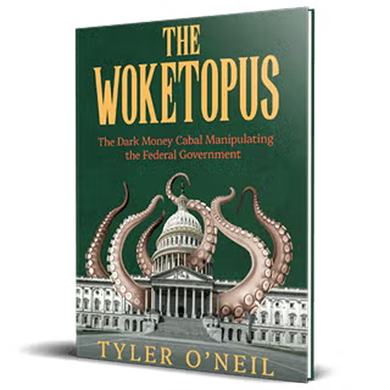
Read the first chapter of The Woketopus right now for FREE
Today, even with President Trump’s victory, leftist elites have their tentacles in every aspect of our government.
The Daily Signal’s own Tyler O’Neil exposes this leftist cabal in his new book, The Woketopus: The Dark Money Cabal Manipulating the Federal Government.
In this book, O’Neil reveals how the Left’s NGO apparatus pursues its woke agenda, maneuvering like an octopus by circumventing Congress and entrenching its interests in the federal government.
You can read the first chapter of this new book for FREE in this eBook, The Woketopus: Chapter One using the secure link below.




The Daily Signal depends on the support of readers like you.
RELATED ARTICLES





Don’t miss the

Don’t miss the signal