China Tried to Silence the Philippines. Instead, It Proved Teodoro Right.
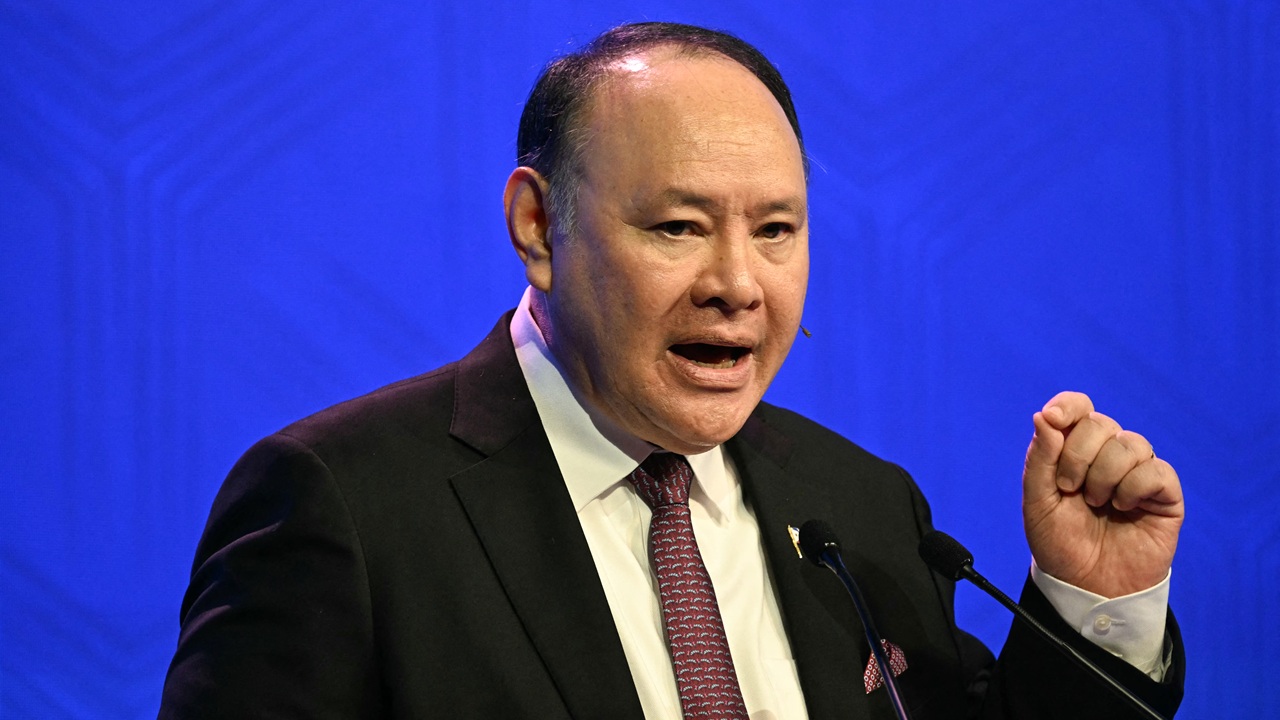
China tried to intimidate the Philippine defense secretary in the middle of an international security conference. Instead, Beijing gave the world a live demonstration of the coercion its neighbors have been writing about for years, and the Philippines gave a master class in how to push back against Chinese bullying.
On Sept. 8, Philippine Secretary of National Defense Gilberto Teodoro Jr. was speaking at the Seoul Defense Dialogue in South Korea about security threats in the South China Sea. During the discussion, a conference staff member handed him a note from the audience.
According to conference organizers, the note came from a Chinese military attaché from the Chinese Embassy in Seoul. It repeated Beijing’s rejection of the July 12, 2016, South China Sea arbitration ruling.
Teodoro could have ignored it.
Instead, he read it aloud.
When the note argued that the arbitration award had “no binding force,” Teodoro challenged the claim. When it stated that China did not accept or recognize the decision, he gave a response that quickly spread online.
TRENDING ARTICLES
“Of course, because you lost.”
The audience laughed, but the exchange revealed something more serious.
China had just demonstrated the exact behavior Teodoro was criticizing.
The dispute did not begin in Seoul. On Jan. 22, 2013, the Philippines formally brought its case against China under the United Nations Convention on the Law of the Sea. On July 12, 2016, the tribunal issued its final award, rejecting the legal basis for key parts of China’s sweeping maritime claims. China refused to accept the ruling.
Ten years later, Beijing is still trying to make that rejection a political reality, and Washington should be paying attention.
China does not necessarily need to start a conventional war to change the balance of power in the South China Sea. It can apply pressure slowly, using coast guard vessels (highly militarized coast guard vessels, of course), unofficial maritime forces, diplomatic pressure, and repeated confrontations to make Chinese control appear normal.
Heritage Foundation naval expert Brent Sadler has long warned of Beijing’s use of this sort of gray zone coercion to advance its interests while avoiding the type of direct military attack that could trigger a larger conflict. Even more concerning, in a 2024 report, he warned that China has become increasingly willing to confront its neighbors more openly as older gray zone methods become less effective.
Teodoro went even further in Seoul, making a similar argument.
“This is not a gray zone anymore,” he said. “This is actual coercion, bullying, and aggression.”
This dispute matters to the United States. Washington and Manila signed a Mutual Defense Treaty in 1951, and the alliance has existed for more than 75 years. Under the treaty, an armed attack against Philippine armed forces, public vessels, or aircraft in the Pacific can potentially implicate American defense commitments.
The Philippines also occupies critical geography. Its islands sit along the Western Pacific at the edge of the South China Sea near Taiwan. In a future conflict with China, access to Philippine territory could affect the ability of American and allied forces to operate across the region.
That is one reason the U.S. and the Philippines signed the Enhanced Defense Cooperation Agreement in 2014, which expanded the ability of American forces to rotate through Philippine military facilities.
Effective deterrence against China that keeps the peace in the Indo-Pacific to protect American security and economic interests is well served by helping the Philippians build a stronger denial strategy.
The Philippines needs stronger anti-ship and air defense capabilities, better military infrastructure, improved intelligence sharing, and more effective maritime surveillance. It also needs the ability to detect Chinese activity earlier and respond before Beijing can create another new normal in contested waters.
The principle is simple: A stronger Philippine military makes coercion more difficult and less effective.
Enabling Manila to help itself also prevents the U.S. from carrying the entire burden of regional security. The Filipinos should be capable of defending their own territory while the U.S. provides intelligence, military cooperation, access, and support.
China understands the value of small actions repeated over time. One confrontation can be dismissed. One blocked ship can be called an accident. One water cannon attack can be forgotten after the news cycle moves on. But enough small changes can eventually create a new status quo without China ever having to formally declare war.
This is what makes the Sept. 8 incident in Seoul so revealing. China sent Teodoro a note defending Beijing’s position and tried to intimidate him on stage. Instead, Teodoro read it to the room. China wanted to challenge his argument. Instead, it proved his point.
Teodoro ended the statement with some words of support for the hapless Chinese official whose actions had backfired and embarrassed Beijing on the international stage, concluding “I hope you don’t suffer in a gulag for it.”

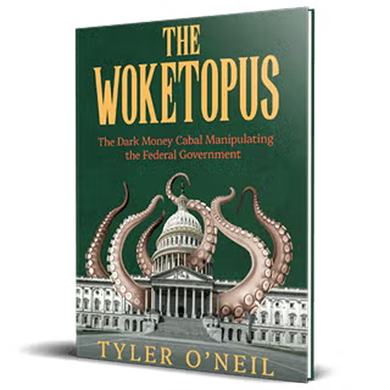
Read the first chapter of The Woketopus right now for FREE
Today, even with President Trump’s victory, leftist elites have their tentacles in every aspect of our government.
The Daily Signal’s own Tyler O’Neil exposes this leftist cabal in his new book, The Woketopus: The Dark Money Cabal Manipulating the Federal Government.
In this book, O’Neil reveals how the Left’s NGO apparatus pursues its woke agenda, maneuvering like an octopus by circumventing Congress and entrenching its interests in the federal government.
You can read the first chapter of this new book for FREE in this eBook, The Woketopus: Chapter One using the secure link below.




The Daily Signal depends on the support of readers like you.
RELATED ARTICLES


Don’t miss the

Don’t miss the signal