
For decades after World War II, Japan maintained a defense policy shaped by pacifism and strict restrictions on the use of military force. That era is coming to an end, and the United States should embrace that change as Japan faces an increasingly dangerous security environment.
China has dramatically expanded its military capabilities while becoming more aggressive around Japan’s airspace and territorial waters, as well as the disputed Senkaku Islands. Beijing’s growing military power also poses a direct threat to the stability of the Taiwan Strait and the idea of a free and open Indo-Pacific. Tokyo has responded by beginning to revamp its defense posture.
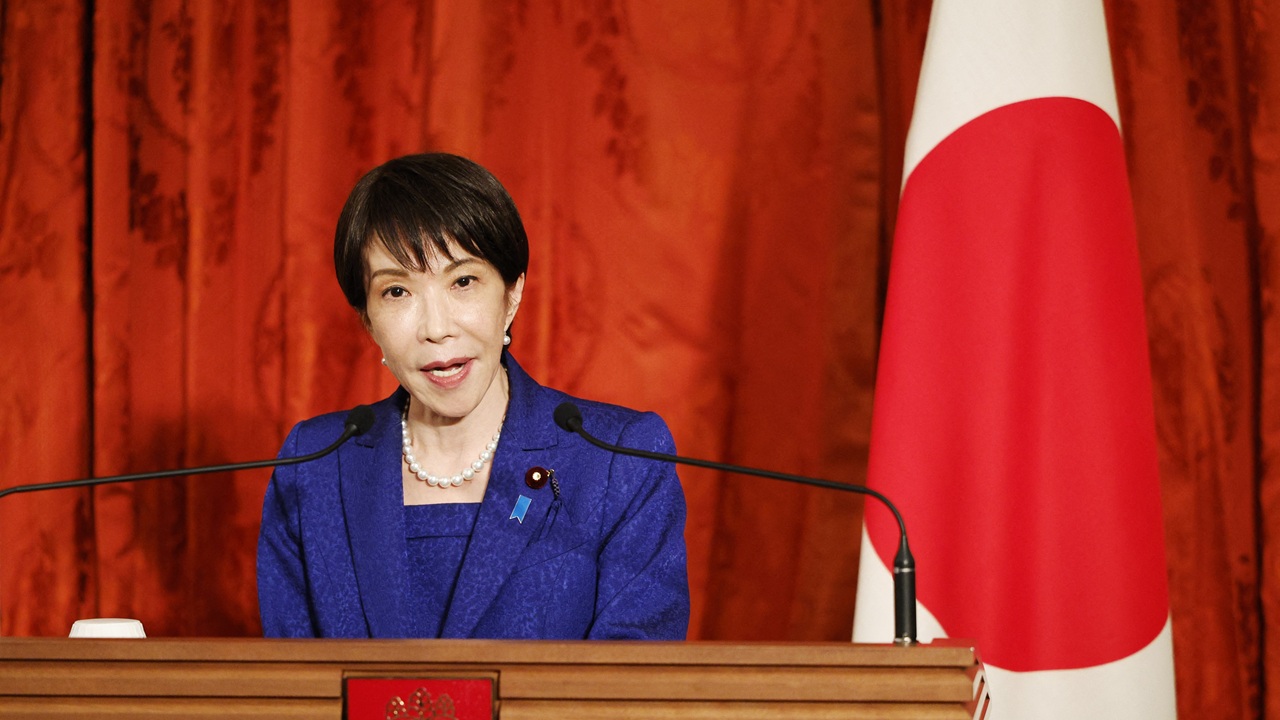
Under Prime Minister Sanae Takaichi, Japan is accelerating defense spending, modernizing the Japanese Self-Defense Force, strengthening its southwestern islands, and expanding cooperation with the U.S. and other regional partners. Japan will exceed its 2% defense spending benchmark as a percentage of gross domestic product in fiscal year 2027, well ahead of schedule. This is great news for both Japan and the U.S.
A stronger Japan means a stronger U.S.-Japan alliance. Japan hosts roughly 55,000 American military personnel and provides the U.S. with critical bases from which it can project power throughout the Indo-Pacific. This presence allows the U.S. to project power in the Taiwan Strait and the broader Indo-Pacific. Luckily for the U.S., Japan has no intention of merely hosting U.S. troops. Indeed, the Japanese military is already quite competent and well-equipped, and it is showing clear intent to expand its capability in the coming years.
Tokyo should continue to expand its defense budget and build the military capabilities necessary to defend its territory. The Japanese Maritime Self-Defense Force is particularly important. Japan’s geography makes naval power essential to protecting its surrounding waters and maintaining freedom of movement throughout the region. Expanding Japan’s fleet, including increasing its number of light aircraft carriers from two to four, would give Tokyo greater ability to deter aggression and contribute to regional security.
Japan also has major opportunities to expand cooperation with the U.S. defense industry. Tokyo is already procuring American-made weapons and moving toward coproduction of U.S. missiles in Japan. Washington should make Japan a priority for additional military sales, technology sharing, and licensed coproduction. The U.S. should also encourage Japan to develop its own defense-industrial capacity so that Tokyo can produce more of the weapons and munitions needed to sustain a prolonged conflict, and it should license higher levels of U.S. technology and a broader array of U.S. missile systems to Japan to produce on its own.
TRENDING ARTICLES



Allowing Japan to produce more advanced American weapons would expand Tokyo’s ability to supply itself while reducing pressure on the U.S. production capacity. It would also strengthen the broader American-led security network in the Indo-Pacific by creating another capable producer of critical weapons and munitions.
Finally, Washington and Tokyo should deepen operational cooperation. The U.S. is transforming U.S. Forces Japan into a Joint Task Force headquarters, while Japan is establishing its own permanent Joint Operations Command. The two militaries should immediately begin exercising how these new commands will work together.
The U.S. should encourage Japan’s continued development into a more capable military power and work with Tokyo to ensure that the alliance is prepared before a crisis occurs. Japan’s changing defense posture is not a return to its prewar past, but a recognition that the security environment surrounding the country has fundamentally changed and that Tokyo has an obligation to secure the safety and prosperity of the Japanese people in the face of the dramatic military buildup and continued threats from Beijing.
As the Chinese Communist Party expands its military capabilities and becomes more aggressive across the Indo-Pacific, Japan needs the ability to defend its territory, contribute meaningfully to regional security, and sustain military operations in the event of a serious Indo-Pacific conflict.
Japan has proven to be one of America’s strongest and most reliable partners in the Indo-Pacific in recent years, and Washington should seize the opportunity provided by the inspired leadership of Takaichi to make sure Japan has everything it needs to remain a powerful force in the region.


Read the first chapter of The Woketopus right now for FREE
Today, even with President Trump’s victory, leftist elites have their tentacles in every aspect of our government.
The Daily Signal’s own Tyler O’Neil exposes this leftist cabal in his new book, The Woketopus: The Dark Money Cabal Manipulating the Federal Government.
In this book, O’Neil reveals how the Left’s NGO apparatus pursues its woke agenda, maneuvering like an octopus by circumventing Congress and entrenching its interests in the federal government.
You can read the first chapter of this new book for FREE in this eBook, The Woketopus: Chapter One using the secure link below.

The Daily Signal depends on the support of readers like you.
RELATED ARTICLES



Don’t miss the

Don’t miss the signal