
Two of America’s closest security partners in Asia, Japan and South Korea, have historically struggled to cooperate due to historical animosities. However, at the urging of the U.S., in recent years, Tokyo and Seoul have increasingly collaborated with each other and trilaterally with Washington. Last month, that cooperation took another step forward.
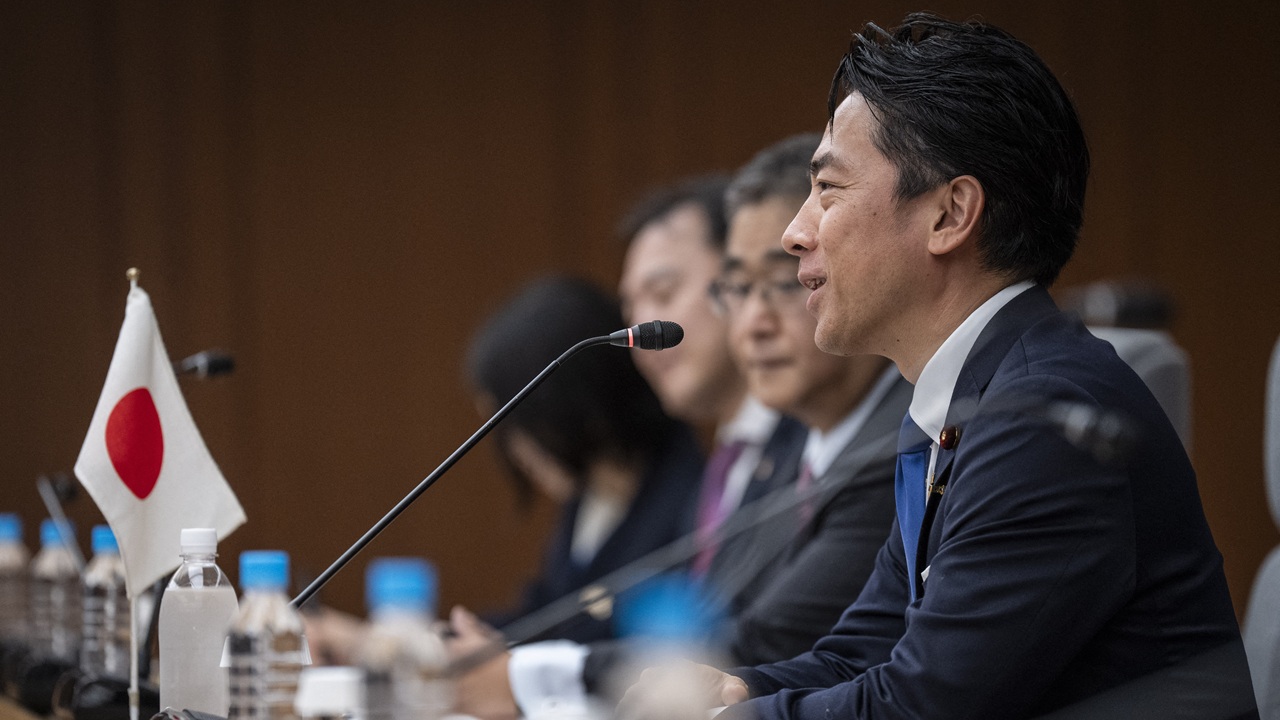
Japanese Defense Minister Shinjiro Koizumi and South Korean Defense Minister Ahn Gyu-back held bilateral talks in Seoul on June 28, marking the first formal defense ministerial meeting between the two nations in several years. The ministers reaffirmed their commitment to closer security cooperation amid growing threats in the region.
“We agreed that, amid an increasingly severe security environment, both countries will cooperate to maintain regional peace and stability,” Koizumi stated following the discussions. The meeting also included agreements to resume joint search-and-rescue drills and to advance talks on defense equipment and technology cooperation.
For Japan, the meeting represents an important step forward in strengthening its security partnerships in Northeast Asia. Tokyo has prioritized building reliable defense relationships as it faces growing challenges from North Korea’s missile activities and China’s accelerating military buildup. Enhanced ties with South Korea allow Japan to improve coordination on intelligence sharing, joint sharing, and potential technology exchanges. These developments support Japan’s broader effort to modernize its defense capabilities and contribute more effectively to regional stability alongside like-minded partners.
By resuming practical cooperation such as search-and-rescue drills, Japan can also demonstrate its commitment to humanitarian and nontraditional security roles, which helps build public and political support for a more active defense posture. This type of engagement is particularly valuable as Japan continues to adjust its security policies in response to an evolving threat landscape.
For South Korea, the engagement likewise provides valuable momentum to its defense diplomacy. Seoul continues to address persistent threats from North Korea while seeking to diversify its security relationships. Closer cooperation with Japan offers opportunities for practical collaboration on humanitarian operations and defense industry ties.
TRENDING ARTICLES


This meeting helps normalize high-level defense contacts that have historically been strained, allowing South Korea to build a more resilient network of alliances in a complex security field. Strengthening these links also enables Seoul to better integrate its capabilities with partners, potentially opening doors for joint development of defense technologies and more effective responses to shared threats such as missile proliferation and maritime challenges. In this context, the talks show a pragmatic approach to managing regional risks while advancing mutual interests.
This deepening Japan-South Korea defense relationship is hugely beneficial to American interests. The United States maintains strong alliances with both nations, and improved bilateral cooperation between Tokyo and Seoul strengthens the broader trilateral framework. Better coordination between the U.S., Japan, and South Korea strengthens deterrence in the Korean Peninsula, improves joint operational readiness, and supports shared goals of maintaining a free and open Indo-Pacific.
In an era of heightened tensions with North Korea and strategic competition with China, durable Japan-South Korea ties reduce reliance on Washington alone and create a more capable, allied network. This setup allows the U.S. to use its resources more wisely while gaining from the combined strength of two strong economies and two capable militaries. The relationship between the U.S., Japan, and South Korea has become more important for dealing with security challenges that no one country can handle.
The recent ministerial meeting shows a positive step in Northeast Asian security relations. Although historical issues between Japan and South Korea have sometimes made cooperation difficult, both countries now seem focused on practical actions. Regular talks at the defense minister level can help build trust and create lasting cooperation that can survive political shifts. As threats in the region continue to change, further progress in Japan-South Korea ties is hugely beneficial from the American perspective.


Read the first chapter of The Woketopus right now for FREE
Today, even with President Trump’s victory, leftist elites have their tentacles in every aspect of our government.
The Daily Signal’s own Tyler O’Neil exposes this leftist cabal in his new book, The Woketopus: The Dark Money Cabal Manipulating the Federal Government.
In this book, O’Neil reveals how the Left’s NGO apparatus pursues its woke agenda, maneuvering like an octopus by circumventing Congress and entrenching its interests in the federal government.
You can read the first chapter of this new book for FREE in this eBook, The Woketopus: Chapter One using the secure link below.




The Daily Signal depends on the support of readers like you.
RELATED ARTICLES


Don’t miss the

Don’t miss the signal