For my birthday, my neighbors hold events listing my faults and describing how I should do better. Who am I?
I’m the United States Constitution on Constitution Day at some colleges.
Constitution Day is Sept. 17. Federal law requires that every college hold an educational program for students about the Constitution each year. The law doesn’t say the program must be positive.
Some lecturers and colleges seem to love that loophole. The historical existence of slavery is their preferred critique.
Take, for instance, Dartmouth College. Last year, Dartmouth’s lecturer spoke on the “flawed constitution” and how President Abraham Lincoln nobly fought its toleration of slavery. Then, according to one student in attendance, the lecturer said that the Constitution is now “significantly less flawed.”
Happy birthday! You’re not so bad as you used to be.
TRENDING ARTICLES



To be fair, this lecture did note some of the Constitution’s key positive features. We transfer power peacefully through democratic elections. To limit tyranny, we divide power through branches of government, federalism, and frequently-used checks and balances.
We also protect fundamental rights against tyranny by a majority. The “will of the people” has very important limits that have been respected throughout most of American civilization.
This is a principle, however, that today’s democratic socialists and other centralizers of power too often neglect.
Cue Dartmouth’s 2024 speaker on “Reimagining a New American Democracy, Racial Equity, and the Constitution.”
Or take Dartmouth’s 2020 speaker, Linda Greenhouse (known for leftist Supreme Court reporting for The New York Times), who reportedly argued that claims for the right to individual conscience have “become a threat to civil society.” She blamed the Supreme Court, too.
Or check out Dartmouth’s 2019 lecturer, who reportedly used his time on campus to say that the coalition electing President Donald Trump was made up of “racists and segregationists, ex-socialists and the religious right,” who shared a common interest in originalism.
Look, we have 364 other days a year to criticize the Constitution, and plenty of people do. I have my concerns, too, starting with the new taxes facilitated by the 16th Amendment. But on one day a year, can’t Dartmouth and its Rockefeller Center choose someone to celebrate it?
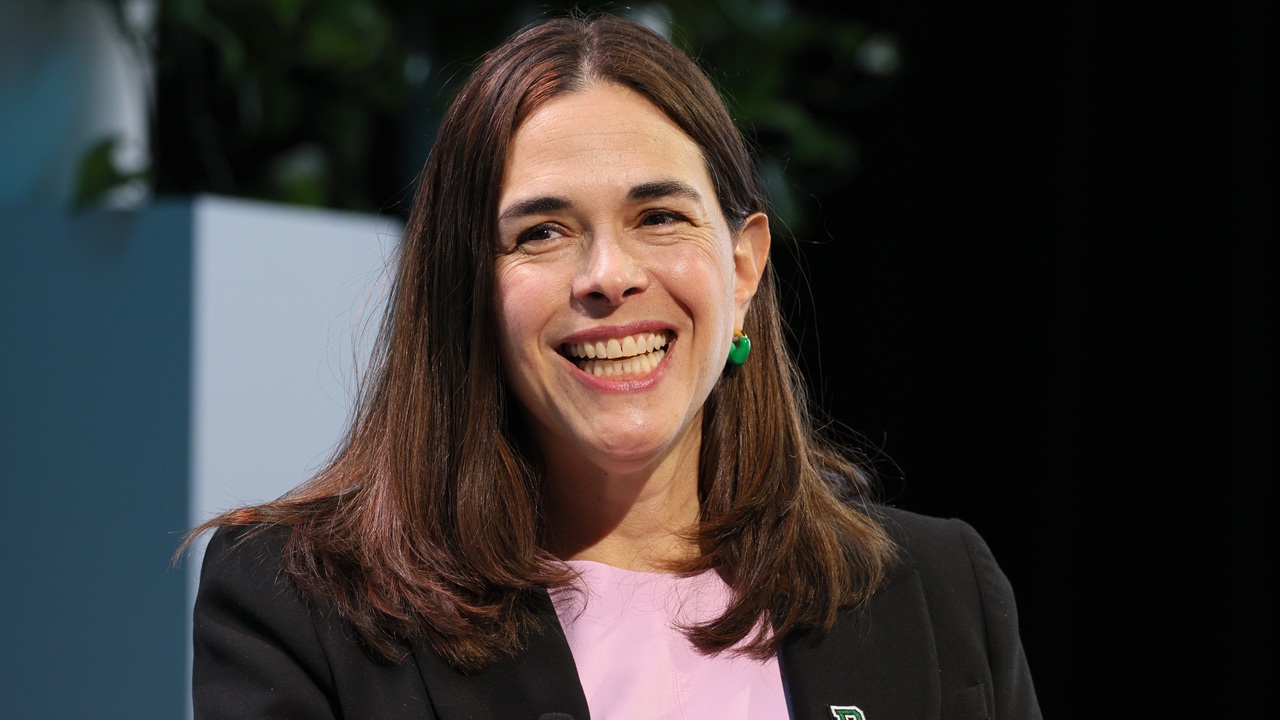
Dartmouth has been improving under its current president, Sian Leah Beilock. One of her initiatives is Dartmouth Dialogues, which helps students have meaningful discussions across differences of opinion and perspective.
Dartmouth Dialogues was an early example of a recent groundswell of similar programs to improve discourse at American colleges and universities. As colleges realize how one-sided their faculties are and how oppressive such monocultures can be for debate, some of them have been giving more than mere lip service to viewpoint diversity.
Centers for dialogue are good places to have hard debates about what’s working well or poorly in the Constitution.
Was it a mistake to start electing, rather than appointing, senators—did it worsen tyranny by the majority?
If the prohibition of alcohol in the 18th Amendment made things so much worse that America repealed it in the 21st Amendment, is there a lesson here regarding government prohibitions today?
Has the federal government intruded so deeply into the privileges and activities of the people and the states that we should say that federalism (and the 9th and 10th Amendments) are mostly dead?
Hundreds of other good questions about the Constitution are worth debating. But using Constitution Day lectures to divide Americans or to point out the flaws in the complexion of the birthday girl has been a moral and rhetorical error.
We have much to celebrate, and it’s not too much to dedicate one day out of 365 to do so.
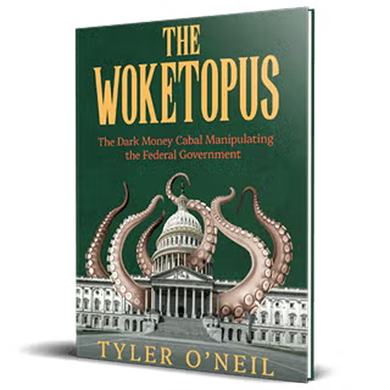
Read the first chapter of The Woketopus right now for FREE
Today, even with President Trump’s victory, leftist elites have their tentacles in every aspect of our government.
The Daily Signal’s own Tyler O’Neil exposes this leftist cabal in his new book, The Woketopus: The Dark Money Cabal Manipulating the Federal Government.
In this book, O’Neil reveals how the Left’s NGO apparatus pursues its woke agenda, maneuvering like an octopus by circumventing Congress and entrenching its interests in the federal government.
You can read the first chapter of this new book for FREE in this eBook, The Woketopus: Chapter One using the secure link below.
TRENDING ARTICLES


The Daily Signal depends on the support of readers like you.
RELATED ARTICLES



Don’t miss the

Don’t miss the signal