
Was America Built on Slavery and Racism? The Confederacy’s ‘Cornerstone’ Gives the Answer
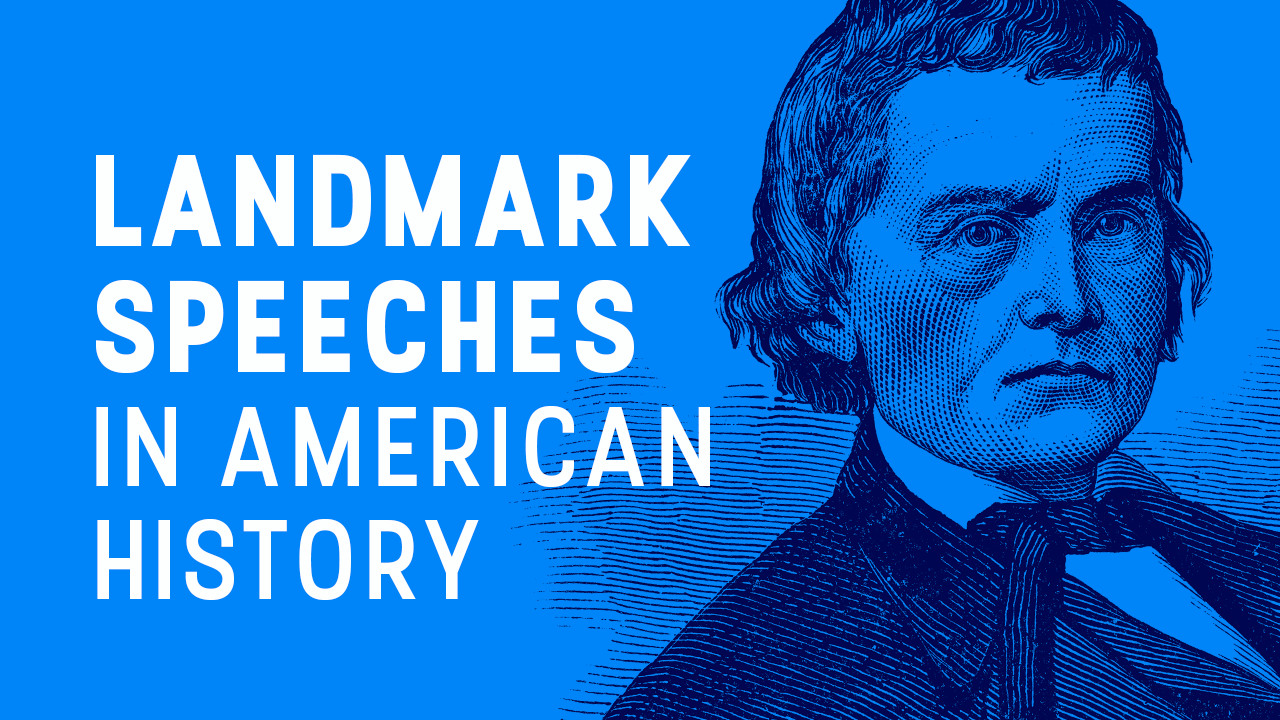
Welcome to the sixth in our series, Landmark Speeches in American History. We are celebrating America’s 250th anniversary with articles by prominent authors about how some of the greatest speeches in our history—by celebrated orators like Ronald Reagan, Abraham Lincoln, and Martin Luther King Jr.—honored the vision of our founding document, the Declaration of Independence.
People tend to assume history moves in a straight line. Atrocities like genocide and slavery are confined to the distant past as progress marches permanently forward.
But that simply cannot be the case. “The line separating good and evil passes … through all human hearts,” as Aleksandr Solzhenitsyn reminds us.
The battle for justice is ever ongoing: replete with setbacks, contradictions, and disappointments. Human beings are never beyond acts of evil, and so regimes are never unfailingly noble.
To read the full speech, click here.
Americans are often guilty of progressive assumptions when it comes to our own story. While America is a comparatively young nation, to us, history all happened long ago and gets lumped together in a generic past. Divisions between generations blur in our memory.
TRENDING ARTICLES



We forget that the Founding Fathers knew slavery was morally abhorrent. Though unable to abolish it, they took measures to set it on the course of ultimate extinction.
The Northwest Ordinance of 1787 banned slavery in the new territories. Many thought eliminating the slave trade would cut off the head of the snake. Congress ended that trade the day it could, and President Thomas Jefferson signed the bill into law.
Despite these victories, technology and ideas altered things, as is often the case. The invention of the cotton gin disrupted economic expectations. A new generation of southerners, led by John C. Calhoun, rose to argue that slavery was not a necessary evil but a positive good.
One of the youngest of the framers, James Madison, was still alive when Calhoun was spreading his constitutional theories. The Father of the Constitution opposed Calhoun’s view, writing that, “The Patrons of this new heresy will attempt, in vain to mask its antirepublicanism.” Still, Calhoun’s false statesmanship did untold damage.
Alexander Stephens and the Civil War came against this backdrop. Stephens’ Cornerstone Speech brings the convictions of the Founding Fathers and his generation into sharp and open conflict.
Stephens was vice president of the Confederacy, and his 1861 remarks came just a few weeks before the first shots at Fort Sumter. Throughout, Stephens contrasts the Confederate Constitution with the American Constitution. For example, the president would serve for six years but was limited to a single term.
More importantly, Stephens lays out the notions upon which his society will be built, comparing them to the principles of the Founders.
The Founders believed in human equality. Stephens explained that Jefferson and other “leading statesmen” held that:
“The enslavement of the African was in violation of the laws of nature; that it was wrong in principle, socially, morally, and politically. It was an evil they knew not well how to deal with, but the general opinion of the men of that day was that, somehow or other in the order of Providence, the institution would be evanescent and pass away.”
Jefferson, Abraham Lincoln, and others surmised that America would be terribly punished for the institution of slavery. Forever inscribed on the southwest wall of the Jefferson Memorial is the warning, “Indeed I tremble for my country when I reflect that God is just; that his justice cannot sleep forever.”
Yet according to Stephens, the assumption of equality of the races was an error:
“It was a sandy foundation, and the government built upon it fell when the “storm came and the wind blew.” Our new government is founded upon exactly the opposite idea; its foundations are laid, its corner-stone rests, upon the great truth that the negro is not equal to the white man; that slavery, subordination to the superior race, is his natural and normal condition.”
Stephens’ words are jarring and repellent. But they are worth reading to understand the competing causes of the Founding and the Civil War.
Disputes throughout America’s history have often revolved around the meaning and role of the Declaration of Independence. It calls to Americans when we are not living up to our principles and unites us in the shared responsibility to realize our aspirations.
Because of that, those who seek to transform America, like Stephens, simply cannot leave that document in place. It must be distorted, dismissed, or replaced. The Confederacy’s secession and the Civil War it precipitated was the most violent of attempts to subvert the Declaration.
But guarding against false interpretations of the Declaration is an ongoing battle. Progressives, the authors of the 1619 Project, and others attack its precepts and centrality, directly or by redefinition.
That is one of the reasons it is essential that citizens know our primary source documents, history, and landmark speeches. We read and dedicate ourselves to the word because words unify us, inspire us, and define our civilization. “We hold these truths … ”

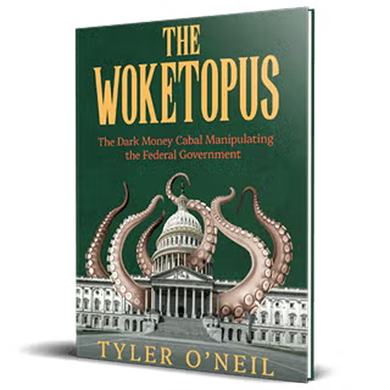
Read the first chapter of The Woketopus right now for FREE
Today, even with President Trump’s victory, leftist elites have their tentacles in every aspect of our government.
The Daily Signal’s own Tyler O’Neil exposes this leftist cabal in his new book, The Woketopus: The Dark Money Cabal Manipulating the Federal Government.
In this book, O’Neil reveals how the Left’s NGO apparatus pursues its woke agenda, maneuvering like an octopus by circumventing Congress and entrenching its interests in the federal government.
You can read the first chapter of this new book for FREE in this eBook, The Woketopus: Chapter One using the secure link below.


The Daily Signal depends on the support of readers like you.
RELATED ARTICLES




Don’t miss the

Don’t miss the signal