

As a companion to the “Top Six Classic Books to Read for America 250,” consider these four history books recommended by evaluators from the “Heritage Guide to Historic Sites.”
Some focus on a particular individual, like Forrest McDonald’s biography of Alexander Hamilton, or an understudied era of history, like “The Political Culture of the American Whigs” by Daniel Walker Howe.
Others illuminate the American culture and creed, “the steady interplay of ideas and inventions,” or “how the distinctive British customs of the founding generations intermingled to produce an altogether new people and, yes, a universal creed that burst the bonds of time and place.”
These books help Americans both to remember our past as well as who we are as a people.
Recommendation: “Albion’s Seed: Four British Folkways in America” by David Hackett Fischer
Evaluator: Spencer Klavan
One of the questions that most troubles Americans right now is whether to define our country with reference to the principles of its founding documents or the culture and heritage of its people. Of course, the answer has to be both, but in what proportions and in what ways?
TRENDING ARTICLES



One classic book of American social history can still help answer those questions beautifully as we enter our second quarter-millennium. “Albion’s Seed: Four British Folkways in America,” by David Hackett Fischer, explains how the distinctive British customs of the founding generations intermingled to produce an altogether new people and, yes, a universal creed that burst the bonds of time and place.
Fischer shows in abundant detail how marked we are by the civilization that produced us, even as he illustrates how various offshoots from that civilization fused and mingled to become something more.
The premise of this nearly 1,000-page book can be stated in a few words. Four British subcultures—the Puritans of East Anglia, the courtly Anglicans of the English and American south, the Quakers of the Midlands, and the rough-hewn Scots-Irish of the “backcountry”—brought their distinctive and often competing traditions to the regions of colonial America where they settled.
In some ways, though, “Albion’s Seed” has been disadvantaged by the clarity of its thesis: it is so neat and easy to summarize that few people feel the need to plough through the thing itself. But it’s well worth the effort—for richness of texture, for the unforgettable anecdotes (you will long remember the miserable Virginia couple that drove their carriage into the sea), and for the marvelously providential history that made us us.
Recommendation: “Alexander Hamilton: A Biography” by Forrest McDonald
Evaluator: Daniel McCarthy
There are bigger biographies of Alexander Hamilton, but there is none better than Forrest McDonald’s. What McDonald captures exceptionally well is the contrast between the oligarchical character that was the default social condition of the newly independent United States and the class mobility that Hamilton’s financial system made possible.
Thomas Jefferson, Hamilton’s great rival, may have believed that the easy availability of land would be sufficient to create a republic of equal citizens, but great wealth was already acquiring great estates even before independence and continued to do so afterward. Free from the British Empire, America had its own early modern approximation of feudalism, in which poorer citizens were dependent on those with great fortunes and landholdings.
Hamilton, in McDonald’s persuasive telling, recognized that commerce and credit would allow the lowly yet talented to rise and unleash the nation’s enterprising spirit. His own humble background as the “bastard brat of a Scotch pedlar” (in John Adams’s estimation) made this more than just a matter of economic theory for Hamilton.
Yet he was not an entirely modern man—his sense of honor led him to war and ultimately to the duel that ended his life, while his son’s death in an earlier duel spurred him to renew his Christian faith. He came to believe an explicitly Christian movement was needed to counteract the secularizing tendencies of Jefferson’s party.
McDonald, who was a conservative as well as a great historian, treats the complexities of Hamilton and his era with singular lucidity and sympathy.
Recommendation: “The Political Culture of the American Whigs” by Daniel Walker Howe
Evaluator: Yuval Levin
For patriotic history buffs, one way to celebrate the 250th anniversary of the founding is to fill in the gaps in our knowledge of the American story. And one particularly common gap involves the decades between the Era of Good Feelings and the Civil War.
We incline to put Andrew Jackson at the center of our perceptions of that time, and with good reason. But Jackson was intensely controversial in his time, and he did not define the spirit of that age alone. His political movement lived always in contrast with the other great force of the era: the mix of religious, intellectual, cultural, and political forces that ultimately came to be embodied in the political project of the Whigs. There can be no making sense of Lincoln, of industrialization, of the effects of the Second Great Awakening, or ultimately of the Civil War, without a grasp of who the Whigs were.
And there is no better guide to who the Whigs were than Daniel Walker Howe’s magisterial study, first published in 1979. By emphasizing the intersection of culture and politics, Howe is able to articulate the connections between ideas, events, personalities, and political action. And through a series of sketches of important Whigs set alongside chapters that take up themes in their thought and action, he fills in our portrait of that era in utterly essential ways.
This is not a book about the founding, but it is a book that anyone who wants to understand how America became America should read.
Recommendation: “The Americans” by Daniel Boorstin
Evaluator: Wilfred McClay
The work of Daniel Boorstin is one of the unsung treasures of American historical writing—and a prime example of how political forces within the intellectual community can serve to suppress good work, and thereby distort the way our past has been studied and understood.
His sin was that, after briefly joining the Communist Party as a Harvard undergraduate in the 1930s, he repudiated that membership and later “named names” in testimony before the House Un-American Activities Committee in the 1950s. He was never forgiven for this by the left-leaning profession.
Whatever one’s views about his actions, they should not have led to a wholesale rejection of his work among professional historians. But that has largely happened, despite his having managed a distinguished career at the University of Chicago and then as the Librarian of Congress. However, we do not need to share this prejudice, and the time has come for a rediscovery of his work, which was extensive and a wonderful antidote to the negative tenor of so much scholarship in American history.
I single out the trinity of books called “The Americans” as a particularly fine example of his historical craft, which illuminates how the steady interplay of ideas and inventions helped to build the texture of life in the America we know.
Covering in its three installments the colonial period, the national period, and the democratic period, it is an admittedly optimistic view of our past and our future. But it is also a vastly entertaining read, which treats with gusto the various aspects of American culture—the importance of hotels, the invention of the balloon-frame house, the meaning of baseball or poker or opera, and so on—that other historians pass over, or leave to specialized writers.
Boorstin also published other books of great interest, always writing with a large audience of general-interest, educated readers in mind. One of them is his 1961 book “The Image,” which deals insightfully with the growing problem of “pseudo-events,” which are really only exercises in publicity and image-making. The book is regarded with respect among the students of social theory. But, as always, it is accessible to any reader who wants to attempt it.
We publish a variety of perspectives. Nothing written here is to be construed as representing the views of the Daily Signal.


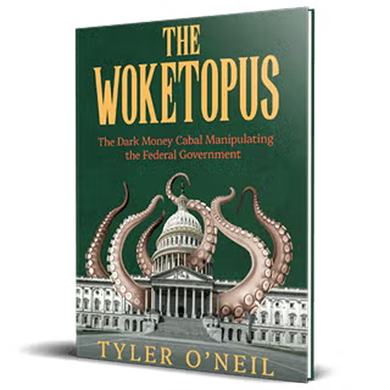
Read the first chapter of The Woketopus right now for FREE
Today, even with President Trump’s victory, leftist elites have their tentacles in every aspect of our government.
The Daily Signal’s own Tyler O’Neil exposes this leftist cabal in his new book, The Woketopus: The Dark Money Cabal Manipulating the Federal Government.
In this book, O’Neil reveals how the Left’s NGO apparatus pursues its woke agenda, maneuvering like an octopus by circumventing Congress and entrenching its interests in the federal government.
You can read the first chapter of this new book for FREE in this eBook, The Woketopus: Chapter One using the secure link below.




The Daily Signal depends on the support of readers like you.
RELATED ARTICLES





Don’t miss the

Don’t miss the signal