Virginians were busy 250 years ago this month. In Philadelphia, of course, Virginians were leading the 13 Colonies into the war that would free them from the British Empire. But others remained in Williamsburg, where the Virginia Convention was hard at work shaping what an independent state would look like.
It ratified the Virginia Declaration of Rights, adopted the first written Constitution of Virginia, and elected Patrick Henry as the Commonwealth’s first governor. The convention also created a state seal, which has lasted just as long as the Declaration of Independence itself.
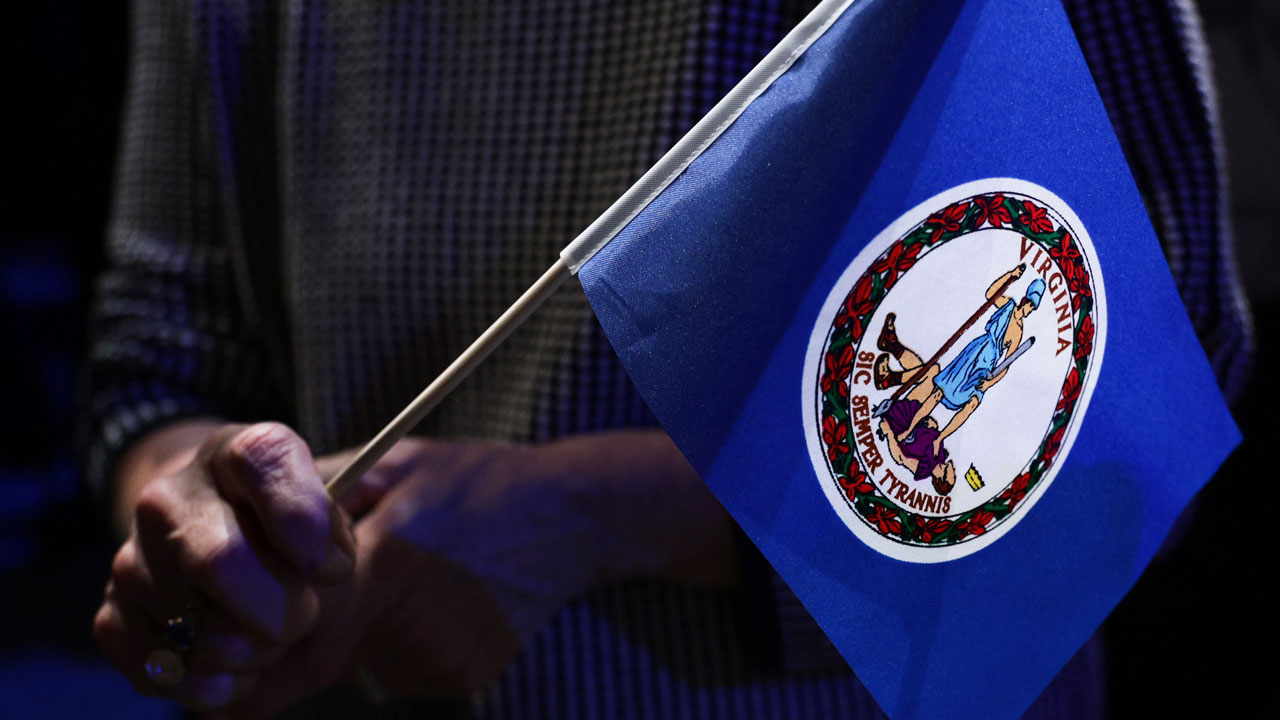
George Wythe is credited as the leader of the committee that created the seal. He worked alongside other patriots, including George Mason, Richard Henry Lee, and Robert Carter Nicholas, to craft a timeless design. You’ve seen it on flags, driver’s licenses, and any official state document, because it is still in use today.
“The front, or obverse, of the Seal depicts Virtus, the Roman goddess of virtue, presented as the genius—the guiding spirit—of the Commonwealth. Dressed as an Amazon, she rests a spear point-downward in her right hand and holds a sheathed sword in her left, her head erect and her face upturned,” writes Candi Mundon King, the secretary of the commonwealth and keeper of the seals.
The reverse of the Seal isn’t seen as often because it isn’t used on the state flag. It also features a scene inspired by antiquity. King writes that it highlights three vows the Commonwealth makes to its people:
- “Libertas, the goddess of liberty, holds a wand and a pileus—the cap of a freed citizen—signifying freedom and self-rule.
- Aeternitas, representing eternity, holds a globe and a phoenix, symbols of endurance and rebirth.
- Ceres, the goddess of agriculture, holds a cornucopia of plenty in one hand and a stalk of wheat in the other, signifying Virginia’s abundance.”
One of the few changes to the seal happened in 1779 when the General Assembly replaced the inscription Deus nobis haec otia fecit (“God has given us this ease”) with the single word Perseverando (“persevering”).
TRENDING ARTICLES



The seal also features the state motto: Sic Semper Tyrannis, thus always to tyrants. It was an indication from the very earliest days of the Revolution that Virginia intended to stand for liberty: first from Britain and eventually for all people.
Of course, for many liberty had to be won through the Civil War, a conflict that divided Virginia as much as it did any state. In 1856, King writes, “The words Virginia, Perseverando, and Sic Semper Tyrannis first appeared within the space of the figures, and a decorative floral border was added,” but there were more changes to come.
In 1861, the Unionist government of Virginia, which met in Wheeling, added the words “Liberty and Union” to both faces of its seal. Early in the 20th century, lawmakers restored the seal, so it almost matched the words used in 1776, and that is how the seal remains today.
Before 1776, the official seal of the colony of Virginia changed every time there was a new British monarch. The Revolution put an end to that, and the Revolutionary generation would certainly be proud that the government it established has endured for 250 years, and counting.

Read the first chapter of The Woketopus right now for FREE
Today, even with President Trump’s victory, leftist elites have their tentacles in every aspect of our government.
The Daily Signal’s own Tyler O’Neil exposes this leftist cabal in his new book, The Woketopus: The Dark Money Cabal Manipulating the Federal Government.
In this book, O’Neil reveals how the Left’s NGO apparatus pursues its woke agenda, maneuvering like an octopus by circumventing Congress and entrenching its interests in the federal government.
You can read the first chapter of this new book for FREE in this eBook, The Woketopus: Chapter One using the secure link below.



The Daily Signal depends on the support of readers like you.
RELATED ARTICLES


Don’t miss the

Don’t miss the signal