Could Voting While Uniformed Be a Problem? Lawsuit Says Arizona Rule Restricts Law Enforcement at Polling Places
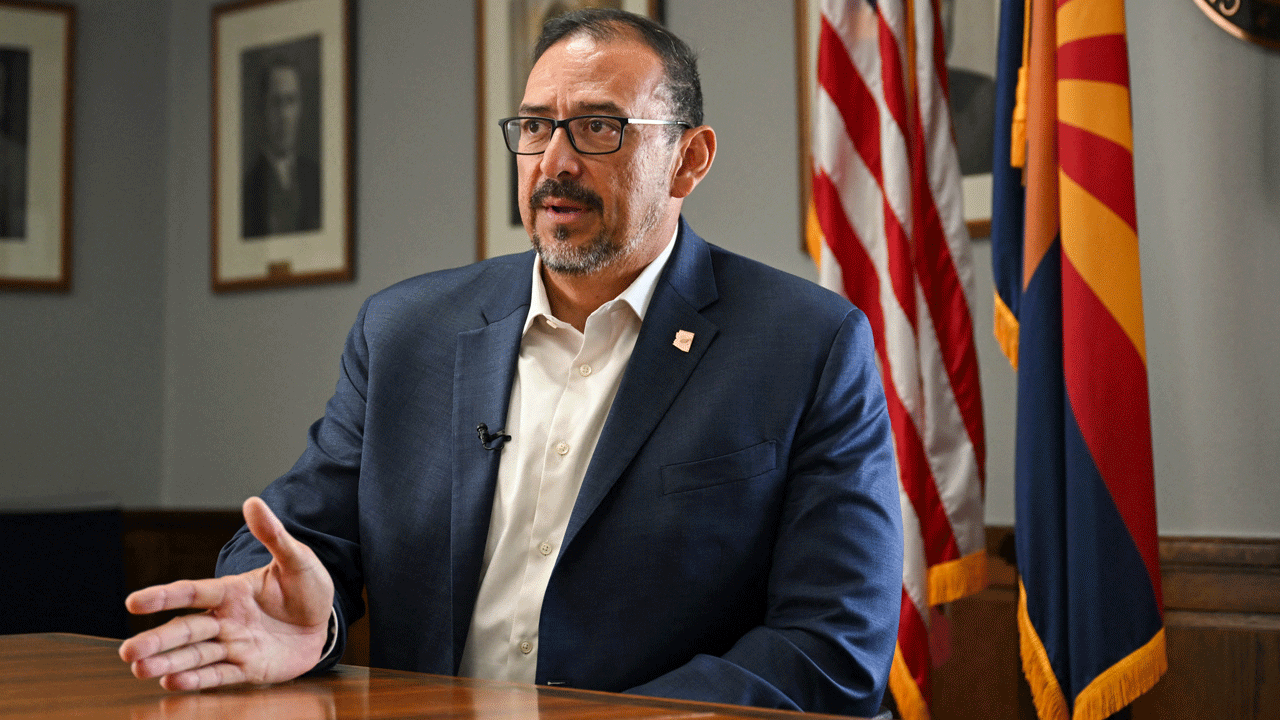
An Arizona election policy could make it more difficult for law enforcement, service members, or other uniform-wearing individuals to vote, according to a federal lawsuit.
Democrats are frequently eager to use the phrase “voter suppression” when talking about voter ID or other election procedures to verify voter eligibility. But Arizona Secretary of State Adrian Fontes, a Democrat, issued an Election Procedures Manual for the state that the Pima County Republican Party argues would make it more difficult for people wearing uniforms to vote.
According to the party’s complaint filed in U.S. District Court for the District of Arizona, the language in question regards what the secretary of state’s office says is meant to deter voter intimidation. The portion of the manual at issue concerns prohibited behavior at the polls such as “impersonating” law enforcement, but then it adds, “or otherwise wearing … uniforms.”
The plaintiffs agree with rules against impersonating law enforcement, but contend the vague language, such as “or otherwise,” is broad enough to give election workers latitude to determine whether even those authorized to wear a uniform could intimidate other voters.
The problem is not theoretical, said Marshall Yates, strategic counsel for the Oversight Project, a watchdog group that is representing the Pima County GOP. He notes a Tucson, Arizona, police officer testified in the case that election workers gave him a tough time voting in the 2024 election because he was in uniform and had a gun holstered, though the officer was eventually able to vote.
“This EPM is designed to discourage more people from voting in person so the state can shift to mail voting,” Yates told the Daily Signal. “There is a clear ideologically based anti-police, anti-military bias. A police officer voting in uniform should be the least intimidating thing. The aim is for law enforcement to have no choice but to vote by mail because they won’t be welcome at polls.”
TRENDING ARTICLES


Yates said the Election Procedures Manual gives so much discretion to election officials that they could prohibit uniformed firefighters, EMTs, or security guards from voting, violating the equal protection clause of the 14th Amendment.
“It’s all up to the election official to decide what constitutes intimidation. It’s far too much discretion,” Yates said.
The state’s Election Procedures Manual has a section about clear cases of voter intimidation.
Specifically on the contested point, the manual says, “In addition to the potentially intimidating conduct outlined above, the following may also be considered intimidating conduct inside or outside the polling place,” before listing conduct such as aggressive behavior, threatening other voters, or blocking an entrance.
It then lists as potential intimidating conduct, “Impersonating a law enforcement officer or otherwise wearing clothing, uniforms or official-looking apparel intended to deter, intimidate, or harass voters.”
This could affect local police, as well as federal law enforcement, such as Border Patrol agents or Immigration and Customs Enforcement agents working in Arizona who might opt for in-person voting during a lunch break or on their way home from work.
“Any rule that could potentially prevent our brave law enforcement officers, or any American citizen, from exercising his or her right to vote is wrong,” a Department of Homeland Security spokesperson told the Daily Signal. The agency is not a party to the litigation.
Last week, U.S. District Judge Michael Liburdi, an appointee of President Donald Trump, presided over the case. Pima County includes the Tucson area.
A spokesperson for the Arizona secretary of state’s office declined to comment for the record on the case to the Daily Signal since it is pending litigation. But in May, Calli Jones, a spokeswoman for the office, told the Arizona Daily Star the Election Procedures Manual does not automatically bar someone in uniform from voting; she said that uniformed police officers do not have to change before voting and can carry a firearm if uniformed and wearing a badge.
“The guidance we provided is to assure that there is no intimidating environment that voters have to participate in,” Jones told the Daily Star.
Kathleen Winn, chairwoman of the Pima County Republican Party, also declined to comment for the record because the case is pending litigation.
Plaintiffs are also challenging the manual’s new limits on electioneering outside a polling place, which extend beyond the statute. State law stipulates no electioneering for or against a candidate within 75 feet of a polling place. But the manual says, “Additionally, no electioneering may take place outside the 75-foot limit if it is audible from a location inside the door to the voting location.”
The Pima County Republican Party contends a lack of objective definition of what is audible, or a defined decibel level, is a violation of the First Amendment and could again leave too much discretion to election officials at a polling place.

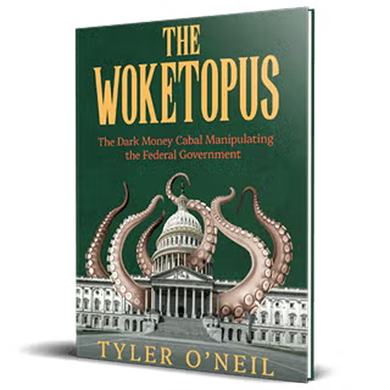
Read the first chapter of The Woketopus right now for FREE
Today, even with President Trump’s victory, leftist elites have their tentacles in every aspect of our government.
The Daily Signal’s own Tyler O’Neil exposes this leftist cabal in his new book, The Woketopus: The Dark Money Cabal Manipulating the Federal Government.
In this book, O’Neil reveals how the Left’s NGO apparatus pursues its woke agenda, maneuvering like an octopus by circumventing Congress and entrenching its interests in the federal government.
You can read the first chapter of this new book for FREE in this eBook, The Woketopus: Chapter One using the secure link below.


The Daily Signal depends on the support of readers like you.
RELATED ARTICLES




Don’t miss the

Don’t miss the signal