The fourth African Regional Inter-Parliamentary Conference on Family Values and Sovereignty is convening in Accra, Ghana, this week. There, parliamentarians and civil society leaders from across Africa will seek to respond to the many contemporary challenges affecting African families, cultural identity, and national sovereignty.
Topping the agenda at the conference will be a discussion of the draft African Charter on Family, Sovereignty and Values, which its proponents hope to adopt this week and bring to the African Union for consideration.
The charter emphasizes the family, formed from the marriage of a man and woman, as the natural and fundamental unit of society. It urges governments to protect the family in law and policy, to strengthen sovereignty in the face of cultural and economic imperialism, and to preserve Africa’s traditional values. It notes that African countries should reject any international agreements that impose sexual and reproductive health rights or gender ideology in opposition to African cultural traditions and domestic laws.
United Nations agencies—primarily the U.N. Population Fund, the World Health Organization, and U.N. Women—are the major drivers and implementers of sexual and reproductive health and rights (SRHR) programming in Africa.
While diplomats at the U.N. go to great lengths to avoid defining the controversial “sexual and reproductive health and rights,” U.N. agencies use it as a broad umbrella term to include contraception; “safe” abortion; “comprehensive” sexuality education; and the enjoyment of “sexual rights,” including those based on sexual orientation, gender identity, and expression.
Throughout Africa, the issue of sexual and reproductive health rights has extensive external support from U.N. entities and Western donors, but it remains very controversial at the national and local levels. U.N. entities fund nongovernmental organizations, like the International Planned Parenthood Federation, EngenderHealth, and MSI Reproductive Choices. The U.N. Population Fund partners with such organizations to deliver SRHR through programs like 2gether 4 SRHR, which operates throughout East and Southern Africa.
TRENDING ARTICLES



As an intergovernmental organization, the African Union appears to be following a trajectory heavily influenced by the European Union, the U.N., and other progressive actors. The African Union is not a supranational organization like the EU (which makes binding laws over its member states), and the African Union leadership’s decisions and opinions are often ignored or blocked by African member states. Nevertheless, the national governments and parliamentarians coming together for this week’s conference are responding to several recent African Union actions that have necessitated a coordinated response to defend life, family, and national sovereignty.
For example, the Pan-African Parliament advanced a draft model law on gender equality and equity to harmonize national legislation with multilateral instruments such as the Maputo Protocol and the U.N. Convention on the Elimination of All Forms of Discrimination Against Women. These documents advance a progressive agenda that conflicts with traditional pro-life and pro-family beliefs.
The African Commission on Human and Peoples’ Rights—the African Union’s human rights body—recently reiterated its position that abortion access is a legal obligation under the Maputo Protocol, irrespective of many national laws that protect unborn life.
And last year, the African Union proposed a Convention on Ending Violence Against Women and Girls, which risks introducing controversial policy changes under the guise of protecting women. It contains vague and expansive definitions of key terms—such as “gender,” “family,” and even “violence”—that depart from established understandings in African legal frameworks. Left undefined, these terms could be interpreted to require far-reaching legal shifts, including the incorporation of contested gender identity concepts or new obligations related to abortion policy.
Equally concerning is the treaty’s reliance on external international frameworks and “soft law” instruments that embed these same ideas. By referencing such documents, the convention risks importing “evolving international norms” that have not been democratically debated or agreed upon by African states. Hence, the need for the new African Charter on Family, Sovereignty, and Values.
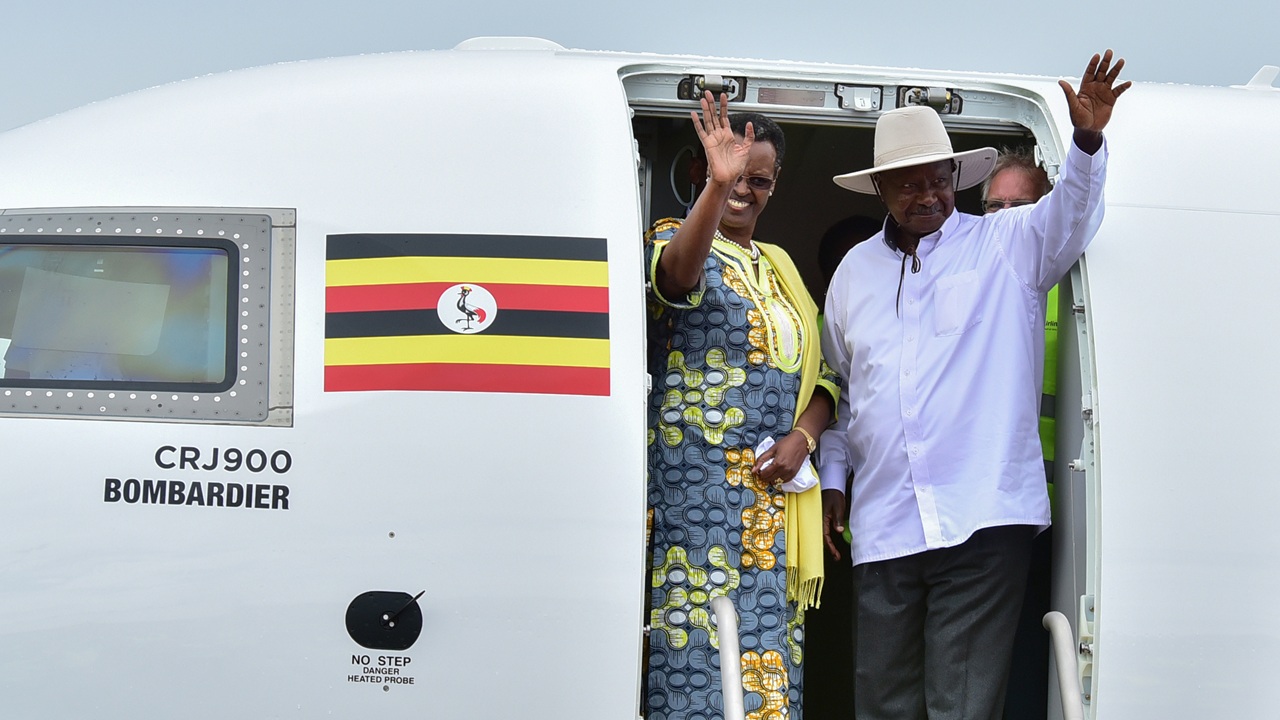
At last year’s interparliamentary conference, Ugandan first lady Janet Museveni warned attendees that “too often, aid is not offered freely, it now comes with conditions that threaten to redefine our societies according to foreign standards, thereby eroding the values we hold sacred and undermining our right to govern ourselves.”
Uganda is no stranger to this phenomenon. When Uganda’s legislature passed its Anti-Homosexuality Act in 2023 to prohibit sexual relations between persons of the same sex, its government became the target of unrelenting pressure from the international community to repeal or moderate the law. The World Bank immediately announced that it would halt any new public financing to Uganda and then froze all funding for nearly two years, until it had determined that there were sufficient safeguards in place.
It is not unusual for donor countries and international organizations to use a combination of carrots and sticks to motivate developing countries to conform to their priorities. While such practices sometimes serve benign foreign policy interests or noble human rights goals, they are increasingly employed by progressive actors to advance a radical social agenda centered on promoting abortion and gender ideology.
A recent report on the World Bank’s practice of conditioning loans and other financing on recipient countries’ social and demographic policies—including liberalizing abortion laws—discussed several examples from Africa.
The European Union’s core foreign assistance instrument is the Gender Action Plan III, which prioritizes sexual and reproductive health and rights programing alongside gender-based violence prevention and women’s economic empowerment.
From 2021 to 2023, the EU gave 415 million euros of bilateral funding for SRHR to sub-Saharan African countries alone. That is a large sum of donor dollars for contraceptives and abortions, especially when compared to the 273 million euros allocated by the EU in the same time period for programs to treat malaria and other infectious diseases.
In its foreign and development policies, the United Kingdom also emphasizes sexual and reproductive health and rights as a central priority. Its flagship program, Women’s Integrated Sexual Health, supports SRHR service delivery across multiple African countries and partners with the International Planned Parenthood Federation.
Clearly, the leaders attending this week’s Inter-Parliamentary Conference on Family Values and Sovereignty are responding to a multitude of threats. African leaders are accustomed to the ideological colonization and policy obfuscation that international progressives push. This new African Charter is a reminder to the rest of the world that family values and African sovereignty are at risk, and Africans care.
The U.S.—particularly under this administration that values life, family, and sovereignty—should support these courageous African leaders in their ongoing cultural and political battlefront.


Read the first chapter of The Woketopus right now for FREE
Today, even with President Trump’s victory, leftist elites have their tentacles in every aspect of our government.
The Daily Signal’s own Tyler O’Neil exposes this leftist cabal in his new book, The Woketopus: The Dark Money Cabal Manipulating the Federal Government.
In this book, O’Neil reveals how the Left’s NGO apparatus pursues its woke agenda, maneuvering like an octopus by circumventing Congress and entrenching its interests in the federal government.
You can read the first chapter of this new book for FREE in this eBook, The Woketopus: Chapter One using the secure link below.
TRENDING ARTICLES


The Daily Signal depends on the support of readers like you.
RELATED ARTICLES




Don’t miss the

Don’t miss the signal