Foreign Donations Are Buying Influence Over K-12 Schools. Here’s What Parents Need to Know.
Earlier this year, the U.S. Department of Education revamped efforts to track foreign donations to postsecondary institutions. State lawmakers have never required the same oversight of international gifts to K-12 schools—until now.
Colleges and universities are required to report foreign gifts worth $250,000 or more to the U.S. Department of Education. For 2025, the agency reported $5.2 billion in such spending, including $528 million from China to colleges and universities (a total of $6.8 billion from China since 1986). But foreign countries and affiliated foundations are also giving to K-12 schools, contributions that afford international actors a level of influence over students in the U.S.
In fact, Stanford University students report that Chinese interests are trying to extract information from U.S. students in sensitive research areas (the subject of a recent congressional hearing). Apart from isolated cases such as these, lawmakers and taxpayers have little information about foreign gifts to elementary and secondary schools.
To remedy this, Georgia lawmakers approved a proposal on April 6 that would require public schools to report gifts and grants from entities in other countries. Legislators have sent the proposal to the governor.
This is good news for taxpayers. Foreign agents do not send gifts to educational institutions for nothing—generous grants create access to educators and students. Taxpayers should know how the spending is influencing classrooms.
Consider the Qatar Foundation International. QFI is the U.S.-based subsidiary of the Qatar Foundation, and it awards grants to K-12 schools ostensibly for academic and extracurricular programs in Arabic language and culture. But research has uncovered antisemitic and other discriminatory school activities linked to the spending.
TRENDING ARTICLES

QFI says it wants to “connect cultures” and “advance global citizenship,” but its favored programs are notably biased. Reporting from The Washington Free Beacon has found that QFI grants have funded “social justice” lessons in U.S. public schools, for example, not just Arabic textbooks.
QFI has advertised some of its programs, such as a “summer immersion institute” at a Houston school in July 2025 and spending on “teacher councils” around the world, but these do not tell the whole story. In Brooklyn, New York, an Arab culture arts classroom that receives funding from QFI displayed an inaccurate map of the “Arab World” that labeled Israel, the West Bank, and Gaza as a unified Palestine. (At a 2024 congressional hearing, then-Chancellor of New York City Public Schools David Banks said the map “was not part of the resources that came from the Qatar Foundation.” He asked the teacher to remove the map, but why was such material accessible in the first place?)
Photos posted by QFI on social media show a teacher at Manara Academy, a Texas charter school, hand-painting a map of the Israeli region. Her finished project erased the Jewish state altogether, instead depicting a single Palestine from the river to the sea, the outcome embraced by political movements and Islamist terrorist groups that reject Israel’s right to exist.
In September 2025, Rep. Kevin Kiley, R-Calif., chair of a congressional subcommittee on K-12 education, said, “At some schools in my home state of California, the antisemitic environment is so hostile that Jewish children are withdrawing and transferring elsewhere.”
Kiley’s subcommittee held a hearing on antisemitic activity in schools, and witnesses specifically cited Qatar in the discussion of antisemitic public school programs.
The Heritage Foundation produced model legislation that would provide more transparency over foreign grants to K-12 schools and postsecondary institutions, similar to the Georgia proposal.
Heritage’s model prohibits contracts between schools and countries of concern involving academic resources. State officials could use the model to call for a review of all spending from international interests, akin to the federal requirement on colleges and universities (Notably, the U.S. Department of Education reports that Qatar is the largest foreign funder of universities in the U.S., sending $8.8 billion to these institutions over the last 40 years).
Georgia lawmakers are taking seriously the discrimination and antisemitism orbiting foreign gifts to K-12 schools. Members of Congress have held hearings, and investigative reporters have gathered evidence, all of which gives state officials reason enough to consider new protections for American students.

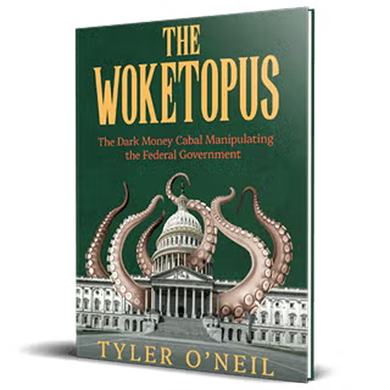
Read the first chapter of The Woketopus right now for FREE
Today, even with President Trump’s victory, leftist elites have their tentacles in every aspect of our government.
The Daily Signal’s own Tyler O’Neil exposes this leftist cabal in his new book, The Woketopus: The Dark Money Cabal Manipulating the Federal Government.
In this book, O’Neil reveals how the Left’s NGO apparatus pursues its woke agenda, maneuvering like an octopus by circumventing Congress and entrenching its interests in the federal government.
You can read the first chapter of this new book for FREE in this eBook, The Woketopus: Chapter One using the secure link below.
TRENDING ARTICLES

The Daily Signal depends on the support of readers like you.
RELATED ARTICLES




Don’t miss the
Don’t miss the signal