Teacher Wins $575K Settlement After Being Fired for Not Using Student’s Preferred Pronouns

Peter Vlaming, a longtime high school French teacher in Virginia, was fired in 2018 for refusing to use a student’s preferred pronouns. On Monday, after years of litigation and a win for Vlaming at the Virginia Supreme Court, the school board finally capitulated and agreed to settle the case for $575,000.
But the West Point School Board’s refusal for five years to protect Vlaming’s free speech and religious freedom rights came with an exorbitant price tag.
In 2018, one of Vlaming’s female students at West Point High School began identifying as a transgender male. Although Vlaming consistently used the student’s preferred name, the French teacher carefully avoided using third-person pronouns so as not to violate his own religious beliefs.
That courtesy wasn’t good enough for West Point’s school board and school administrators. When Vlaming refused to use preferred pronouns, they fired the teacher for “creating a hostile learning environment.”
That’s right. Vlaming wasn’t fired for what he said. He was fired for what he didn’t—and couldn’t—say.
Represented by Alliance Defending Freedom and a local attorney, Vlaming sued in state court in 2019, asserting claims under Virginia law and the Virginia Constitution.
TRENDING ARTICLES



The school board didn’t flinch, but instead tried to move the case to federal court.
And no wonder. If the West Point School Board succeeded, it could invoke the 4th U.S. Circuit Court of Appeals’ decision in another Virginia case called Grimm v. Gloucester School Board, which largely adopted gender ideology in its reasoning. That case—and its deeply flawed reasoning—would have mandated the use of preferred personal pronouns.
Thankfully, the school board failed in Vlaming’s case. But it took nearly two years of litigation simply to determine what court should hear it.
The school board then asked the state lower court to dismiss the case. The judge agreed and tossed Vlaming’s lawsuit, ruling from the bench without an opinion.
Vlaming appealed to the Virginia Supreme Court, which ruled in his favor in December 2023 and reinstated his lawsuit.
The majority decision, written by Justice D. Arthur Kelsey, was a landmark victory for religious freedom and free speech. The state Supreme Court held that the Virginia Constitution protects religious exercise—not just religious speech—unless it threatens the public’s safety or order.
In so ruling, the state’s highest court rejected U.S. Supreme Court Justice Antonin Scalia’s highly criticized majority opinion in Employment Division v. Smith. That decision gutted religious freedom when a challenged law could be considered both neutral and generally applicable to everyone.
Instead, Kelsey’s opinion for the state Supreme Court relied on the Virginia Constitution’s text and its framers’ views on religious freedom. The Virginia Constitution, the court explained, protects not just beliefs but also the right to act on those beliefs in every aspect of life.
The court also ruled for Vlaming on his claim of compelled speech. Merely “objectionable” or “hurtful” speech, it emphasized, poses no threat to public safety or order.
Vlaming’s refusal to use preferred personal pronouns based on his Christian religious beliefs thus was protected even if others subjectively took offense to his silence, Kelsey wrote in the opinion.
“[I]f liberty means anything at all,” Kelsey wrote, “it means the right to tell people what they do not want to hear. … All the more, it means the right to disagree without speaking at all.”
Seeing the writing on the wall, the West Point School Board finally relented. In a settlement finalized Monday, the board agreed to pay Vlaming $575,000 in damages and attorneys’ fees. It also agreed to expunge Vlaming’s firing from his employment record.
And for good measure, the school board took the initiative and changed its policies to conform to new educational policies from Virginia Gov. Glenn Youngkin, a Republican, which protect free speech and parental rights.
The school board fought for five years to avoid respecting Vlaming’s rights to free speech and the free exercise of religion. In the end, that fight cost the board (or, more likely, its insurance provider) more than half a million dollars.
That’s to say nothing of what the school board had to pay its own lawyers.
It turns out that compelling a teacher’s speech carries a hefty price tag and causes quite a lot of trouble.
In the end, Peter Vlaming’s courage in defending his right to remain silent is exemplary and achieved far more than money. His stand resulted in one of the clearest statements in history from the Virginia Supreme Court that religious exercise is robustly protected under the state Constitution.
This is a victory that we all can celebrate. Hopefully, it also serves as a stark reminder to school boards and school administrators that mandating the use of gender-based personal pronouns just isn’t worth it.

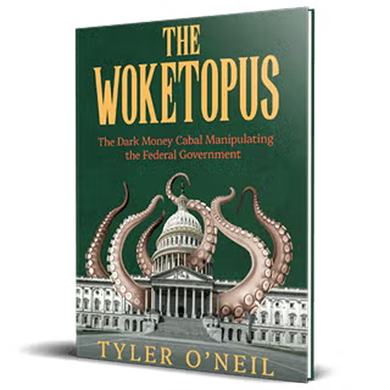
Read the first chapter of The Woketopus right now for FREE
Today, even with President Trump’s victory, leftist elites have their tentacles in every aspect of our government.
The Daily Signal’s own Tyler O’Neil exposes this leftist cabal in his new book, The Woketopus: The Dark Money Cabal Manipulating the Federal Government.
In this book, O’Neil reveals how the Left’s NGO apparatus pursues its woke agenda, maneuvering like an octopus by circumventing Congress and entrenching its interests in the federal government.
You can read the first chapter of this new book for FREE in this eBook, The Woketopus: Chapter One using the secure link below.
TRENDING ARTICLES


The Daily Signal depends on the support of readers like you.
RELATED ARTICLES




Don’t miss the

Don’t miss the signal