Since the 2008–2009 global recession, China has accounted for roughly one-third of global economic growth, by far the highest in the world. With a GDP of roughly $11 trillion (current prices), the second-largest in the world after that of the United States, any economic slowdown in this Asian juggernaut is bound to have enormous global consequences.
The rate of economic growth in China has decelerated from 9.3 percent in 2011 to 6.8 percent in 2015 (and the accuracy of the latest figure is in serious question due to a host of other economic indicators). The question is what impact a further slowdown in China would have on the U.S. economy.
There are three primary channels in which a significant slowdown in China could affect the U.S. economy. The first is through trade. In 2015, China was America’s third-largest export market, after Canada and Mexico, respectively. U.S. exports were valued at $116.2 billion, a 50 percent increase since 2008. Exports to China accounted for 7.7 percent of total U.S. exports in 2015, not an inconsequential figure, but not devastating to U.S. export revenue in the event of a further Chinese stall in growth (Chinese exports to the U.S. were $481 billion in 2015).
The second channel is financial. The Chinese are now the largest holder of U.S. debt standing at $1.2 trillion in April 2016. This currently represents 20 percent of total foreign debt holdings.
In the event of a further slowdown in the Chinese economy, the Chinese government may want to sell some of these securities for economic stimulus. This could lead to a fall in U.S. bond prices (that is, a rise in domestic interest rates), depressing domestic investment. This impact has been discussed extensively and largely exaggerated for two reasons. First, the Chinese are unlikely to liquidate a large portion of their U.S. Treasury holdings because it might lead to a capital loss on their existing holding. Second, U.S. Treasuries are the most liquid and coveted securities in the world. In an economic crisis, investors would flee toward Treasuries. The recent economic crisis illustrates this.
The third channel is largely a positive one. The slowdown in the Chinese economy has significantly depressed global commodity prices. Despite the shale oil revolution, the U.S. imported 9.4 million barrels of petroleum per day in 2015. While the U.S. exported 4.8 million barrels per day in 2015, the net impact for the U.S. economy was positive.
TRENDING ARTICLES


So what is the likely net impact? According to the OECD, a 2 percent decline in Chinese domestic demand growth will cause a decrease in U.S. GDP growth rate by approximately 0.3 percent. Bottom line? With an economy drifting along at a lackluster 2 percent rate of growth, this drop is neither insignificant nor traumatic.

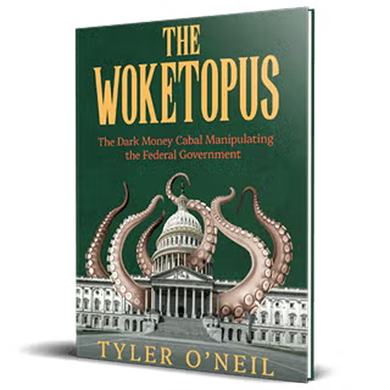
Read the first chapter of The Woketopus right now for FREE
Today, even with President Trump’s victory, leftist elites have their tentacles in every aspect of our government.
The Daily Signal’s own Tyler O’Neil exposes this leftist cabal in his new book, The Woketopus: The Dark Money Cabal Manipulating the Federal Government.
In this book, O’Neil reveals how the Left’s NGO apparatus pursues its woke agenda, maneuvering like an octopus by circumventing Congress and entrenching its interests in the federal government.
You can read the first chapter of this new book for FREE in this eBook, The Woketopus: Chapter One using the secure link below.



The Daily Signal depends on the support of readers like you.
RELATED ARTICLES




Don’t miss the

Don’t miss the signal