Should Unions Give to Planned Parenthood Without Members’ Permission? This Bill Would Ban That.
Unions claim they’re for the little guy.
They talk about big businesses putting corporate interests ahead of the average Joe.
But unions have become quite big themselves. They often put their institutional interests ahead of workers.
Last year, for example, several major unions gave over $400,000 to Planned Parenthood and its political action fund.
They did not get their members’ permission before donating their dues to such a controversial organization. But that’s not unions’ only abuse. Unions often care more about adding dues-paying members than whether workers actually want union representation.
Unions frequently pressure businesses into letting them organize workers without a secret ballot election.
TRENDING ARTICLES



They find it much easier to unionize workers who lack the privacy of the voting booth. Unions also pressure and interfere with workers who want a vote on whether to remain unionized. They do not want to have to stand for re-election.
These practices increase union membership, but they do not necessarily make those workers better off.
Similarly, unions can call strikes without their members’ approval.
Hostess employees never got a secret ballot vote on whether they should go on strike.
After workers rejected a contract offer by voice vote, the bakery union leadership simply called the strike—which liquidated the company and eliminated all their jobs.
In one effort to address such abuses, Sen. Orrin Hatch, R-Utah, and Rep. Tom Price, R-Ga., recently introduced the Employee Rights Act (ERA) to give workers more control over their jobs.
The ERA would guarantee secret ballot elections when unionizing workplaces or calling strikes, as well as requiring unions to periodically stand for re-election.
It would also make it illegal for unions to threaten or interfere with workers who want a different—or no—workplace representative.
The Employee Rights Act would also protect workers’ privacy.
Federal law requires businesses to share their employees’ home addresses and telephone numbers with union organizers.
Many workers may not want union organizers to know this. So the ERA would create a workplace version of the “do not call” list. It allows workers to opt out of having their personal information given to unions.
Union members have little control over how their union spends their money.
The ERA requires unions to get workers’ permission before they can spend their dues on political activities or give their money to objectionable causes.
Unions would prefer workers not to have these rights. They would rather organize workplaces, call strikes, spend dues and access private information without employee interference.
But unions exist to serve workers, not the other way around. The law should give workers more say over how unions represent them.

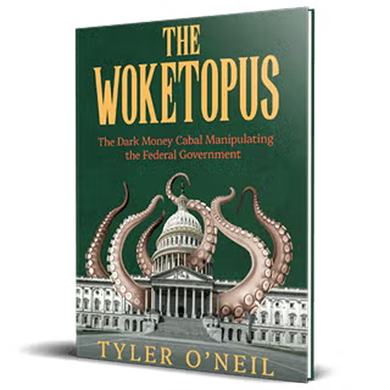
Read the first chapter of The Woketopus right now for FREE
Today, even with President Trump’s victory, leftist elites have their tentacles in every aspect of our government.
The Daily Signal’s own Tyler O’Neil exposes this leftist cabal in his new book, The Woketopus: The Dark Money Cabal Manipulating the Federal Government.
In this book, O’Neil reveals how the Left’s NGO apparatus pursues its woke agenda, maneuvering like an octopus by circumventing Congress and entrenching its interests in the federal government.
You can read the first chapter of this new book for FREE in this eBook, The Woketopus: Chapter One using the secure link below.
TRENDING ARTICLES


The Daily Signal depends on the support of readers like you.
RELATED ARTICLES




Don’t miss the

Don’t miss the signal