
On March 18, the Office of the Inspector General (IG) of the Federal Housing Finance Agency (FHFA) released a new report, “The Continued Profitability of Fannie Mae and Freddie Mac Is Not Assured.” This report is instructive because it points out that although the government-sponsored enterprises (GSEs) Fannie Mae and Freddie Mac returned to profitability in 2012, their continued profitability is not assured.
Furthermore, as Heritage research has previously shown, the agreement that placed the GSEs under government conservatorship and cost taxpayers nearly $200 billion stipulates that all GSE profits simply flow into the U.S. Treasury. In other words, GSE profits cannot be used to pay back the bailout money.
Perhaps worse is the fact that this agreement also requires the GSEs to reduce their capital reserves by $600 million per year, eventually reaching zero in 2018. This reduction in capital combined with possibly shrinking future profits means that taxpayers could easily be forced to send more money to the GSEs.
According to Freddie Mac’s 2014 Financial Results, its net income declined and its comprehensive income declined from 2013 by $41.0 billion and $42.2 billion, respectively. Fannie Mae also announced a big decline in its net income last year, which fell from $83.98 billion in 2013 to $14.21 billion. Fannie Mae also reports that it expects to remain profitable for the foreseeable future; however, it acknowledges that a decrease in home prices or changes in interest rates, combined with provisions of their agreements with Treasury that require the reduction of their retained asset portfolios, could lead to losses. Meanwhile, falling earnings could raise the possibility of future bailouts.
Moreover, the latest staff report from the Federal Reserve Bank of New York suggests that although conservatorship may have achieved its key short-term goals of stabilizing the mortgage markets and promoting financial stability during a period of extreme stress, conservatorship led to tensions between maximizing the firms’ value and achieving broader macroeconomic objectives. More important, this government takeover has so far failed to reform the U.S. housing finance system.
The Heritage studies on Fannie Mae and Freddie Mac indicate that housing finance GSEs played a central role in the systemic nature of the collapse of the financial market. Eliminating the role Fannie Mae and Freddie Mac currently play in the U.S. mortgage market would save billions of taxpayer dollars by eliminating the subsidy that has induced U.S. households to take on more debt. Congress should move the U.S. toward a private market-based housing finance system. Increasing government intervention by subsidizing loans has made housing less affordable for the typical American and destabilized housing and financial markets.
TRENDING ARTICLES



Yexin Mao is currently a member of the Young Leaders Program at The Heritage Foundation. For more information on interning at Heritage, please click here.
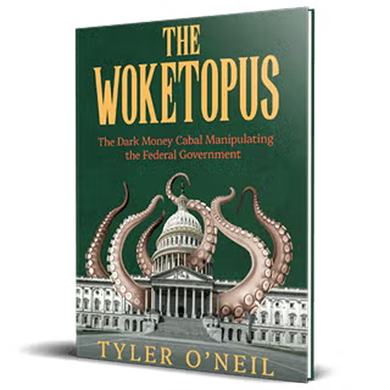
Read the first chapter of The Woketopus right now for FREE
Today, even with President Trump’s victory, leftist elites have their tentacles in every aspect of our government.
The Daily Signal’s own Tyler O’Neil exposes this leftist cabal in his new book, The Woketopus: The Dark Money Cabal Manipulating the Federal Government.
In this book, O’Neil reveals how the Left’s NGO apparatus pursues its woke agenda, maneuvering like an octopus by circumventing Congress and entrenching its interests in the federal government.
You can read the first chapter of this new book for FREE in this eBook, The Woketopus: Chapter One using the secure link below.
TRENDING ARTICLES




The Daily Signal depends on the support of readers like you.
RELATED ARTICLES




Don’t miss the

Don’t miss the signal