
Thursday’s Senate Energy and Natural Resources Committee hearing on America’s crude oil export policies will focus largely on the 40-year-old ban on crude oil exports enacted in response to the Organization for Petroleum Exporting Countries embargoes levied on the United States and other countries in the 1970s.
But at the heart of the matter is economic freedom.
As noted in a featured chapter of the 2015 Index of Economic Freedom, energy is a key building block for economic opportunity. Energy policies rooted in the principles of economic freedom tend to generate increased production, improved access and greater economic dynamism.
Open markets and trade freedom are key components of such energy policies. Opening markets for both import and export fosters innovation and vibrant economic expansion. When markets are open to more producers and consumers, the ensuing competition provides more choices and better products at lower prices. Energy should be no exception, but the law treats it differently.
The ban on crude oil exports effectively becomes a form of price control that harms both the United States and rest of the world in both the near and long term. The ban is not a direct form of price control, but it has similarly harmful effects. History reminds us that when policymakers implement price caps, they tend to backfire in a big way.
Attempts in the 1970s to force gasoline prices below market levels invariably resulted in shortages. Drivers waited hours in line. Gas stations ran out of fuel. The economy suffered, and unrest increased.
TRENDING ARTICLES



Prices help ensure resources go to their most efficient use. After Hurricane Katrina caused massive power outages, demand for generators rose dramatically along the Gulf Coast, which drove up prices. Governors implemented price ceilings, so instead of generators being allocated where they were needed most—grocery stores and gas stations—many ended up in the hands of hardware store employees and their families and friends.
The crude export ban discourages production, which decreases global supplies of oil, which leads to higher prices. This government intervention hampers economic growth rather than stimulate it. Keeping markets closed serves only to distort price signals, muffle economic growth and press the financially less fortunate into paying disproportionately more for their energy.
Lifting the ban could generate 1 million additional jobs as a result of increased oil production and the industries that support it. Furthermore, households could save up to 8 cents a gallon for gasoline if crude were allowed to be exported, according to the U.S. Government Accountability Office.
The Senate Energy and Natural Resources Committee hearing should serve as another platform to explain the benefits of lifting the ban and making meaningful progress toward more market-driven energy policies, which ultimately will advance America’s economic freedom.


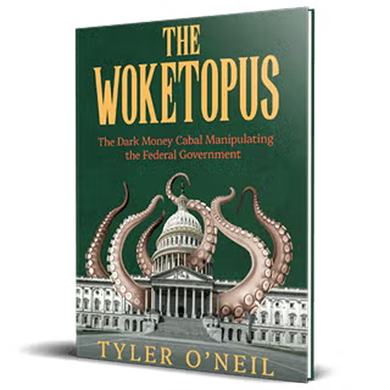
Read the first chapter of The Woketopus right now for FREE
Today, even with President Trump’s victory, leftist elites have their tentacles in every aspect of our government.
The Daily Signal’s own Tyler O’Neil exposes this leftist cabal in his new book, The Woketopus: The Dark Money Cabal Manipulating the Federal Government.
In this book, O’Neil reveals how the Left’s NGO apparatus pursues its woke agenda, maneuvering like an octopus by circumventing Congress and entrenching its interests in the federal government.
You can read the first chapter of this new book for FREE in this eBook, The Woketopus: Chapter One using the secure link below.
TRENDING ARTICLES


The Daily Signal depends on the support of readers like you.
RELATED ARTICLES



Don’t miss the

Don’t miss the signal