The Financial Stability Oversight Council (FSOC) has announced that it directed its staff to take more of an activities-based approach to identifying systemic risk in the asset management industry. This could mark a sensible change from the FSOC’s original method of identifying large asset management companies as systemically dangerous, but the statement’s precise implications remain unclear.
As the American Enterprise Institute’s Peter Wallison notes, if the FSOC really has decided to completely revamp its review process of asset managers, that’s very good news for U.S. capital markets. The decision could also signal a setback for the international-based Financial Stability Board’s efforts to subject non-bank financial firms to bank-like regulation and supervision.
Still, the news would be even better if the FSOC’s announcement included an activities-based approach for the insurance industry.
In 2012, William Wheeler, president of MetLife’s Americas division, testified before Congress that it made more sense for the FSOC to identify the specific activities that cause systemic risk and then regulate those activities. Instead, the FSOC continued identifying supposedly risky companies based on unclear standards and singling out those firms for heightened regulations. (Prudential Insurance was designated under the FSOC’s process in 2013.)
It makes little sense for the FSOC to continue designating specific firms for these special regulations for multiple reasons. The main problem is that this process identifies large financial firms whose failure regulators believe will be catastrophic for the economy, thus perpetuating the too-big-to-fail problem. The FSOC’s method also does nothing to identify supposedly dangerous activities that firms could then reduce or modify.
If the FSOC can identify specific activities that caused the 2008 financial crisis, then it makes more sense to regulate those activities than to broadly regulate large non-bank financial firms that had nothing to do with the crisis.
TRENDING ARTICLES


Until Congress can abolish the FSOC, it should direct the FSOC to take this type of activities-based approach for all non-bank financial firms. Congress could also improve the regulatory environment by forcing the FSOC to re-examine its previous designations of insurance firms, this time with clearly defined activities-based standards.
Still, Congress should recognize that the mere existence of the FSOC is wholly incompatible with the functioning of a dynamic private capital market. Long term, Congress’s best course of action remains eliminating the FSOC.

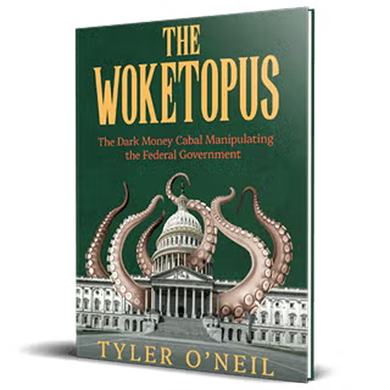
Read the first chapter of The Woketopus right now for FREE
Today, even with President Trump’s victory, leftist elites have their tentacles in every aspect of our government.
The Daily Signal’s own Tyler O’Neil exposes this leftist cabal in his new book, The Woketopus: The Dark Money Cabal Manipulating the Federal Government.
In this book, O’Neil reveals how the Left’s NGO apparatus pursues its woke agenda, maneuvering like an octopus by circumventing Congress and entrenching its interests in the federal government.
You can read the first chapter of this new book for FREE in this eBook, The Woketopus: Chapter One using the secure link below.


The Daily Signal depends on the support of readers like you.
RELATED ARTICLES





Don’t miss the

Don’t miss the signal