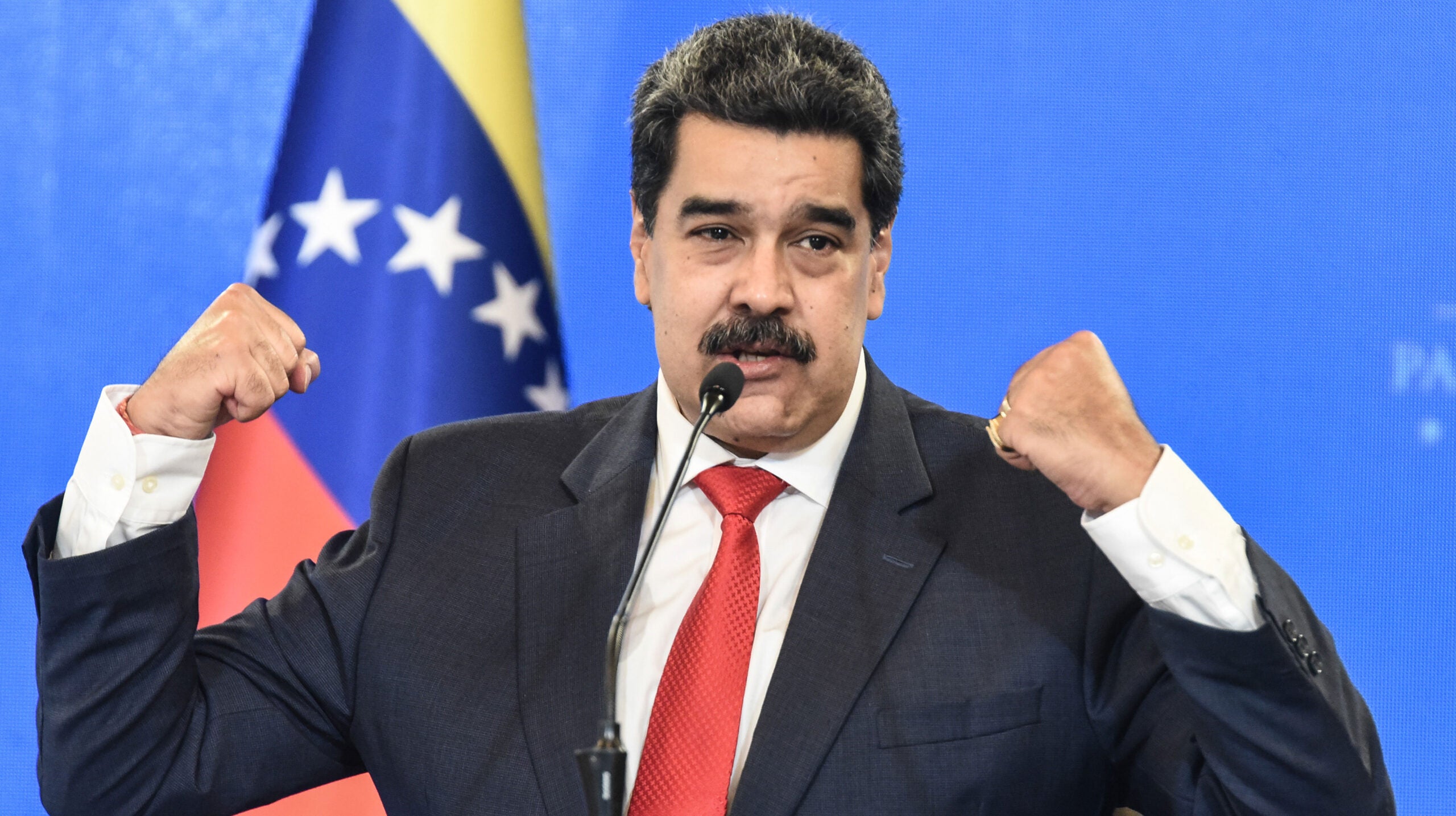
The United States needs more heavy oil for a whole series of reasons. President Joe Biden could have chosen to have that oil come from a close friend and ally, environmentally conscious Canada, or from one of the world’s nastiest regimes, Nicolas Maduro’s Venezuela, which doesn’t give a toss about the environment.
Which did he choose? Venezuela, of course.
In exchange for modest concessions on electoral reform, the Biden administration just lifted sanctions on Venezuela, allowing it to export hundreds of thousands of barrels a day of vital heavy oil to the United States. The shale oil revolution has not and cannot change the fact that the U.S. produces virtually no heavy oil, yet many of this country’s refineries, especially on the Gulf Coast, were set up to refine that kind of oil.
Most of their heavy oil is from Canada, which is why that country is far and away the largest exporter of oil to America—more than twice as much as Saudi Arabia, Mexico, Russia, and Colombia combined. If America is now a net exporter of oil, it can thank Canada.
The war in Ukraine caused unpopular price hikes at the gas pump. In response, the Biden administration has drawn down the Strategic Petroleum Reserve. That drawdown focused on medium and heavy crudes. OPEC responded with supply cuts aimed at throttling the supply of these strategically important crudes.
The drawdown of the Strategic Petroleum Reserve is reaching its limits, but the risk of higher gas prices in an election year is rising. To OPEC and Ukraine, we must now add the heightened risk of conflict spreading in the Middle East.
TRENDING ARTICLES



In this context, recall that one of the very first acts Biden took upon reaching office was to cancel the permit for the Keystone XL pipeline, a permit issued by his predecessor. Keystone XL was intended to provide 830,000 barrels a day of Canadian heavy crude to those Gulf Coast refineries. Pipe was already being laid.
Had Biden allowed Keystone XL to proceed, the supply of heavy oil to the U.S. industry would have been secure, risky drawdowns of the Strategic Petroleum Reserve unnecessary, and America would have been much less vulnerable to global supply disruptions and OPEC’s manipulations.
Instead, the president colluded with a campaign to vilify oil from Alberta’s oil sands as “dirty oil.” Yes, producing Canada’s heavy oil emits greenhouse gases. But then, all heavy oil is greenhouse gas intensive, and Venezuela is the highest emitting in the world.
The Canadian oil and gas sector has invested heavily and successfully in emissions reductions. The industry has a $75 billion plan to decarbonize and achieve net zero by 2050, focused on carbon capture and storage and small modular nuclear reactors.
Venezuela has done nada in terms of real improvement in the environmental footprint of its heavy oil production. What it does have is a regime that is world-leading in terms of its human rights abuses and the damage it has inflicted on a once-prosperous economy. Every dollar America spends on Venezuelan oil will prop up one of the most violent and repressive regimes in the Americas, of which Amnesty International said in 2022:
The security forces responded with excessive force and other repressive measures to protests … to demand economic and social rights, including the right to water.
Impunity for ongoing extrajudicial executions by the security forces persisted. Intelligence services and other security forces, with the acquiescence of the judicial system, continued to arbitrarily detain, torture, and otherwise ill-treat those perceived to be opponents of the government of Maduro.
A recent U.N. fact-finding mission to Venezuela talked about the “unremitting human rights crisis” and patterns of crimes against humanity in that country. Nearly 8 million Venezuelans are estimated to have fled the economic and humanitarian crisis there.
Meanwhile, Canada, while not perfect, has robust human rights protections and high environmental standards. It is also a magnet for immigrants (including tens of thousands of Venezuelans), having one of the highest shares of its population born elsewhere in any country in the world.
In 2021, Biden was happy to offend one of America’s closest allies by blocking Keystone XL because it was inconsistent “with my administration’s economic and climate imperatives.” Two short years later, behind the fig leaf of Venezuelan electoral reform, he is welcoming much more environmentally damaging oil from one of Latin America’s most odious regimes, all to try and keep the price down at the pump.
That’s a big win for Maduro, but a bad deal for America and Canada.
Originally published at RealClearWorld.com
The Daily Signal publishes a variety of perspectives. Nothing written here is to be construed as representing the views of The Heritage Foundation.
Have an opinion about this article? To sound off, please email [email protected], and we’ll consider publishing your edited remarks in our regular “We Hear You” feature. Remember to include the URL or headline of the article plus your name and town and/or state.
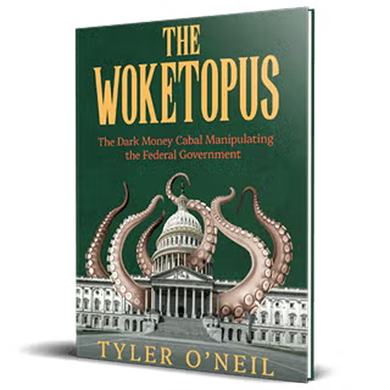
Read the first chapter of The Woketopus right now for FREE
Today, even with President Trump’s victory, leftist elites have their tentacles in every aspect of our government.
The Daily Signal’s own Tyler O’Neil exposes this leftist cabal in his new book, The Woketopus: The Dark Money Cabal Manipulating the Federal Government.
In this book, O’Neil reveals how the Left’s NGO apparatus pursues its woke agenda, maneuvering like an octopus by circumventing Congress and entrenching its interests in the federal government.
You can read the first chapter of this new book for FREE in this eBook, The Woketopus: Chapter One using the secure link below.
TRENDING ARTICLES


The Daily Signal depends on the support of readers like you.
RELATED ARTICLES



Don’t miss the

Don’t miss the signal