
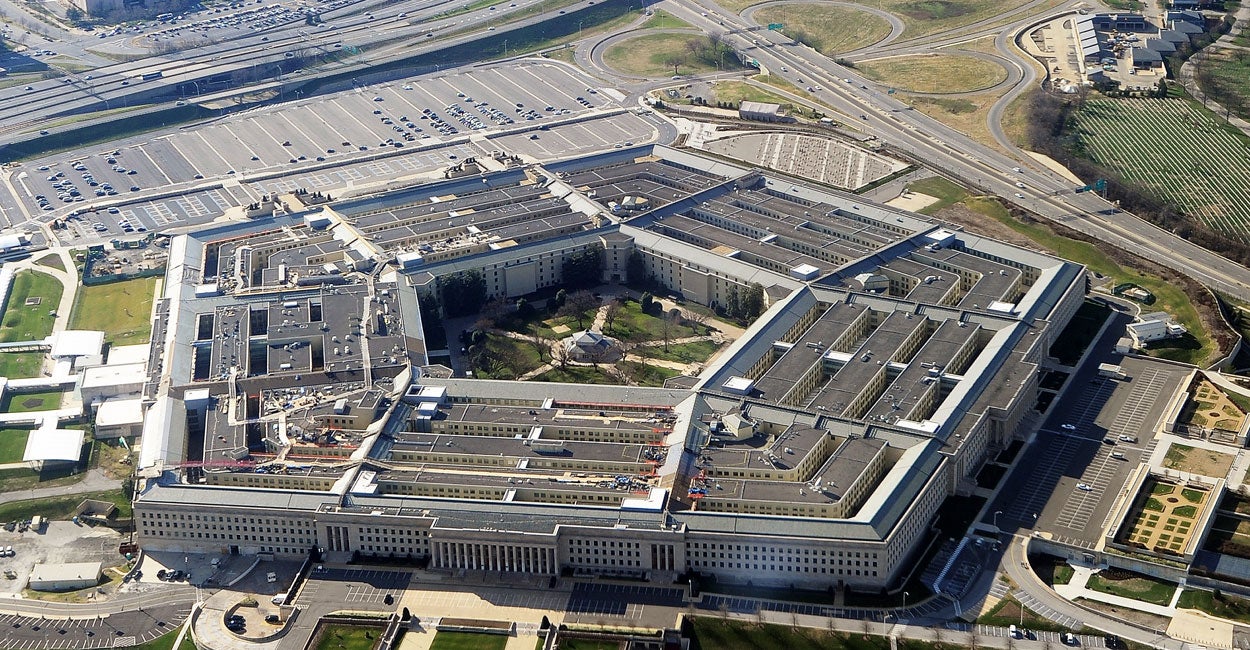
Many people around the world will be watching and waiting to see how the next American election turns out, but one group doesn’t have that luxury: those in the Pentagon.
They have a little less than two years to get ready to explain to the next administration, a new Congress, and their fellow Americans how they plan to protect America from potential aggressors such as China, Russia, and Iran.
The U.S. military is in a strange place. Likely as not, America won’t be looking to start any new wars anytime soon. Congress passed a two-year budget deal that would deliver the military sustained and consistent funding through the next two fiscal years, and Washington is distracted by a divisive and bitter no-holds-barred political struggle for power.
So the two sides will war over a lot of issues, but war itself probably won’t top the list. This election cycle is proving to be mostly about domestic issues. In short, the Pentagon isn’t the center of attention.
What this represents to the military is an opportunity—an opportunity to use that time to make a clear and compelling case for what capabilities America’s military will bring to the table to protect America’s interest over the long term and ensure the global stability that suits the U.S. and its friends and allies.
On the high end, the U.S. needs to demonstrate the capacity to deter great power conflict. Right now, Russia, China, Iran, and North Korea share a common goal. They would like to “win without fighting.” In other words, they would like to beat the U.S. without getting into a military confrontation where they know they’d have at least as much to lose as we do—if not more.
TRENDING ARTICLES



We need to keep it that way. We have to remain able to demonstrate that we can fight and win the big ones, so no ever even thinks about giving it a shot.
In particular, the U.S. has to refurbish its capacity to lead in large-scale conventional conflicts, operating well above the level of ground brigades, fighter sorties, and the naval task force deployments as it does now. The U.S. must be able lead, fight, and sustain coalition armies fighting on land, at sea, and in the air—as well as in space and cyberspace.
Just deterring big wars, however, isn’t enough. America’s competitors will look for other ways to meddle, undermine, and fracture America’s power and alliances. These competitors want to get their way by engaging in operations below the level of general wars.
The U.S. has to sustain the capability and capacity to operate freely, particularly where America’s vital interests are at stake. This means working with our allies in Europe; checkmating Iran in the Middle East, and working for a free and open Indo-Pacific in the Far East.
The Pentagon doesn’t have the luxury of focusing only on one or two of these regions. You can be sure that the minute the U.S. steps back in any of these areas, one of our competitors will step up in our place.
Finally, the U.S. can’t forget the “low” end of conflict. This administration would like to finish in places such as Iraq, Syria, and Afghanistan. But while we would like to forget about this kind of conflict, others won’t. Like it or not, the U.S. must assume that sooner or later it will have to train, assist, and support allies or other countries struggling with the challenges of unconventional conflict and political warfare.
The U.S. shouldn’t lose its muscle memory for low-end conflict. The Army, for example, ought to retain its robust Security Assistance Brigade capability.
If the Pentagon does its job right between now and the election, it can demonstrate that while America’s military isn’t cheap, it’s a bargain for sustaining the freedom, prosperity, and security of Americans well into the 22nd century.
Distributed by Tribune Content Agency, LLC.


Read the first chapter of The Woketopus right now for FREE
Today, even with President Trump’s victory, leftist elites have their tentacles in every aspect of our government.
The Daily Signal’s own Tyler O’Neil exposes this leftist cabal in his new book, The Woketopus: The Dark Money Cabal Manipulating the Federal Government.
In this book, O’Neil reveals how the Left’s NGO apparatus pursues its woke agenda, maneuvering like an octopus by circumventing Congress and entrenching its interests in the federal government.
You can read the first chapter of this new book for FREE in this eBook, The Woketopus: Chapter One using the secure link below.

The Daily Signal depends on the support of readers like you.
RELATED ARTICLES





Don’t miss the

Don’t miss the signal
