
President Donald Trump signed into law the Economic Growth, Regulatory Relief, and Consumer Protection Act on May 24 to, among other things, provide exemptions to smaller banks from several Dodd-Frank Act regulations.
But although regulatory relief is welcomed, there is still a great deal of red tape to cut and revisions to make to permanently fix the regulatory mess created by the Dodd-Frank Act.
Data suggests the Dodd-Frank Act has reduced the viability of small banks, curtailed small business lending, and downshifted the pace of economic growth.
On balance, the Dodd-Frank Act (on top of other regulation) has made entry into banking so difficult there have been virtually no new bank charters since 2011. In contrast, from 1990 to 2008, the number of bank charters ranged from 60 to 270.
Additionally, the Dodd-Frank Act imposed stricter compliance requirements for making loans and operating a bank, which discouraged banks from making smaller loans.
This increased cost particularly hurt smaller banks, which traditionally have a higher small business share of commercial and industrial loans compared to larger banks.
TRENDING ARTICLES



Yet, it is important to note that this decrease in the distribution of smaller loans is not unique to small banks.
Data suggests that since 2010, when Dodd-Frank was enacted, commercial and industrial loans of less than $1 million at banks with $300 million or more in assets have “plunged,” and there has been “an 80 percent rise in real aggregate volume of loans over $1 million in size since 2010.”
These skewed patterns have not always existed.
According to the Hoover Institution, “between 1993 and 2010, the small and large size real loan series trended together and had risen by roughly similar amounts: 79 and 67 percent, respectively.”
Furthermore, large and small banks combined have seen a decrease of approximately 9 percentage points in the small loan share of commercial and industrial loans since 2010.
Other research indicates Dodd-Frank regulation has contributed to a slowdown in economic growth, so many businesses will welcome the regulatory relief in the Economic Growth, Regulatory Relief, and Consumer Protection Act.
This new law provides a limited regulatory off-ramp (relief from regulation in exchange for higher equity capital) for some banks with less than $10 billion in total assets. This gives smaller banks more flexibility in how they assess risks when making loans, which should incentivize them to make more smaller loans.
This is good, but the legislation leaves in place many of the other growth-killing aspects of the Dodd-Frank Act.
To remedy these problems, legislators should provide a broad off-ramp and expand the concept to provide broader regulatory relief. Using such an off-ramp to provide exemptions for all banks from risk-weighted capital rules and the Ability to Repay/Qualified Mortgage rules are just two examples that would provide widespread benefits. Many more ideas can be found in this Heritage Foundation issue brief and backgrounder.

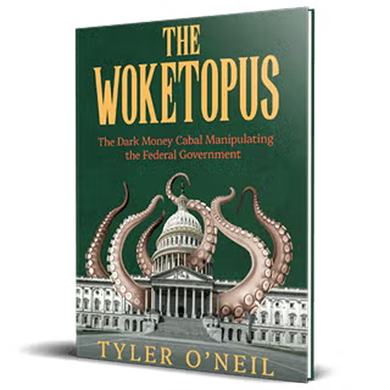
Read the first chapter of The Woketopus right now for FREE
Today, even with President Trump’s victory, leftist elites have their tentacles in every aspect of our government.
The Daily Signal’s own Tyler O’Neil exposes this leftist cabal in his new book, The Woketopus: The Dark Money Cabal Manipulating the Federal Government.
In this book, O’Neil reveals how the Left’s NGO apparatus pursues its woke agenda, maneuvering like an octopus by circumventing Congress and entrenching its interests in the federal government.
You can read the first chapter of this new book for FREE in this eBook, The Woketopus: Chapter One using the secure link below.


The Daily Signal depends on the support of readers like you.
RELATED ARTICLES





Don’t miss the

Don’t miss the signal