
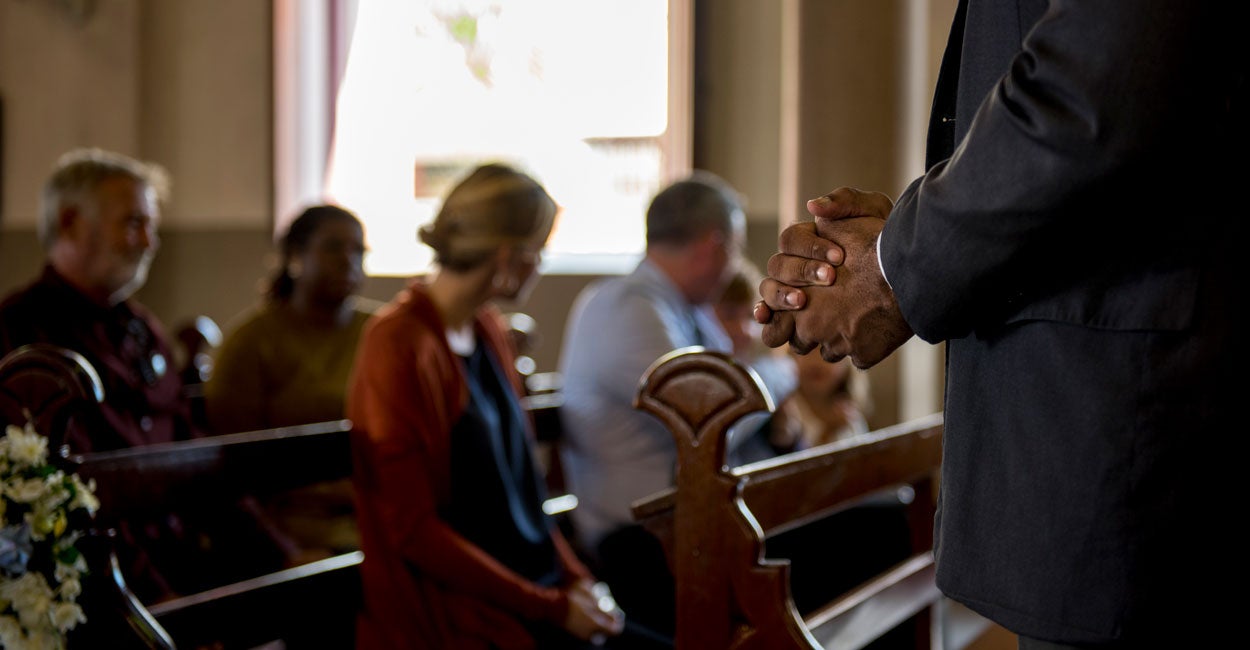
Some recent celebrity suicides have sparked much discussion about depression and mental illness. There was, however, little talk of spiritual health.
That’s unfortunate. Even as the suicide rate rises, a growing body of research testifies to a positive relationship between faith and mental health. The help so many need may be as close as the nearest house of worship.
Suicide is now the 10th leading cause of death among American adults and the second leading cause among youth and adolescents.
Aaron Kheriaty, author of “Dying of Despair,” argues that rising suicide rates and many other societal ills can be traced to increased social fragmentation. He concurs with a former U.S. surgeon general’s analysis that “social isolation is a major public health crisis, on par with heart disease or cancer.”
Similarly, Nobel Prize winner Angus Deaton and Princeton University economist Anne Case concluded that the rise in “deaths of despair” is a “failure of spiritual and social life.”
Social fragmentation can damage our emotional and mental health, but faith—and faith communities—can be a powerful force for connectedness, for nurturing a sense of belonging. As John Stonestreet of the Colson Center has observed, “One of the characteristics of regular churchgoing is that it increases social ties and strengthens already existing ones.”
TRENDING ARTICLES



Yet faith and fellowship is receding from the daily lives of a growing number of Americans. Weekly church attendance has dropped by almost a third among Americans with a high school diploma or less.
While career success is often depicted as climbing a ladder, personal success may be envisioned as building a web of healthy relationships, each adding spiritual, emotional, and mental strength. Few people are better situated to help build these relationships than local religious leaders.
Recognizing this, priests, pastors, imams, and rabbis are increasingly becoming more active in suicide prevention initiatives. More than 100 imams, for example, have successfully completed a suicide-prevention education program offered by Farha Abbasi, assistant professor of psychiatry at Michigan State University.
Faith-based counselling has some inherent advantages. Many people resist seeking medical treatment for depression due to the lingering stigma attached to mental illness. They may feel far more comfortable seeking understanding and compassion in a house of worship rather than a medical facility to discuss what’s troubling them.
A solid body of research studies supports the connection between spiritual faith and mental health. Notes professor Harold Koenig of Duke University Medical Center who studies post-traumatic stress disorder: “Spiritual involvement has been shown to distinguish resilient from non-resilient veterans by increasing emotional stability, serving as a protective psychosocial factor, and increasing social connectedness.”
A sense of the transcendent may also serve as a final barrier against the fear of life overcoming the fear of death. When country music legend Johnny Cash bottomed out in his struggle against drug addiction, he crawled into a cave to die. There, he had a spiritual awakening that drew him back from the brink.
Describing the experience later, he said, a feeling of tranquility came over him and “I became conscious of a very clear, simple idea: I was not in charge of my destiny. I was not in charge of my own death. I was going to die at God’s time, not mine.”
Even cultural and political leaders who are not devout would be wise to recognize the power of spirituality to encourage the struggling and build their support networks. A mother who lost her son to depression, addiction, and suicide recently wrote: “Connection and love are probably the most important component to healing our culture. Who better to lead that change than our faith leaders and houses of worship?”
The more distant we grow from one another, the more likely we are to break down, mentally, emotionally, psychologically, and physically. We should not underestimate our need for one another and the power of faith to give the vulnerable hope to face their struggles.
As David Litts of the National Action Alliance for Suicide Prevention says, “Where there’s faith, there’s hope, and where there’s hope, there’s life.”
Originally published by The Kansas City Star.


Read the first chapter of The Woketopus right now for FREE
Today, even with President Trump’s victory, leftist elites have their tentacles in every aspect of our government.
The Daily Signal’s own Tyler O’Neil exposes this leftist cabal in his new book, The Woketopus: The Dark Money Cabal Manipulating the Federal Government.
In this book, O’Neil reveals how the Left’s NGO apparatus pursues its woke agenda, maneuvering like an octopus by circumventing Congress and entrenching its interests in the federal government.
You can read the first chapter of this new book for FREE in this eBook, The Woketopus: Chapter One using the secure link below.



The Daily Signal depends on the support of readers like you.
RELATED ARTICLES





Don’t miss the

Don’t miss the signal