The U.S. has reportedly been monitoring Russian naval activity along sea routes transited by undersea communications cables. News reports over the weekend speculated that Russia may be laying the groundwork to sever these cables in the event of war with the U.S., or to tap into them for intelligence gathering.
Installation of the first underwater cable—a telegraph cable—began in 1854, connecting the Canadian coast with Ireland. Since then, undersea cables have become a vital part of the global communications infrastructure. Presently, undersea cables carry more than 95 percent of daily communications and conduct over $10 trillion in business per day.
Fiber-optic cables can carry far more information than satellites, and for a fraction of the cost. If Russia were to sever the undersea cables leading to and from the U.S., it could potentially cripple the U.S. economy and interfere with its military operations. But how realistic is a move by another state against undersea cables—and how worried should the U.S. be?
During World War I, the Central and Allied powers both targeted transatlantic communications cables. During WWII and the Cold War, U.S. military planners were concerned that the Axis powers and the Soviet Union would sever undersea cables in the conduct of war. Neither of these fears, however, were realized.
Jonathan Reed Winkler, associate professor at Wright State University and author of Nexus: Strategic Communications and American Security in World War I, said in an interview with The Heritage Foundation that the fear that undersea cables could be cut “are not new—they’re at least a century old at this point—and they have constantly spurred U.S. plans for continuous, reliable communications with other countries and our forces arranged around the world in times of peace and crisis.”
Severing undersea cables is not an easy task. Some cables lie deep on the ocean floor, sometimes as deep as Mount Everest is tall. Additionally, there is risk of electrocution, detection, and, of course, the repercussions on one’s own economy and communications in an interconnected world.
TRENDING ARTICLES


Moreover, the U.S. is connected to the world via a host of different undersea cables, as well as satellites and “secret cables,” which the U.S. uses for military operations and whose number and location are unknown.
The risk that Russia (or any other nation, for that matter) would cut the U.S.’s undersea communications cables is low. However, increased Russian naval activity near cable transit zones is a reminder that the U.S. should continue to invest in building and maintaining vital redundancies for the nation’s communications infrastructure.
Repairing cables requires specialized equipment and knowledge. The U.S. needs to find ways to maintain its capacity to repair damage, whether intentional or unintentional, to undersea cables. The U.S. should ensure that it remains connected to the world through enough links so that isolating the nation becomes a practical impossibility.

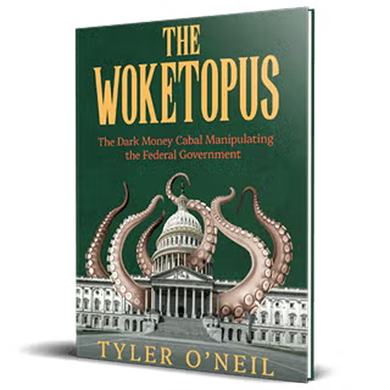
Read the first chapter of The Woketopus right now for FREE
Today, even with President Trump’s victory, leftist elites have their tentacles in every aspect of our government.
The Daily Signal’s own Tyler O’Neil exposes this leftist cabal in his new book, The Woketopus: The Dark Money Cabal Manipulating the Federal Government.
In this book, O’Neil reveals how the Left’s NGO apparatus pursues its woke agenda, maneuvering like an octopus by circumventing Congress and entrenching its interests in the federal government.
You can read the first chapter of this new book for FREE in this eBook, The Woketopus: Chapter One using the secure link below.


The Daily Signal depends on the support of readers like you.
RELATED ARTICLES




Don’t miss the

Don’t miss the signal