
It’s March 16, 2015, and it is the day the debt limit returns—with a vengeance.
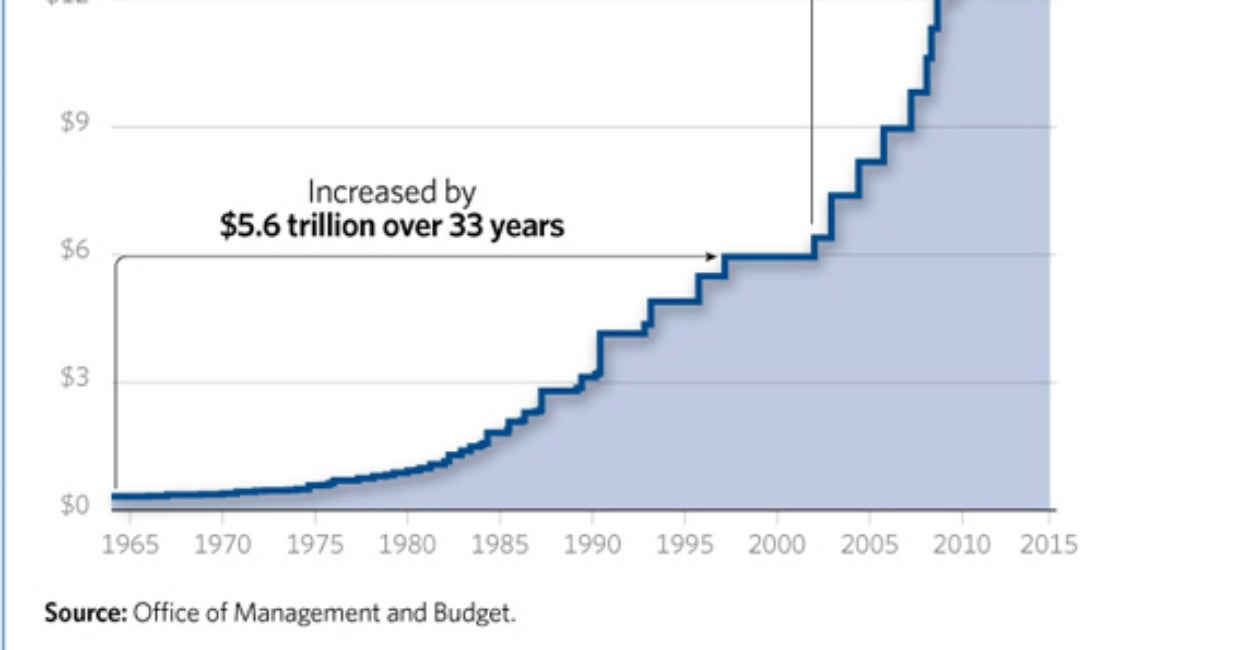
Since Congress suspended the debt limit for more than a year last February, the debt subject to the limit has grown by nearly $1 trillion, from $17.2 trillion to more than $18.1 trillion. A $900 billion increase in the national debt adds more than $2,800 in additional government debt for every American.
Over the past 13 years, the debt subject to the limit has increased by nearly $12 trillion. The largest share of this debt is called U.S. public debt. This is the debt the government has sold in credit markets to investors in the U.S. and abroad, including China, Japan, and European nation countries.
Public debt doubled since before the Great Recession, and is now at levels not seen since right after World War II. Now it’s at $41,000 for every American, and a child born in 2015 will be faced with a public debt of $142,000 by the time he or she leaves college, absent budget reforms.
The other part of the debt subject to the limit is debt that government agencies have borrowed from each other, like payroll taxes borrowed from the Social Security trust fund to fund other government spending. As these debts come due, the federal government sells more treasury securities in credit markets and over time more and more of the intragovernmental debt will become public debt.
TRENDING ARTICLES



Why does the debt matter? Extensive research shows that excessive debt burdens harm job growth and ultimately lower Americans' personal incomes. Unless America changes course soon, younger and future generations will inherit a massive national debt and a less prosperous nation.
To help all Americans understand what our nation's spending, debt, and taxes mean for them and their families—as well as what solutions can point the way forward—The Heritage Foundation's Federal Budget in Pictures, released today, offers a unique tool to learn about these vital issues in a clear, compelling way.
In 21 easily accessible and downloadable charts, the Federal Budget in Pictures lays out who pays how much in taxes, where every federal dollar goes, which programs are growing and which are shrinking, and how high the debt will grow if Congress fails to reform the budget in time.
The 2015 Federal Budget in Pictures helps Americans understand the severity of the nation's current fiscal situation. Lawmakers must make the tough choices to cut government spending, just as American households have trimmed back their own unnecessary spending in recent years.
As the new Congress debates its fiscal year 2016 budget it should seek to change the nation's dangerous fiscal course, support a budget based on real constitutional priorities, and unshackle the enormous power of free people to create jobs, wealth, and prosperity.
Read the first chapter of The Woketopus right now for FREE
Today, even with President Trump’s victory, leftist elites have their tentacles in every aspect of our government.
The Daily Signal’s own Tyler O’Neil exposes this leftist cabal in his new book, The Woketopus: The Dark Money Cabal Manipulating the Federal Government.
In this book, O’Neil reveals how the Left’s NGO apparatus pursues its woke agenda, maneuvering like an octopus by circumventing Congress and entrenching its interests in the federal government.
You can read the first chapter of this new book for FREE in this eBook, The Woketopus: Chapter One using the secure link below.
TRENDING ARTICLES

The Daily Signal depends on the support of readers like you.
RELATED ARTICLES





Don’t miss the

Don’t miss the signal