
Suspected Russian Penetration of U.S. Critical Infrastructure Calls for Firm Response
When people think of computer hacking, China immediately comes to mind. Recent news reports, however, puts the spotlight on Russia as a sophisticated state player silently infiltrating U.S. cyber systems. ABC News reported that a “Trojan Horse” malware program, reportedly of Russian origin, infiltrated the software of critical infrastructures in the U.S. and has been around since 2011.
This information comes after the release of a FireEye report indicating Russian cyber espionage targeted NATO, eastern European countries, and defense organizations since 2007. Russia was also caught releasing malware through a recent campaign dubbed Sandworm.
It is currently unknown which critical infrastructure networks were infiltrated, but according to the Department of Homeland Security, critical infrastructure sectors are
assets, systems, and networks, whether physical or virtual, so vital to the United States that their incapacitation or destruction would have a debilitating effect on security, national economic security, national public health or safety, or any combination thereof.
Critical infrastructures, like water and wastewater systems, nuclear power plants, and the electric grid, are foundational to Americans’ ability to work and live. The ability to infiltrate and potentially degrade or disable these systems poses a serious threat.
To protect against these cyber attacks, the U.S. should collaborate with critical infrastructure owners to enhance cybersecurity measures through education and training, cybersecurity insurance, and information sharing. Information sharing between the government and private companies is a vital tool to counter threats.
TRENDING ARTICLES



Beyond just playing defense, the U.S. should lead international efforts to hold Russia accountable for its actions. Making it very costly for Russia to engage in these activities would hopefully deter them from future cyber espionage and attacks. Legal action, economic sanctions, and travel restrictions are tools the U.S. can use to show Russia that we take their actions very seriously. The U.S. can also bolster support for our eastern European allies to ensure that Russia knows the U.S. will not back down.
In 2013, the U.S. signed a cybersecurity agreement with Russia hoping to create “confidence-building measures that would increase transparency and improve relations between the two countries.” Yet, cooperation with aggressive states has failed in the past, only encouraging them to continue acting maliciously. The U.S. should not be naïve in thinking that we, the victim, can get along with the robber.
Underestimating the threat Russia poses with its cyber attacks and espionage is unwise. Instead, the U.S. government must respond forcefully to deter further hacks.
Ellen Prichard is currently a member of the Young Leaders Program at The Heritage Foundation. For more information on interning at Heritage, please click here.

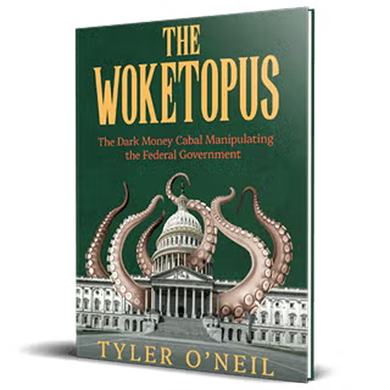
Read the first chapter of The Woketopus right now for FREE
Today, even with President Trump’s victory, leftist elites have their tentacles in every aspect of our government.
The Daily Signal’s own Tyler O’Neil exposes this leftist cabal in his new book, The Woketopus: The Dark Money Cabal Manipulating the Federal Government.
In this book, O’Neil reveals how the Left’s NGO apparatus pursues its woke agenda, maneuvering like an octopus by circumventing Congress and entrenching its interests in the federal government.
You can read the first chapter of this new book for FREE in this eBook, The Woketopus: Chapter One using the secure link below.

The Daily Signal depends on the support of readers like you.
RELATED ARTICLES





Don’t miss the

Don’t miss the signal