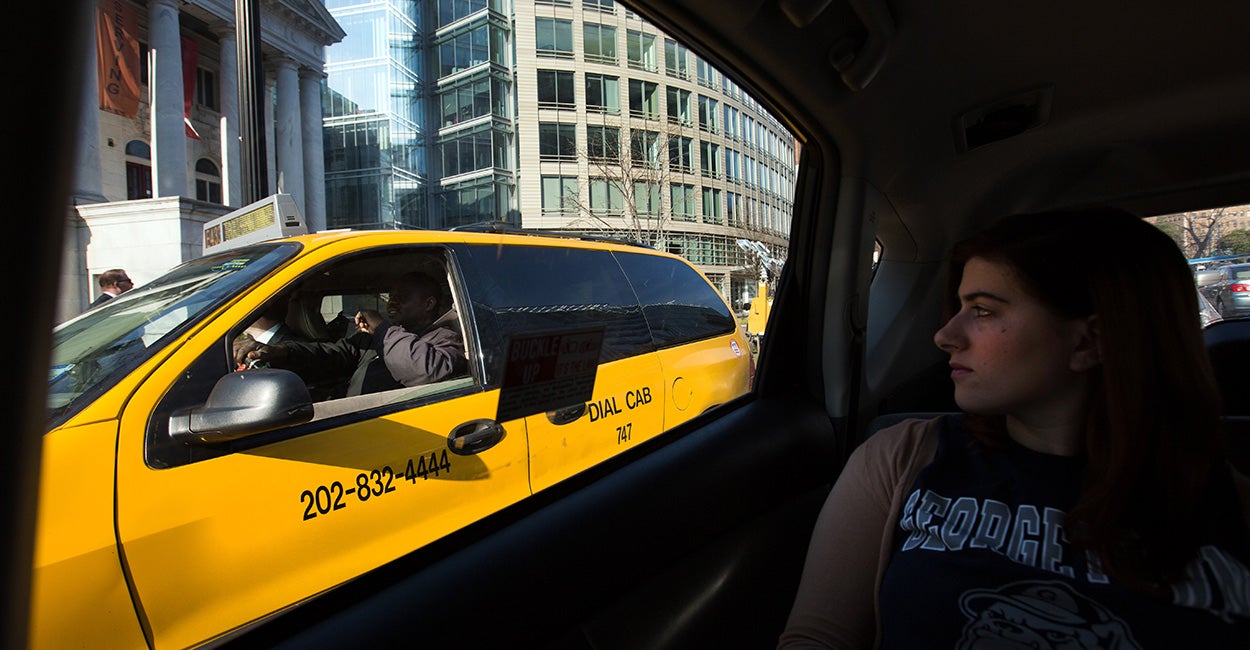
For cab companies and limo services, ridesharing startups such as Uber, Lyft and Sidecar are about as welcome as a blown tire on a crowded freeway.
This chart focusing on the San Francisco Bay Area may go a long way toward explaining why.
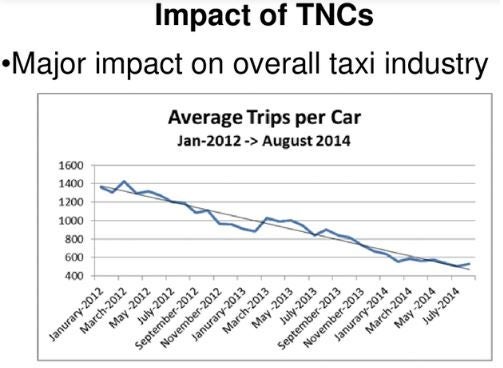
Dubbed the "Uber Effect,” the chart, presented recently at a municipal transportation agency meeting, shows how many fares cab companies have lost over the past two years, since ridesharing companies, also known as transportation network companies, burst onto the Bay Area business landscape.
In that time, Bay Area passengers increasingly have used ridesharing to help them get to work, airports, train stations and sports events.
>>> Uber Fights to Win the Regulatory War (And You Should Want It To)
TRENDING ARTICLES



Other factors could account for the drop, but the numbers reflect the threat cabbies and limo companies see from the blossoming ridesharing market.
“This is like a pirate cab company coming into the area and putting up a taxi sign and running around,” said Raymond Sanchez, an attorney for the Yellow Cab Co. of Albuquerque, N.M.
Sanchez has been trying to persuade the New Mexico Public Regulation Commission to take a hard stand against Uber and Lyft, which opened for business this summer in New Mexico’s largest city.
>>> Another State Attempts to Block Ride-Sharing Companies Uber, Lyft
“Taxi companies are worried about ridesharing companies like Uber and Lyft, and they should be,” said Matthew Feeney, policy analyst at the Cato Institute. “It’s like evolution. You adapt or you die.”
The debate is playing out in cities across the country.
Last Friday, a district court judge in Albuquerque refused to impose a temporary restraining order, which taxis and limos wanted to effectively shut down Uber and Lyft. The judge said the decision is up to state regulators, not the courts.
>>> State Strikes Deal to Let Uber, Lyft Operate … With a Few Strings Attached
In the nation’s capital, the city council proposed forcing ridesharing companies to charge no less than five times what D.C. cab companies charge customers, but it had to back down after it was flooded by calls from angry consumers.
“Consumers have spoken,” said Mark Perry, professor of Finance and Business Economics at the University of Michigan-Flint. “People do not want the old [taxi] model … The old model is a cartel.”
Disclosure: An executive of Heritage Action for America, a sister organization of The Heritage Foundation, is married to an executive of Uber.
Read the first chapter of The Woketopus right now for FREE
Today, even with President Trump’s victory, leftist elites have their tentacles in every aspect of our government.
The Daily Signal’s own Tyler O’Neil exposes this leftist cabal in his new book, The Woketopus: The Dark Money Cabal Manipulating the Federal Government.
In this book, O’Neil reveals how the Left’s NGO apparatus pursues its woke agenda, maneuvering like an octopus by circumventing Congress and entrenching its interests in the federal government.
You can read the first chapter of this new book for FREE in this eBook, The Woketopus: Chapter One using the secure link below.




The Daily Signal depends on the support of readers like you.
RELATED ARTICLES



Don’t miss the

Don’t miss the signal