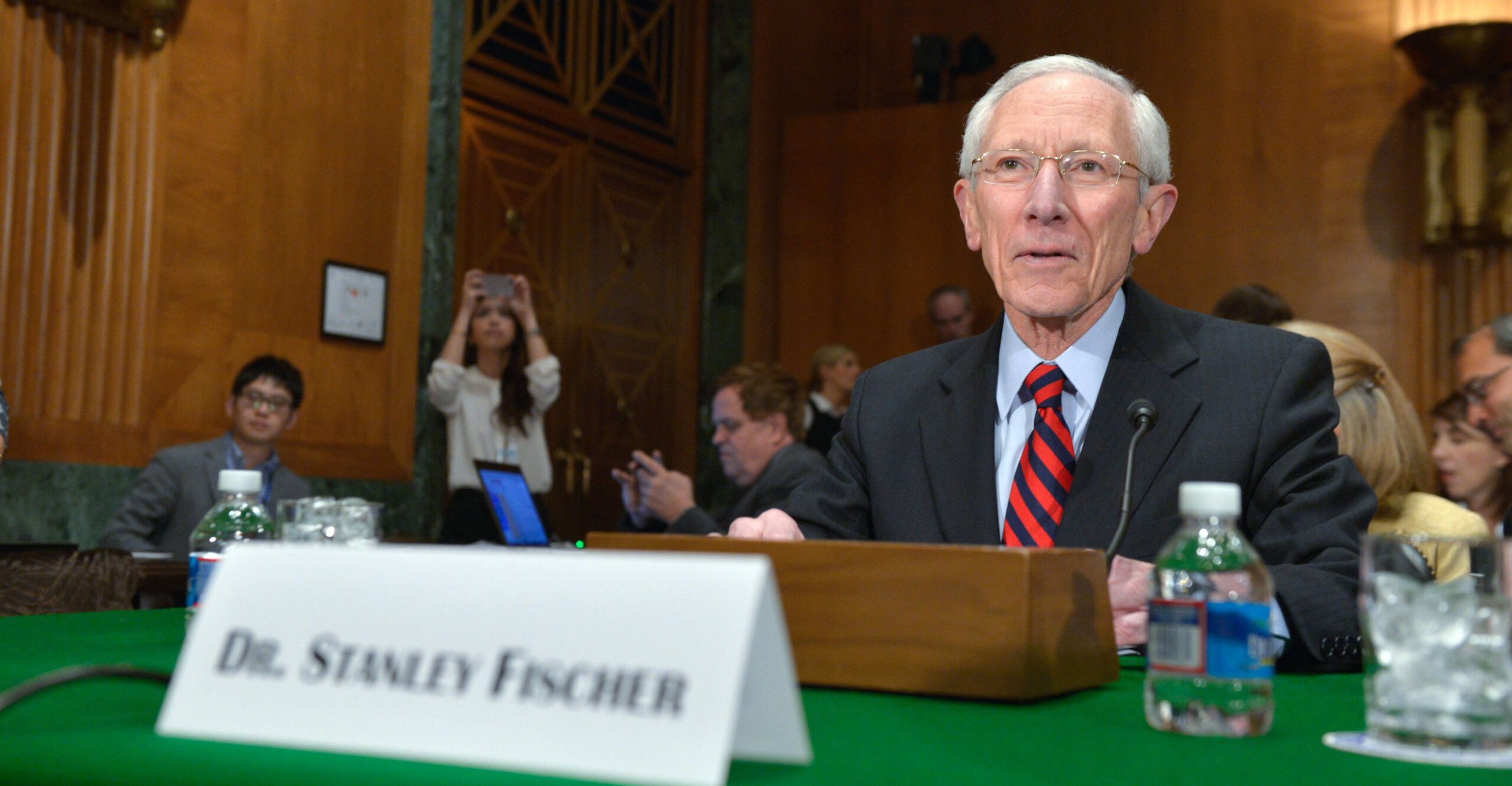
New Federal Reserve Vice Chairman Stanley Fischer made headlines yesterday for suggesting that regulators should not arbitrarily start breaking up large banks, and that’s encouraging news. In a speech to the National Bureau of Economic Research, Fischer pointed out that breaking up banks would be incredibly complex and possibly futile.
But Fischer’s speech includes many bad ideas that overshadow his statements on breaking up banks.
For starters, Fischer wants banking regulators to start “broadening their goals to include financial stability” as a way to prevent future crises. Aside from the merits of such a policy, the comments are bizarre because the 2010 Dodd-Frank Wall Street Reform and Consumer Protection Act gave regulators this mandate.
Dodd-Frank created the Financial Stability Oversight Council, a committee of regulators with a broad mandate to stamp out threats to financial stability. The FSOC is known mostly for designating large financial firms as systemically important financial institutions–or SIFIs–but it can require new regulations for virtually any financial company, for nearly any stability-related reason.
Fischer also perpetuates the myth regulators can now protect the world from financial meltdowns because they have new “macroprudential tools” at their disposal. This entire concept is, at best, misleading.
Supposedly, after more than a century of regulating financial markets, the Fed finally is focused on what matters. It no longer is blinded by the importance of individual firms’ safety and soundness. Instead, it’s now focused on how individual firm risk fits in with the macro economy.
TRENDING ARTICLES



Are we really to believe that the Federal Reserve was created simply to help save a few banks? That it had nothing to do with stopping bank panics from spreading to the broader economy?
And what sort of “macroprudential tools” are regulators using now? Fischer pointed to examples such as “increasing bank capital requirements, restrictions on the terms of the mortgages they offered and limits on loan-to-value and payment-to-income ratios.” These, as well as nearly every other Dodd-Frank inspired capital regulation, are the exact same types of rules that have been imposed for decades.
The truth is we’re no safer now than we were before the 2008 crisis. And although Fischer seems hesitant to use Federal Reserve interest-rate policy to head off a new asset price bubble, his reasoning isn’t all that assuring. The Washington Post reports:
Fischer did not weigh in on whether central banks should use monetary policy—namely, interest rates—to combat bubbles. But he did point out that policymakers do not have a strong understanding of how well their regulatory tool kit might work.
Hopefully, Fischer won’t spend too much time directing his colleagues to perfect their “took kit.” Federal Reserve manipulation of interest rates causes enough market distortion as it is, and even if policymakers could agree on what various interest rates and asset prices should be, there’s good reason to believe they can’t make these rates and prices exactly what they want them to be.
This problem is especially clear with regard to long-term interest rates. In a recent response to the Senate Budget Committee’s Questions for the Record, Fed Chair Janet Yellen noted that “The Federal Reserve’s control over longer-term interest rates is more indirect and more limited than its influence over the level of the federal funds rate.”
Unfortunately, Fischer is just one more in a long line of policymakers who wants us all to believe the Fed can achieve almost any economic goal it wants. History tells us otherwise.
Read Yellen’s letter to the Budget Committee in its entirety here: Yellen Letter by The Heritage Foundation

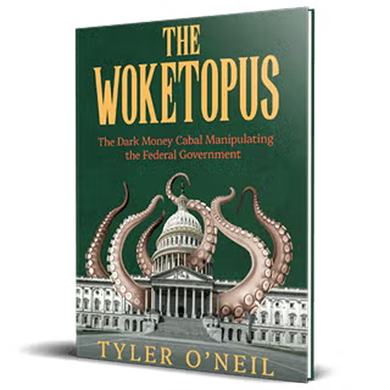
Read the first chapter of The Woketopus right now for FREE
Today, even with President Trump’s victory, leftist elites have their tentacles in every aspect of our government.
The Daily Signal’s own Tyler O’Neil exposes this leftist cabal in his new book, The Woketopus: The Dark Money Cabal Manipulating the Federal Government.
In this book, O’Neil reveals how the Left’s NGO apparatus pursues its woke agenda, maneuvering like an octopus by circumventing Congress and entrenching its interests in the federal government.
You can read the first chapter of this new book for FREE in this eBook, The Woketopus: Chapter One using the secure link below.
TRENDING ARTICLES


The Daily Signal depends on the support of readers like you.
RELATED ARTICLES





Don’t miss the

Don’t miss the signal