
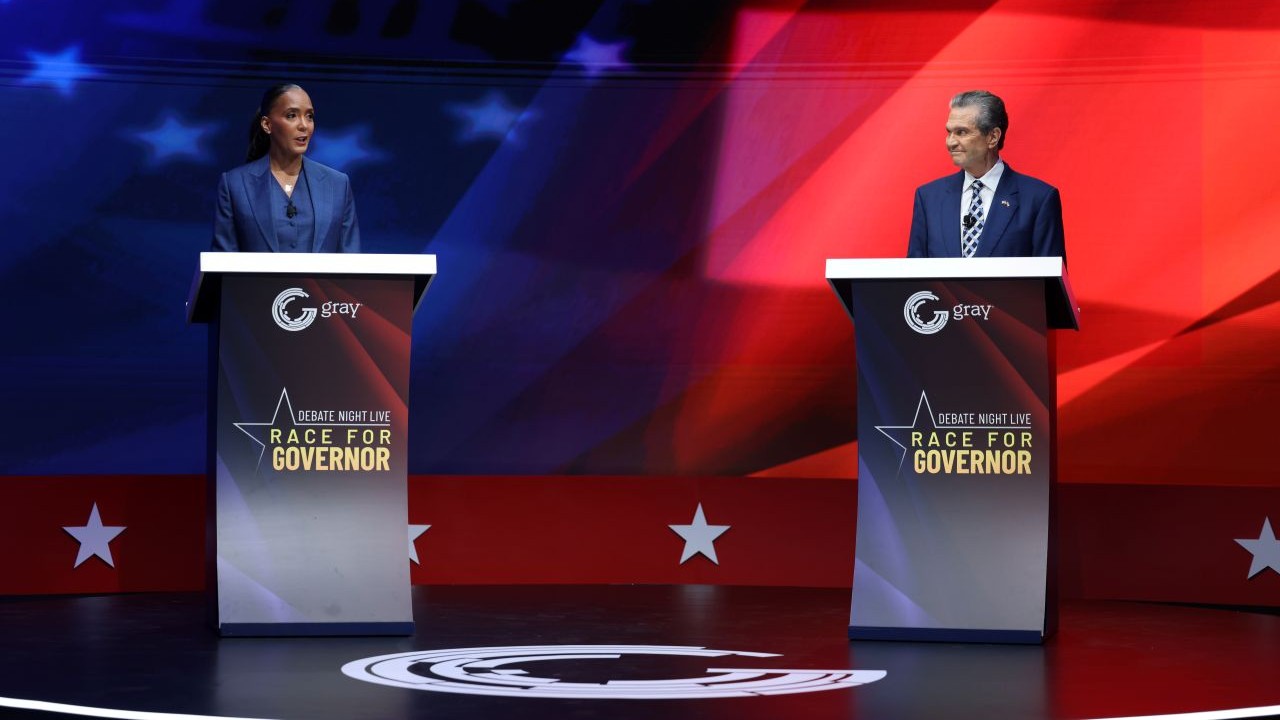
Affordability, health care, and technology: These were three main issues that former Mayor Keisha Lance Bottoms and health care executive Rick Jackson were faced with during Tuesday night’s gubernatorial debate in Doraville, Georgia.
The two candidates took the stage, and immediately, attacks began. Bottoms opened by saying, “While my opponent is running to enrich himself and be [President Donald] Trump’s favorite governor, I want to be yours, Georgia, and I hope to earn your vote.”
After describing a rocky and tumultuous childhood, Jackson appealed to voters who may be in the midst of a struggle or challenging time, saying, “I’m running for governor for every Georgian who knows struggle or uncertainty, and wants a better life for their family.”
The debate included undecided voters, both in person and on video, who asked questions to the candidates on issues ranging from affordability to data centers to election security.
The Affordability Question
The first question came from an undecided Fulton County voter named Sri Kaar, who asked about affordability, especially when it comes to the cost of homes and health care.
Jackson answered first, seeking to appeal to low-income voters, saying, “I’ve lived in poverty. I understand exactly what you’re talking about.”
TRENDING ARTICLES



After relating to those who may have found themselves in less-than-fortunate situations, Jackson pointed to Bottoms’ record as mayor of Atlanta, saying, “Your record is who you are.” He added, “Bad mayors don’t make good governors.”
Bottoms answered by discussing potential options for the Peach State, saying, “I would like to create an affordable housing trust fund.” She explained the importance of “making sure that young people … have an opportunity to own their own homes.”
The second question came from a veteran named David from Chatham County, who touched on affordability in a different light, asking about taxes rising drastically.
Bottoms answered first, discussing the auto insurance tax that gets “pass[ed] on to consumers,” as well as the homeowners insurance tax. She added that, as governor, she plans to “suspend the grocery taxes.”
Jackson replied by pledging his commitment to “cut the income tax in half [during] the first term.” After making the promise, he added that if he doesn’t follow through on his promise, he “won’t run again.”
Health Care for All?
Later in the debate, James from Bartow County asked about health care coverage, touching on a subject that has seemingly affected many Americans over the past year: rising insurance costs.
James asked about each candidate’s plan to expand Medicaid across the state, and Bottoms answered first, asserting, “I have repeatedly said that I want to expand Medicaid in this state.”
She followed her assertion by taking a jab at Jackson, saying, “My opponent has said that he opposes Medicaid expansion. My opponent has made money off of this broken health care system.”
Jackson responded by saying, “I am going to expand Medicaid to cover everybody. I just want to do it in a way that we don’t lose $4.5 billion that we’re currently getting for the state, because that would really hurt our hospitals and doctors all over the state.”
He added that he would utilize technology so that people can “know what something costs before you buy it, so that you can shop and save money from that standpoint.”
Data Center Moratorium and State Election Board Removal
Data centers were also addressed during the debate. A voter named Luann asked about data centers, citing her concern that there could be an adverse impact on her “rural community’s water supply.”
Jackson answered first, saying, “I won’t approve a data center unless three things happen: The community absolutely approves it. It has strict [Environmental Protection Agency] standards. Each person in the community gets a benefit of a reduction of their power bill and their property taxes.”
Bottoms, on the other hand, said, “I have called for a pause on the construction of new data centers. Georgia is currently No. 1 in the country for data centers; we need to pause.”
Later on in the night, there was a question from a poll worker, who asked about the State Election Board’s request for the Department of Justice to “investigate and … get involved in the general election in November.”
Jackson answered first, saying, “I don’t think that’s necessary unless Gov. [Brian] Kemp thinks it’s necessary. He would make that decision, and he always makes the right decision when it comes to this.”
Bottoms followed by asserting, “I do want to eliminate that State Election Board that has gone rogue and has been a disaster for the state of Georgia. I also want to make sure that we increase security for people like Greg who are giving of their time to help protect our right to vote.”
Early voting for the Peach State starts on Oct. 13, with Election Day approaching on Nov. 3.


Read the first chapter of The Woketopus right now for FREE
Today, even with President Trump’s victory, leftist elites have their tentacles in every aspect of our government.
The Daily Signal’s own Tyler O’Neil exposes this leftist cabal in his new book, The Woketopus: The Dark Money Cabal Manipulating the Federal Government.
In this book, O’Neil reveals how the Left’s NGO apparatus pursues its woke agenda, maneuvering like an octopus by circumventing Congress and entrenching its interests in the federal government.
You can read the first chapter of this new book for FREE in this eBook, The Woketopus: Chapter One using the secure link below.
TRENDING ARTICLES


The Daily Signal depends on the support of readers like you.
RELATED ARTICLES





Don’t miss the

Don’t miss the signal
