
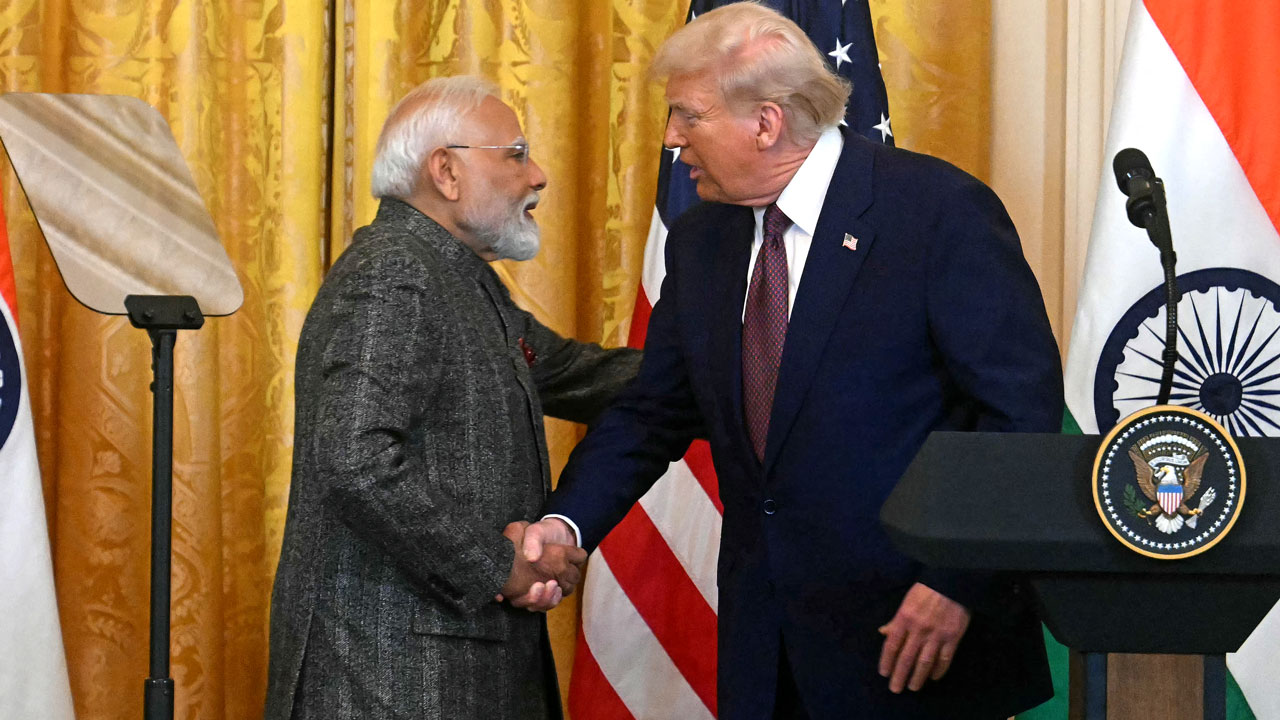
U.S.-India defense cooperation has accelerated in the past decade. Today, India conducts more military exercises with the United States than with any other country. American platforms also underpin some of India’s most important military capabilities. The Indian Navy flies P-8I maritime patrol aircraft, operates MH-60R helicopters, MQ-9B drones, and uses sonobuoys. The Air Force operates C-17 and C-130J transports, Apache attack helicopters, and Chinooks. While the Indian Army uses Howitzers and Excalibur.
The relationship has also moved beyond mere purchases. Apache fuselages and C-130J empennages are manufactured in India for U.S. original equipment manufacturers’ global supply chain. The two countries are pursuing production of GE F414 fighter jet engines in India, alongside cooperation on Javelin missiles and sonobuoys.
Strategic convergences, especially over China, and a joint commitment to ensure a free and open Indo-Pacific explain part of this transformation. However, the upward trajectory in bilateral ties has coincided with another important shift: the reform of India’s defense sector.
India formally opened defense production to private companies before Prime Minister Narendra Modi came to office, but the sector remained dominated by state-owned enterprises and notoriously difficult for both private domestic companies and foreign companies to navigate.
Under Modi, foreign investment rules were liberalized. First, by raising the defense Foreign Direct Investment limit from 26% to 49% and eventually allowing up to 100% under certain conditions. Industrial licensing requirements were simplified, and procurement rules were repeatedly revised to create greater opportunities for private manufacturers and foreign partnerships.
The government also established defense industrial corridors to develop manufacturing clusters and supply chains. Importantly, the corporatization of the colonial era ordinance factory boards was a major industry signal that even the most entrenched parts of the Indian defense ecosystem can be reformed.
TRENDING ARTICLES



The Indian government has also broadened who can participate in defense. Innovations for Defense Excellence was launched in 2018 and was inspired by the U.S. Department of War’s Defense Innovation Unit. Innovations for Defense Excellence created a mechanism for startups and smaller technology companies to work directly on military requirements.
The Defence Acquisition Procedure 2020 and its various amendments further streamlined acquisition rules and created additional pathways for foreign companies to manufacture in India, especially through the Buy (Global) and Strategic Partnership models. Government testing infrastructure was strengthened, and parts of defense research and development have also been opened more widely to private industry, startups, and academia.
These reforms were designed to advance India’s own objective of building a stronger domestic defense industry. However, by virtue of being pro-business they also made India a more accessible and commercially viable market for American companies. U.S. firms gained more Indian partners, more avenues to invest and manufacture locally, and pathways into one of the world’s largest defense markets.
India’s defense reforms and the growing U.S.-India defense ties are especially relevant under President Donald Trump, whose approach with regard to allies and partners has emphasized reciprocity, greater purchases of American goods, and more burden-sharing. A stronger Indian defense market creates more opportunities for U.S. companies, while a stronger Indian defense industry makes India a more capable security partner.
Importantly, India pays for its defense and defense equipment entirely on its own rather than relying on U.S. gifts, grants, or loans.
The benefits also extend beyond the bilateral U.S.-India relationship. India is now exporting defense equipment to 80-plus countries, including in Southeast Asia. As India becomes a larger defense producer and exporter, it can help shoulder more of the regional security burden.
For the Trump administration, India increasingly represents an ideal partner: one that buys more from America, builds with America, and contributes to balancing power in the Indo-Pacific.
This commentary is part of a regular series of articles from the Davis Institute for National Security and Foreign Policy at The Heritage Foundation. Subscribe to the Davis Dispatch to learn more.
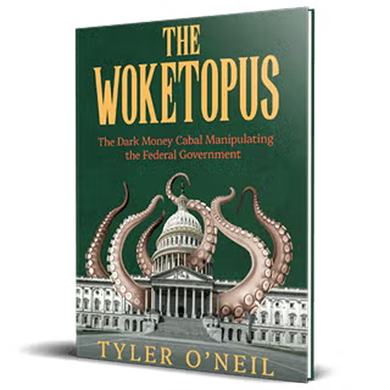
Read the first chapter of The Woketopus right now for FREE
Today, even with President Trump’s victory, leftist elites have their tentacles in every aspect of our government.
The Daily Signal’s own Tyler O’Neil exposes this leftist cabal in his new book, The Woketopus: The Dark Money Cabal Manipulating the Federal Government.
In this book, O’Neil reveals how the Left’s NGO apparatus pursues its woke agenda, maneuvering like an octopus by circumventing Congress and entrenching its interests in the federal government.
You can read the first chapter of this new book for FREE in this eBook, The Woketopus: Chapter One using the secure link below.



The Daily Signal depends on the support of readers like you.
RELATED ARTICLES



Don’t miss the

Don’t miss the signal