For years, America’s biggest technology companies were the loudest corporate cheerleaders for wind and solar.
Microsoft pledged to match its electricity use with 100% renewable energy and to become carbon negative by 2030.
Meta joined RE100, the global corporate club whose members promise 100% renewable electricity.
Silicon Valley poured billions into renewable projects and lent its political muscle to the campaign against fossil fuels.
Then artificial intelligence arrived.
Suddenly the companies telling the rest of us to give up fossil fuels cannot get enough natural gas.
TRENDING ARTICLES



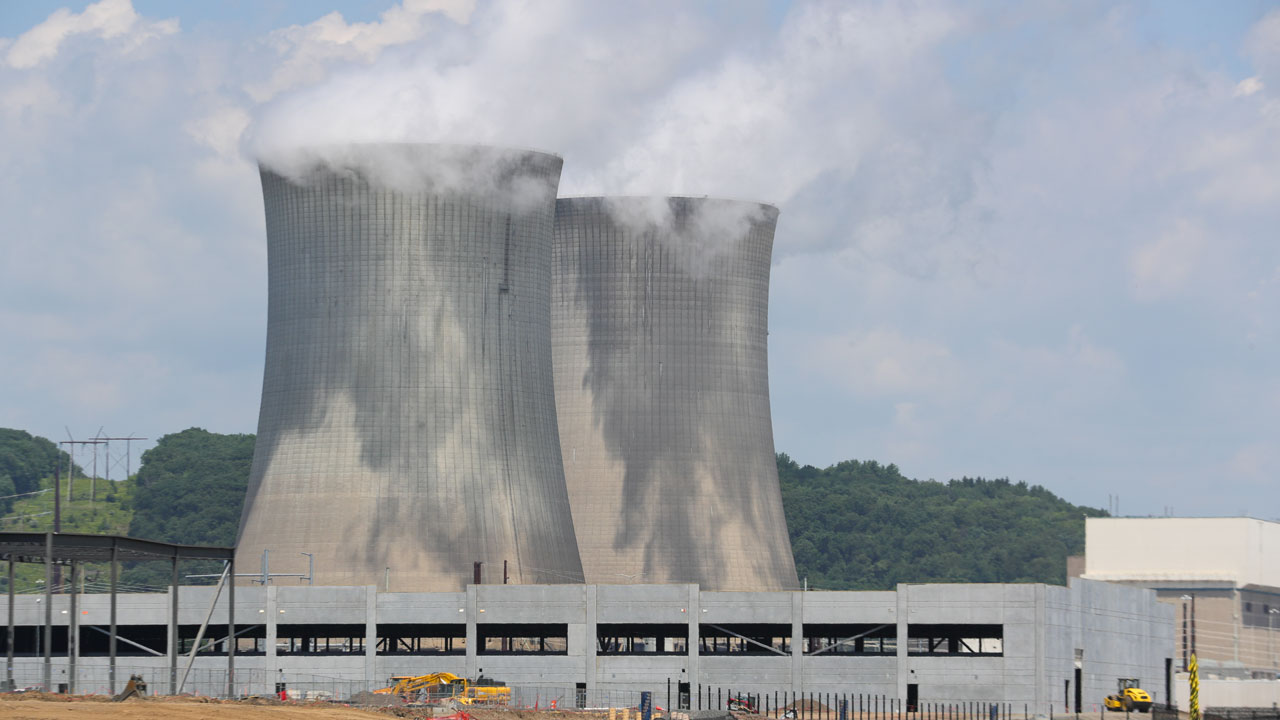
In June, Microsoft signed a 20-year agreement with Chevron for Project Kilby, a natural gas power complex in Reeves County, Texas, dedicated to a Microsoft data center. Planned capacity is about 2.7 gigawatts, roughly two large nuclear reactors, with first power expected in late 2028.
The detail that matters most: those plants are designed to run behind the meter, serving the data center directly, not connected to the Texas grid.
Twenty years is not a bridge fuel. It is a marriage.
Meta went further. Its Hyperion campus in Richland Parish, Louisiana, is scaling toward 5 gigawatts of computing. Meta is paying for roughly 10 new Entergy gas plants, about 7.5 gigawatts, enough power for a small state.
Last month, after about a decade, Meta quit RE100. It still says it matches its electricity use with clean and renewable energy, largely through certificates and contracts. Matching on paper over a year is different from generating power at 2 a.m. on a windless Louisiana night.
I do not blame Microsoft or Meta. I applaud them for facing facts.
AI runs on electricity, continuously. Billion-dollar server halls do not care whether the wind is blowing or what politicians promised. They need power 24 hours a day, 365 days a year.
When hundreds of billions of their own dollars are at stake, Big Tech understands what too many policymakers still dodge. Electricity that might show up is not the same product as electricity that shows up on demand.
Watch what companies do with their money, not what they write in sustainability reports.
They need firm power. Today, that means natural gas. Increasingly, it also means nuclear. Microsoft signed a 20-year deal that is restarting the Three-Mile Island reactor in Pennsylvania. Meta signed a 20-year deal for the Clinton nuclear plant in Illinois.
Both still buy plenty of wind and solar, and that is the point. AI is not proving renewables worthless. It proves they cannot generate electric power all the time.
Imagine a family adds a car that needs no gasoline, with one catch. It runs only when the weather cooperates. They are not selling their dependable car if they want to get around all the time.
Here is the part that should trouble every ratepayer.
About a quarter of the data center capacity now under development plans to build its own generation on-site, roughly 90 gigawatts across 59 tracked projects. Big Tech is not just buying reliable power. It is buying its way off a grid that its own lobbying helped make less reliable and more expensive.
Families, factories, hospitals, and farms cannot do that. We are stuck with the system policy built, one that piled on weather-dependent generation while retiring coal and nuclear plants that ran on demand. Ratepayers pay for two systems and get one.
Our bills keep climbing. Average U.S. electricity prices have risen steadily since 2022, and utilities are asking regulators to approve billions in plants and wires for data centers. Who pays if that demand falls short?
So, ask the obvious question. If firm, always-on electricity is worth 20-year contracts and billions in new gas and nuclear for Microsoft’s servers, why is it not worth the same for our factories, hospitals, farms, and homes?
State legislators and regulators write these rules. They can pay for capacity that actually shows up, price power honestly, and stop forcing the retirement of plants we still need.
Perhaps AI’s first great contribution will not be writing code or answering questions.
Perhaps it reminds America of something we should never have forgotten. Electricity is only valuable when it is there the moment you need it.
We publish a variety of perspectives. Nothing written here is to be construed as representing the views of the Daily Signal.
Read the first chapter of The Woketopus right now for FREE
Today, even with President Trump’s victory, leftist elites have their tentacles in every aspect of our government.
The Daily Signal’s own Tyler O’Neil exposes this leftist cabal in his new book, The Woketopus: The Dark Money Cabal Manipulating the Federal Government.
In this book, O’Neil reveals how the Left’s NGO apparatus pursues its woke agenda, maneuvering like an octopus by circumventing Congress and entrenching its interests in the federal government.
You can read the first chapter of this new book for FREE in this eBook, The Woketopus: Chapter One using the secure link below.
TRENDING ARTICLES


The Daily Signal depends on the support of readers like you.
RELATED ARTICLES




Don’t miss the

Don’t miss the signal