
A draft rule now moving through the Commerce Department would rewrite how many House seats each state gets by narrowing who counts as a “resident” on Census Day. The proposal hasn’t been published in the Federal Register. Nobody’s voted on it. But the fact that Washington is drafting it at all tells you the current system has a problem worth naming out loud.
Here’s the problem in one sentence: The Constitution hands out political power based on how many people live somewhere, not on how many of them can vote for the people who end up representing them.
I spend my working life allocating capital for people who have a stake in the outcome. In my business, you don’t get a seat on the board because you happen to be standing in the lobby. You get one because you own something. Congress runs on a different theory.
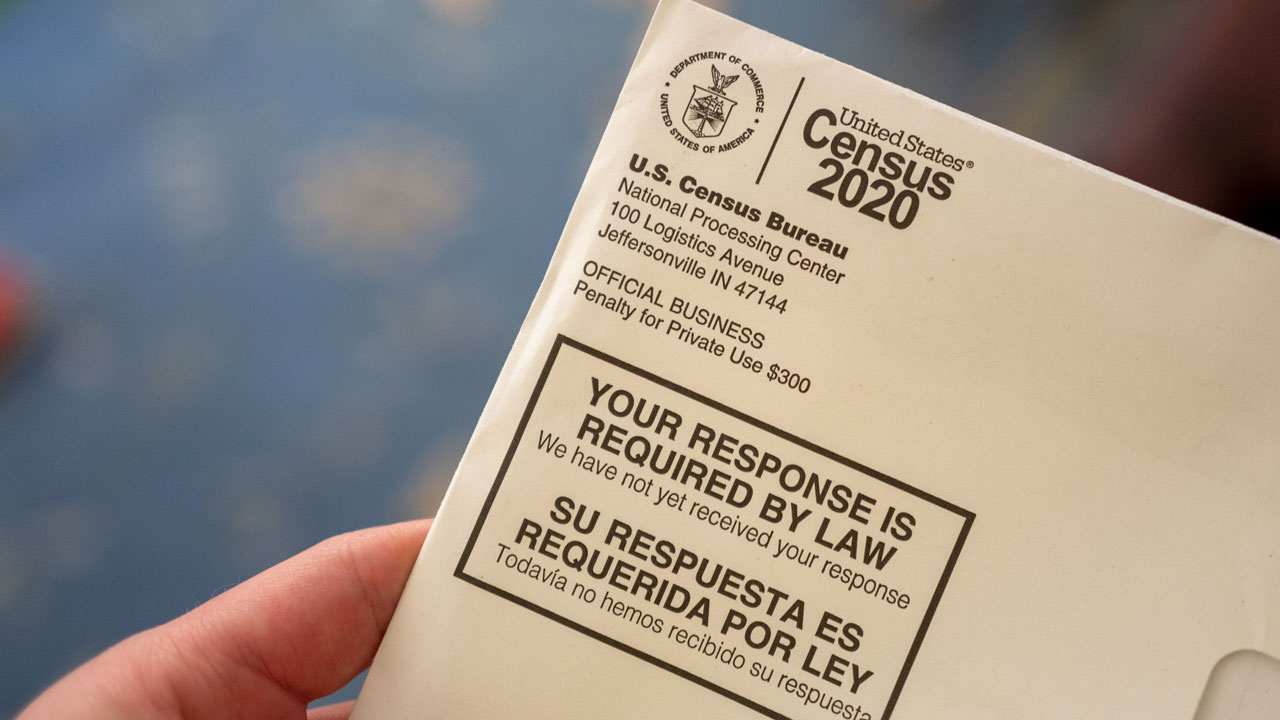
Since the first census in 1790, the government has counted every person physically present on Census Day and handed that number straight to the apportionment formula. The Census Bureau still says as much on its own website: The count “includes all people (citizens and noncitizens) who are living in the United States,” tallied wherever they live and sleep most of the time.
Citizenship never enters the equation.
The 14th Amendment made that rule permanent, not incidental. Section 2 replaced the Three-Fifths Compromise with a command to count “the whole number of persons in each State.”
TRENDING ARTICLES



Read the historical floor debate and you’ll find the framers meant exactly that.
Rep. Roscoe Conkling, who wrote the final language, told his colleagues that “persons,” not “citizens,” had always been the basis of representation. He was arguing against a citizens-only rule that would have punished states with large immigrant populations, some of them ancestors of people reading this piece right now. That’s an honest historical account. It’s also a rule written 70 years before anyone imagined more than 10 million people living in the country without legal status.
So, skip the version of this argument that says illegal immigration has stolen a bloc of House seats for one political party. The numbers don’t support it as cleanly as the talking point suggests. The most careful estimate, from the Center for Immigration Studies, finds that all foreign-born residents, legal and illegal combined, redistributed roughly 17 House seats after the 2020 census.
Isolate illegal immigration alone, and the Center for Immigration Studies’ own number drops to two seats, with no clear partisan direction.
Academic modeling published in PNAS Nexus reaches a similar conclusion: No more than two seats have changed party hands in any census since 1980 because of residents without legal status.
If you’re hunting for the crime of the century, this isn’t it.
What you are looking for is a principle worth defending on its own terms. Representation is supposed to track the political community, the people who can be held accountable through a ballot and who carry the obligations of citizenship in return.
A visa holder or an unauthorized migrant may live under our laws and rightly claim due process protection. Neither one is a member of the electorate whose presence should move a congressional map. Counting them for apportionment doesn’t give them a vote. It gives someone else’s vote less weight, in whichever state ends up with the seat their presence helped create.
To be sure, the other side has a real argument here, not just a talking point.
The text says “persons,” and no Supreme Court majority has ever ruled that “persons” means “citizens only.” The Court has ducked the question twice. It let Alabama’s challenge die in the lower courts for lack of standing and ripeness, and it vacated a nearly identical case, Trump v. New York, because the dispute was premature.
Neither ruling settles the merits. Both amount to a court declining to decide, which is Washington’s version of a rain check with no expiration date and no promise it’ll ever get cashed.
That’s exactly why this belongs to Congress, not to a Commerce Department rule written behind closed doors and swapped out with every change of administration.
A regulation that redefines “usual residence” today can be rewritten by the next occupant of the White House in four years, and the seats will lurch again on cue. If Americans believe representation should track citizenship and lawful residence, the fix is legislation, passed in the open, that amends Title 13 and states plainly who counts and why. Anything less just moves the argument from one unelected body to another and calls it reform.
Congress has ducked this question since 1868 because ducking it is easier than debating it. My advice, the same I’d give a client sitting on a governance problem he’d rather not name: fix the ambiguity in daylight, or don’t be surprised when somebody else fixes it for you, one Commerce Department memo at a time.
We publish a variety of perspectives. Nothing written here is to be construed as representing the views of the Daily Signal.

Read the first chapter of The Woketopus right now for FREE
Today, even with President Trump’s victory, leftist elites have their tentacles in every aspect of our government.
The Daily Signal’s own Tyler O’Neil exposes this leftist cabal in his new book, The Woketopus: The Dark Money Cabal Manipulating the Federal Government.
In this book, O’Neil reveals how the Left’s NGO apparatus pursues its woke agenda, maneuvering like an octopus by circumventing Congress and entrenching its interests in the federal government.
You can read the first chapter of this new book for FREE in this eBook, The Woketopus: Chapter One using the secure link below.


The Daily Signal depends on the support of readers like you.
RELATED ARTICLES





Don’t miss the

Don’t miss the signal
