

A recent White House report put the Smithsonian’s National Museum of American History under fire. The report details historical distortions and egregious omissions in how the museum depicts the national narrative. There are no exhibits on George Washington or the Declaration of Independence, even as America marks its 250th birthday.
Concerns over the museum raise a real question: What is the purpose of the National Museum of American History? One side argues for restorative justice and transformation, the other for civic education and preservation.
The first view shows up in statements by Smithsonian leaders Lonnie Bunch and Anthea Hartig, and in the creation of a Center for Restorative History. According to Hartig, history should serve as a “tool of social justice,” and institutions should promote “activism and advocacy.” In practice, this means outsized attention on historically oppressed groups and America’s failings—as if that attention could make up for past wrongs.
The ultimate aim is to undermine the American regime by tainting its principles, erasing shared memory, and diminishing goodwill between citizens.
Fostering disdain for Thomas Jefferson, for example, isn’t simply about fairly noting the faults of a flawed man. It’s about undermining the truth of the principles in the Declaration of Independence: human equality, consent of the governed, and inalienable rights. Those republican principles are at odds with the postmodern ideology Smithsonian directors promote.
The Case for Civic Education
The alternative to museum advocacy is civic education. Both whitewashing history and fixating on past shortcomings are antithetical to that education. Museums should depict the past as it really occurred and help visitors understand why things happened as they did.
TRENDING ARTICLES



That means not just recounting the lives of ordinary folks but also focusing more on people who had an outsized impact, such as George Washington and James Madison (or Napoleon Bonaparte and Julius Caesar in other contexts). Prioritizing accuracy inevitably runs afoul of equity, since such figures don’t fall neatly into modern identity categories.
It also means confronting the good, the bad, and the ugly. As Founder Mercy Otis Warren wrote, “The study of the human character opens at once a beautiful and a deformed picture of the soul.”
The Founders trusted the human capacity for reason, but they weren’t naïve about human failings and passions. The American system reflects this view of human nature: it rests on the consent of the governed yet implements auxiliary precautions like checks and balances.
By studying history, Americans come to grips with this reality and become the kind of citizens who buy into and support the American system.
The heritage of any regime contains injustices, and that truth should be a sober reminder that atrocities lie within reach of every generation. But it is not the whole story of history.
A Tremendous Responsibility
America’s integrity depends on the choices and conduct of her citizens, just as it has throughout our nation’s history. That is a tremendous responsibility. For that reason, Americans must be both informed and virtuous. As James Madison wrote, “What spectacle can be more edifying or more seasonable, than that of Liberty & Learning, each leaning on the other for their mutual & surest support?”
Smithsonian museums are part of public education, places devoted to civics: to the study of American history and of the principles that animate our laws, institutions, and character. Those principles are the source of American unity and justified civic pride.
Most Americans last studied their heritage in high school, and knowledge that goes unused fades away. Museums are opportunities for Americans to reeducate themselves, to learn unfamiliar stories, and to introduce their children to the national narrative. And they do so together, with friends, neighbors, and fellow citizens. Smithsonian museums are destinations for families and school field trips, and shared experiences, along with shared principles, bind Americans as a people.
Those forged common memories, like small-town parades and firework displays, are ones we can look back on with fondness. People from California, Wisconsin, and Maine can all recall the time they visited Gettysburg and the gravity of standing where so many gave the last full measure of their devotion.
One National Story
The stories that form the national narrative are not cold and nondescript, just as the tales from the Bible or Aesop are not neutral. They carry America’s principles, aspirations, and character, with pieces found in Jamestown, Independence Hall, and Antietam. A National Museum of American History can gather those pieces and present them to visitors in Washington, D.C., and to the world.
The trajectory of the American story begins with the Declaration of Independence, with the assertion that no one is born to rule over others without their consent. A regime dedicated to self-government requires people to act with dignity and to uphold their obligations to fellow citizens.
Since that declaration, the mission of America has been to move toward a better fulfillment of the demands of natural law. As Abraham Lincoln said, human equality offers a: “standard maxim for free society, which should be familiar to all, and revered by all; constantly looked to, constantly labored for, and even though never perfectly attained, constantly approximated, and thereby constantly spreading and deepening its influence … ”
The American story includes contradictions and failures, but it is ultimately one of triumph and hope. Its recounting instills gratitude, reminds us who we are, and unites us across generations. It offers a shared view of justice that sets bounds to conduct and enables benevolence, goodwill, and trust among the American people. Any civilization must take such things seriously.

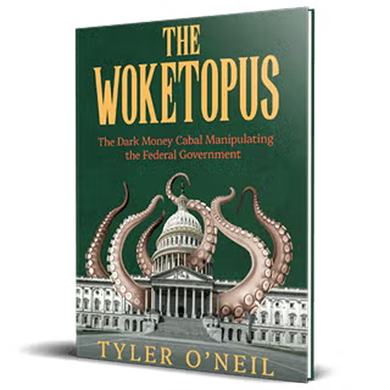
Read the first chapter of The Woketopus right now for FREE
Today, even with President Trump’s victory, leftist elites have their tentacles in every aspect of our government.
The Daily Signal’s own Tyler O’Neil exposes this leftist cabal in his new book, The Woketopus: The Dark Money Cabal Manipulating the Federal Government.
In this book, O’Neil reveals how the Left’s NGO apparatus pursues its woke agenda, maneuvering like an octopus by circumventing Congress and entrenching its interests in the federal government.
You can read the first chapter of this new book for FREE in this eBook, The Woketopus: Chapter One using the secure link below.
TRENDING ARTICLES


The Daily Signal depends on the support of readers like you.
RELATED ARTICLES




Don’t miss the

Don’t miss the signal