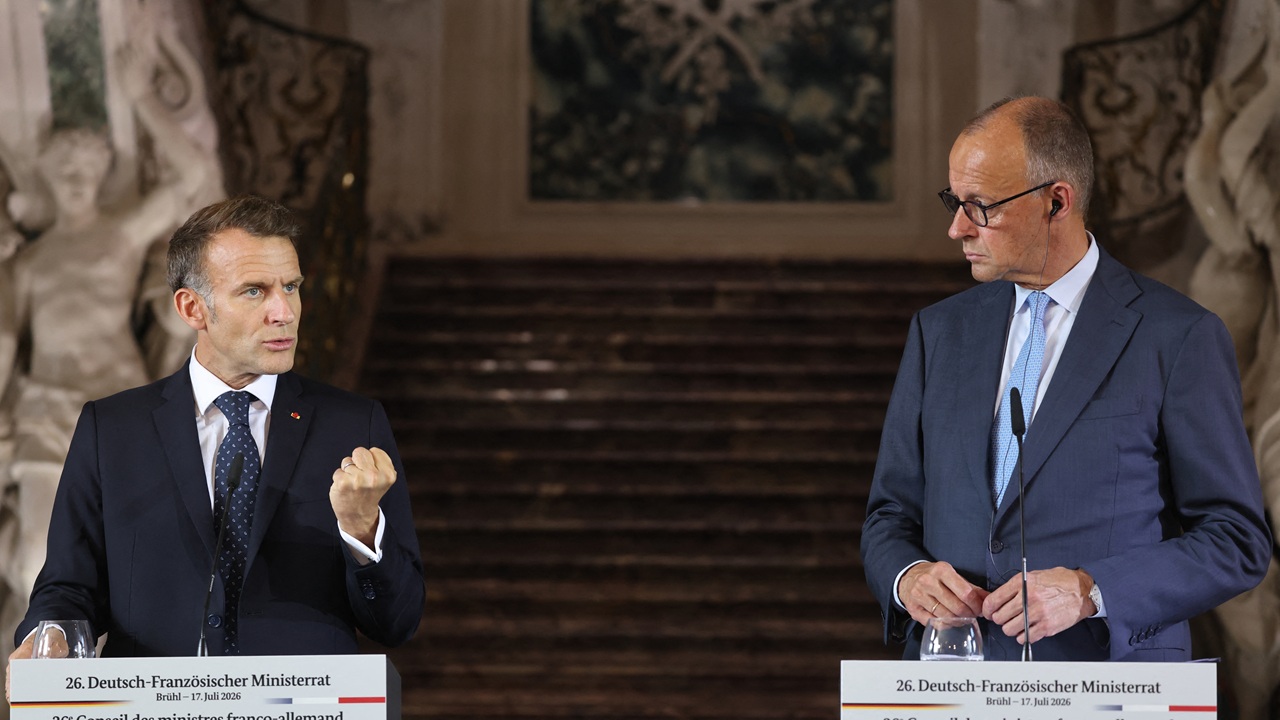
On July 17, the leaders of France and Germany announced that Germany would be participating in a French nuclear exercise later this year. The exercise, titled Poker, is a recurring part of France’s nuclear operations and is a full-scale rehearsal of France’s airborne nuclear capabilities.
The announcement at the Franco-German Defense and Security Council at Germany’s Nörvenich Air Base comes after recent discussions between France and Germany about the deployment of France’s nuclear arsenal outside of French territory. It highlights a doctrinal shift for both France and Germany on the use of nuclear weapons.
Currently, France is one of only three countries in NATO, along with the United States and the United Kingdom, that have a nuclear arsenal. In recent years, France’s position as a nuclear power in Europe has become more important as threats to European security have grown. The rise of a more assertive Russia seems to be encouraging some in Europe—notably Germany—to rethink nuclear deterrence strategies.
Earlier this year, French President Emmanuel Macron gave a speech on France’s nuclear posture in which he unveiled a new nuclear strategy for France. In front of a Le Triomphant-class S617 nuclear ballistic submarine, Macron spoke of the need for “France’s [nuclear] deterrent to remain a constant.” He also argued that a new strategy he called “forward deterrence” must be pursued in order to protect the sovereignty of France and the security of the European continent.
This new strategy aims to expand and strengthen France’s nuclear capabilities by increasing the number of nuclear warheads in its arsenal, allowing the forward basing of nuclear weapons outside of French territory while maintaining strategic ambiguity by keeping the size of France’s nuclear stockpile private.
At its core, France’s reinvigorated nuclear strategy is centered on ensuring the protection of the national sovereignty of France. Though Macron has signaled to European countries that France would be open to deploying its nuclear assets outside French territory, the sole decision-making authority and control of France’s nuclear arsenal lie in Paris with the president of France—as they always have.
TRENDING ARTICLES


The sovereignty and independence of France’s nuclear arsenal have been a consistent aspect of France’s nuclear doctrine even with the shift in approach toward forward deterrence. In his speech, Macron did not mention the integration of France’s nuclear arsenal with NATO’s. The independence of France’s nuclear arsenal is relevant; it shows that France seeks to maintain complete sovereignty of its nuclear capabilities even as it expands and other countries seek collaboration.
Shortly after the speech, German Chancellor Friedrich Merz announced that France and Germany would be forming a nuclear steering group to discuss increased collaboration on nuclear deterrence.
Like France, Germany has recognized the shifting security landscape in Europe. To adapt to changing headwinds, Merz has put Germany on a path of increased cooperation with regional nuclear powers that have signaled that they are open to expanding their nuclear umbrella to protect Germany.
Increased collaboration between European powers is a welcome sign for those in the Trump administration. It is consistent with President Donald Trump’s policies to encourage more self-reliance on security matters from European nations.
While a more active France is a good thing for complicating Russian planning and keeping the peace in Europe, the French nuclear deterrent is not a replacement for the American nuclear umbrella, nor can it be. Only the United States has the variety of systems and delivery mechanisms needed to deter the large and diverse Russian nuclear arsenal.
Many American conservative foreign policy realists recognize this, seeing that even though Europeans should take the lead on conventional deterrence in Europe, the American nuclear umbrella is still an irreplaceable aspect of collective deterrence within NATO.
Franco-German cooperation on nuclear deterrence sets an example for how regional security cooperation in Europe can work to complement U.S. security presence on the continent as the U.S. is forced to prioritize the Indo-Pacific.
Americans should applaud Europeans taking a more active role in their own security.

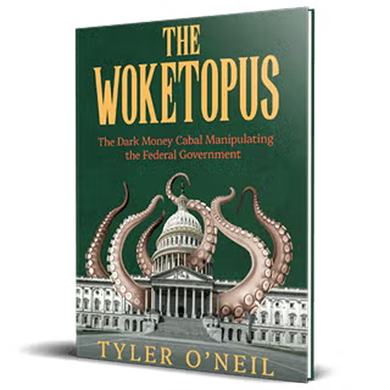
Read the first chapter of The Woketopus right now for FREE
Today, even with President Trump’s victory, leftist elites have their tentacles in every aspect of our government.
The Daily Signal’s own Tyler O’Neil exposes this leftist cabal in his new book, The Woketopus: The Dark Money Cabal Manipulating the Federal Government.
In this book, O’Neil reveals how the Left’s NGO apparatus pursues its woke agenda, maneuvering like an octopus by circumventing Congress and entrenching its interests in the federal government.
You can read the first chapter of this new book for FREE in this eBook, The Woketopus: Chapter One using the secure link below.

The Daily Signal depends on the support of readers like you.
RELATED ARTICLES



Don’t miss the

Don’t miss the signal