
When a man in Belfast, Northern Ireland, was stabbed and nearly beheaded by a Sudanese migrant two weeks ago, the governmental response was unnervingly familiar: Remain calm, suppress the truth, and scold the native people for their strong reaction against a select foreign class.
Welcome back to 1726.
The Irish people’s long struggles with British rule resulted in an independent Republic of Ireland (Éire) a century ago, and a Northern Ireland that remained part of the United Kingdom. After decades of terrorism and sectarian violence, the U.S.-brokered Good Friday Agreement of 1998 brought peace to the land.
Ironically, the hard-won Republic of Ireland is now run by the ideological descendants of the empire their ancestors despised. And for Northern Ireland, the issue is twofold: Although part of the U.K., the North has maintained an open border with the Republic. This leaves it victim to the poor immigration policies of both London and Dublin. The recent attempted murderer had initially entered Dublin and, in 2023, crossed easily into Belfast, where he was granted asylum.
Neither government has taken any accountability. Just as in the 18th century, the British government today prosecutes citizens for speech deemed unacceptable or inimical to state interests. In both eras, criticism of favored foreigners—the English then, Third-World migrants today—draws particular ire.
After the attempted beheading, Northern Irish lawmakers immediately attempted to suppress the harrowing footage. Claire Hanna, leader of the Social Democratic and Labour Party, said, “[T]he video will create fear and shock. No good will come of sharing it.”
TRENDING ARTICLES



Perhaps that’s why, as Cormac Lucey points out, the attack failed to make the front pages of the Irish Times and the Irish Independent, two top national publications. Yet both later ran lead stories on the ensuing riots, in a classic example of “Conservatives Pounce” media bias. The fury of the people of Belfast—not its cause—was swiftly condemned. Just like in the U.S., the barbarous act of a migrant wasn’t leading news for Irish legacy media, but the native backlash was.
Rather than reevaluate their asylum and immigration laws, both the U.K. and Irish authorities doubled down on protecting the status quo. Outgoing Prime Minister Keir Starmer expressed sympathy for the victim and thanked those who intervened, but he was silent on the policy failures that led to a psychotic illegal immigrant being released to wander the streets.
For their part, the Oireachtas (the legislative assembly for the Republic of Ireland) voted directly after the attack to adopt the EU Migration Pact without discussion. Under this law, EU member states will be subject to a policy of “mandatory solidarity”: If one or more member states are struggling to accept excessive numbers of migrants, other member states will be forced either to provide them assistance in doing so or to take the migrants in their stead. Most of this migration is of supposed asylum-seekers, whose applications are approved on generous terms, and few of whom are deported even if denied.
The 72% of Irish who voted in 2024 for “very strict limits” on migration were not even granted the courtesy of a debate. Anglican landlords ruled the native peasantry for centuries with little care for their opinions. The Oireachtas today, like its 18th-century predecessor, still cares less for the Irish people than it does for the EU, a foreign body with sparse connection to its local constituents.
This crisis of poor representation was evident in Ireland’s recent presidential elections. After right-wing candidates Maria Steen and Nick Delehanty failed to gain governmental sanction for their campaigns, 13% of Irish voters spoiled their ballots in protest.
When the outrageous video of the attempted beheading inevitably went viral, the people of Belfast took to the streets in protest. Unfortunately, some of the protesters turned to violence. Dean Céitinn, the director of Breaking Point, expressed their frustration at their vulnerability to preventable violent crime from uninvited migrants. “People’s options are very limited. It’s just a type of brutality that’s so unprecedented here. And it keeps getting more common,” he said.
It was only then that British and Irish leaders began responding forcefully. In the face of an attempted beheading, authorities like Ryan Henderson, the deputy chief of the Belfast police, had responded with the meek tone of an ineffective parent cowed by a toddler: “I understand that last night’s attempted murder will leave people feeling a range of emotions.”
In our day, however, the forces seeking to control the narrative in Ireland—and elsewhere—face a nascent source of pushback. One they haven’t had to contend with in a very long time.
For centuries, Ireland and what is now Northern Ireland were racked with political-sectarian violence. In 1729, Irish satirist Jonathan Swift wrote about the threat of subversive “Papists” seeking to overthrow the British government. In more recent memory, the Troubles saw roughly three decades of violence and terrorism, resulting in over 30,000 dead or injured. Of those killed, more than half were innocent bystanders or noncombatants.
Until this point, persistent violence and grave suspicion between Catholics and Protestants in Belfast had precluded the faintest alignment.
Now, confronting what many have described as an invasion, there has emerged what Aris Roussinos calls “the first glimmerings of an attempted and distrustful rapprochement.” That represents the first time in living memory that the citizens of Belfast have recognized a common, external threat. All because of a government that has silenced and ignored them.
In America, elites should take note.

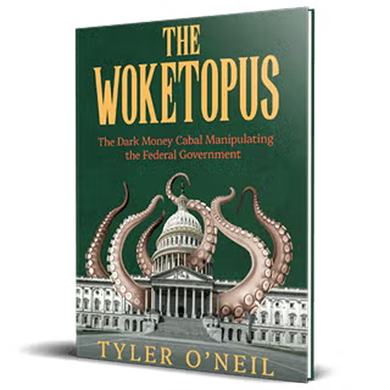
Read the first chapter of The Woketopus right now for FREE
Today, even with President Trump’s victory, leftist elites have their tentacles in every aspect of our government.
The Daily Signal’s own Tyler O’Neil exposes this leftist cabal in his new book, The Woketopus: The Dark Money Cabal Manipulating the Federal Government.
In this book, O’Neil reveals how the Left’s NGO apparatus pursues its woke agenda, maneuvering like an octopus by circumventing Congress and entrenching its interests in the federal government.
You can read the first chapter of this new book for FREE in this eBook, The Woketopus: Chapter One using the secure link below.


The Daily Signal depends on the support of readers like you.
RELATED ARTICLES





Don’t miss the

Don’t miss the signal