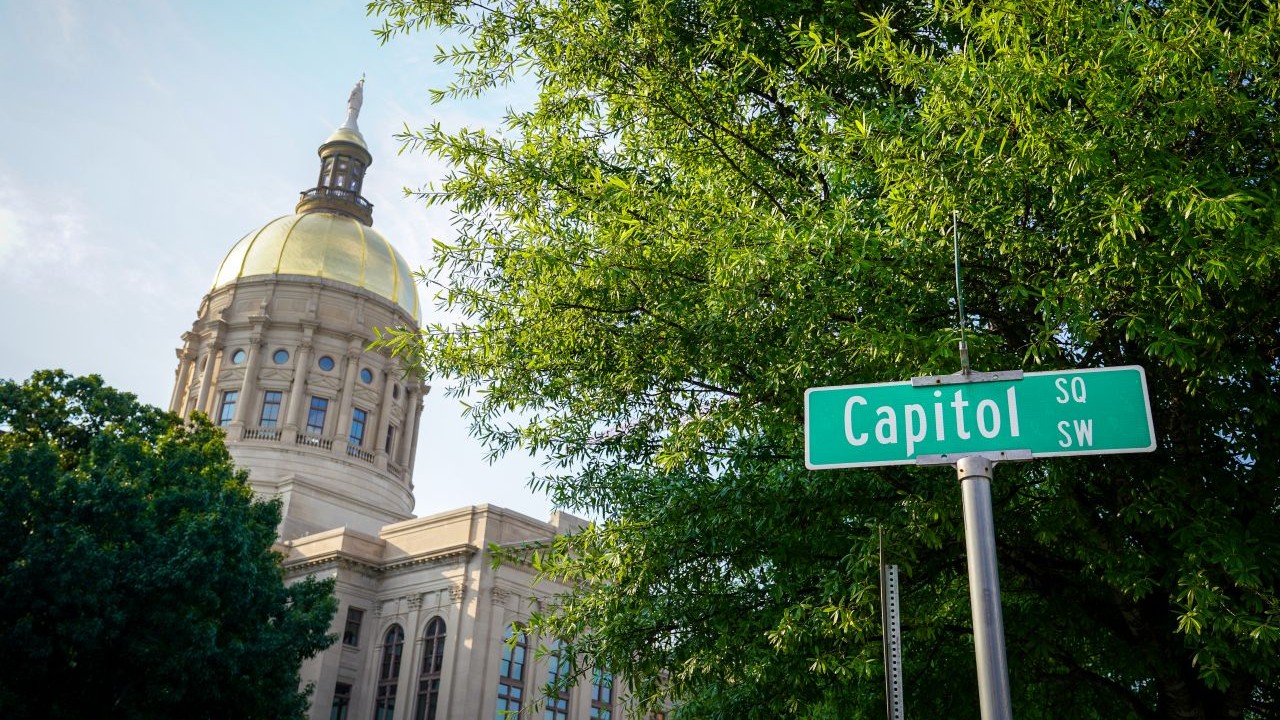
Following the U.S. Supreme Court decision in Louisiana v. Callais, Georgia lawmakers on Wednesday are meeting in a special session to debate the fairness of district lines drawn in 2023 for the state’s political map.
Before Gov. Brian Kemp ordered legislators to convene for a special session, the high court in April issued its opinion on the use of race as a factor for drawing legislative districts. The court ruled against it, causing several states, including Georgia, to revisit their current political maps.
Back in 2023, U.S. District Court Judge Steve Jones had instructed lawmakers to update the maps to represent another congressional district largely populated by black Georgians in west Metro Atlanta. Additionally, Jones instructed legislators to add seven mainly black districts—two House districts around Macon, and two Senate districts and three House districts in metro Atlanta.
During a special session in 2023, the state’s districts were redrawn to their current standing today, which considers race. The prior map boundaries, drawn in 2021, were attacked by lawsuits and liberal advocacy groups that argued that the districts unlawfully diminished Black residents’ voting power.
Following the order from Jones, the maps were reconfigured and were instituted for elections held in 2024.
Prior to Kemp announcing this week’s special session, he offered that “the Supreme Court’s decision in Louisiana v. Callais restores fairness to our redistricting process and allows states to pass electoral maps that reflect the will of the voters, not the will of federal judges. Voting is already underway for the 2026 elections, but it’s clear that Callais requires Georgia to adopt new electoral maps before the 2028 election cycle.”
TRENDING ARTICLES



The push for redistricting in the state comes after surrounding states such as Alabama, Louisiana, and South Carolina have also sought to redistrict.
QR Codes and Vote Tallying
Another debate has surfaced related to the system for tabulating votes. Legislation enacted in 2024 bans the state from utilizing QR codes to tabulate votes after July 1, 2026.
Those who support this measure claim that transparency would improve as Georgians can more easily read their vote selections, as opposed to using the QR codes system.
While a new system has been suggested by the Office of the Secretary of State, legislators have not yet agreed on a substitute vote-counting system. One idea proposed would include the continued use of current voting machines while also relying on technology to count votes from the readable text on voters’ ballots. Under this proposal, the QR code system expires.
While the secretary of state has suggested this new system, the State Election Board is claiming the solution is not acceptable under current legislation. The board has instructed localities to make use of paper ballots and scanners as a backup system if the July 1 deadline remains in place.
The current system in place across the state combines technology with standard paper ballots. This allows Georgians to cast their votes via touchscreen ballot-recording technology that prints out a paper ballot that is easily readable for voters with a QR code. The dilemma is that statements on what to do next coming from the State Election Board and the Secretary of State’s office conflict and require a resolution from lawmakers.
The Associated Press states that the session could have two outcomes: legislators could grant a later deadline to change the current system that utilizes QR codes. The other outcome would include accepting a new vote-tallying system before the July 1 deadline.
Local election administrators worry this could create other challenges ahead of the coming election cycle. A special election to replace U.S. Rep. David Scott is scheduled for July 28, with early voting to start on July 6.

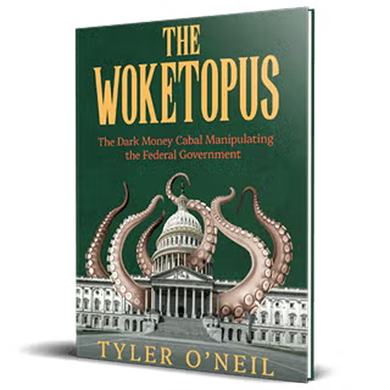
Read the first chapter of The Woketopus right now for FREE
Today, even with President Trump’s victory, leftist elites have their tentacles in every aspect of our government.
The Daily Signal’s own Tyler O’Neil exposes this leftist cabal in his new book, The Woketopus: The Dark Money Cabal Manipulating the Federal Government.
In this book, O’Neil reveals how the Left’s NGO apparatus pursues its woke agenda, maneuvering like an octopus by circumventing Congress and entrenching its interests in the federal government.
You can read the first chapter of this new book for FREE in this eBook, The Woketopus: Chapter One using the secure link below.



The Daily Signal depends on the support of readers like you.
RELATED ARTICLES





Don’t miss the

Don’t miss the signal