
Elections You’re Not Watching Could Rewrite the Rules for 2028, Report Contends

State legislative races this cycle could determine how elections are run for decades, with the potential for future laws on voter ID, undermining the Electoral College, noncitizen voting, and ranked-choice voting.
States could have enough votes after the elections to trigger the National Popular Vote Interstate Compact, according to a report by the conservative group Honest Elections Project Action. Under the compact, a state would give its electoral votes to the national popular vote winner of a presidential election. The compact takes effect only if participating states can contribute a total of 270 electoral votes.
After Virginia entered the compact, the current member states collectively hold 222 electoral votes—just 48 votes away from 270. Five states outside the compact currently have divided government but appear to be leaning Democrat in legislative races: Pennsylvania, Michigan, Nevada, Wisconsin, and Arizona.
“Arizona, Michigan, Nevada, Pennsylvania, and Wisconsin are perennial presidential battlegrounds with 61 electoral votes between them,” the report says. “Each has divided government today but could become a Democrat trifecta on November 3rd.”
The report, released just one week before the midterms, contends the state legislative races “will decide what rules will govern the 2028 presidential election.”
A total of 36 governorships and 88 legislative chambers are on the ballot this year, though most of those races are not highly competitive.
TRENDING ARTICLES


Virginia could be a model of what is to come across the country, the report argues. Democrats gained a trifecta—control of the governorship and both houses of the state legislature—after Gov. Abigail Spanberger took office in January.
“Virginia’s experience in 2026 shows what comes next: Within months of taking full control in January, Democrats expanded ranked-choice voting, reinforced a law allowing mail ballots to arrive three days late, rammed an unconstitutional gerrymander through the legislature, and joined the National Popular Vote scheme to get around the Electoral College,” the report said.
Virginia enacted a law that makes ranked-choice voting a permanent option for any local election, but did not adopt it statewide as Maine and Alaska have. The form of voting allows voters to rank their candidates, and if no candidate reaches a majority, counting continues into additional rounds, eliminating the candidate with the least number of votes until a winner is reached.
Republican state trifectas have concentrated on verifying citizenship, cleaning voter rolls, strengthening voter ID laws, and banning ranked-choice voting. Democratic trifectas have enacted laws allowing automatic voter registration and expanded mail-in voting, and limiting the use of citizenship data for local election officials.
Republican lawmakers have argued they are pushing for election security, while Democrats have argued they are pushing to protect voting rights.
“The stakes are high for election integrity this November,” Jason Snead, executive director of the Honest Elections Project, said in a statement.
The report notes that this year, 44 states enacted 419 election-related laws by Aug. 14. Of those, 223 were enacted by Republican trifectas, while 158 were enacted by Democrat trifectas.
Conversely, the Brennan Center for Justice, a liberal think tank that has opposed voter ID and other election security measures, joined the University of California at Berkeley Democracy Lab in releasing a report earlier this month that said more “expansive” voting legislation passed this year than what it called “restrictive.”
The Brennan and Berkeley report criticized proof of citizenship measures that passed in Mississippi, South Dakota, and Utah as “show your papers” laws. It praised laws that gave voters more grounds to sue under new state voting rights acts in Colorado, Maryland, New Jersey, Virginia, and Washington.
“A number of states have enacted laws restricting access to voting—with a particular focus on questioning voters’ citizenship — that may require some voters to clear new hurdles this fall,” the report says. “Overall, states continue to pass more laws expanding access to voting than those restricting access.”

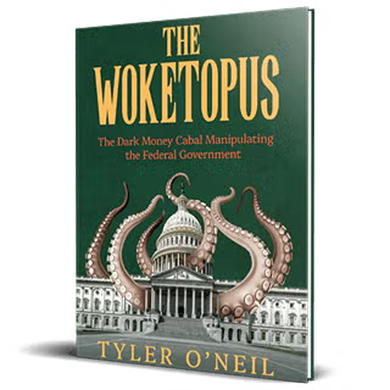
Read the first chapter of The Woketopus right now for FREE
Today, even with President Trump’s victory, leftist elites have their tentacles in every aspect of our government.
The Daily Signal’s own Tyler O’Neil exposes this leftist cabal in his new book, The Woketopus: The Dark Money Cabal Manipulating the Federal Government.
In this book, O’Neil reveals how the Left’s NGO apparatus pursues its woke agenda, maneuvering like an octopus by circumventing Congress and entrenching its interests in the federal government.
You can read the first chapter of this new book for FREE in this eBook, The Woketopus: Chapter One using the secure link below.

The Daily Signal depends on the support of readers like you.
RELATED ARTICLES




Don’t miss the

Don’t miss the signal
