
How to Know When a Mexican Migrant Caravan Really Threatens the Southern Border—a Day Sure to Come
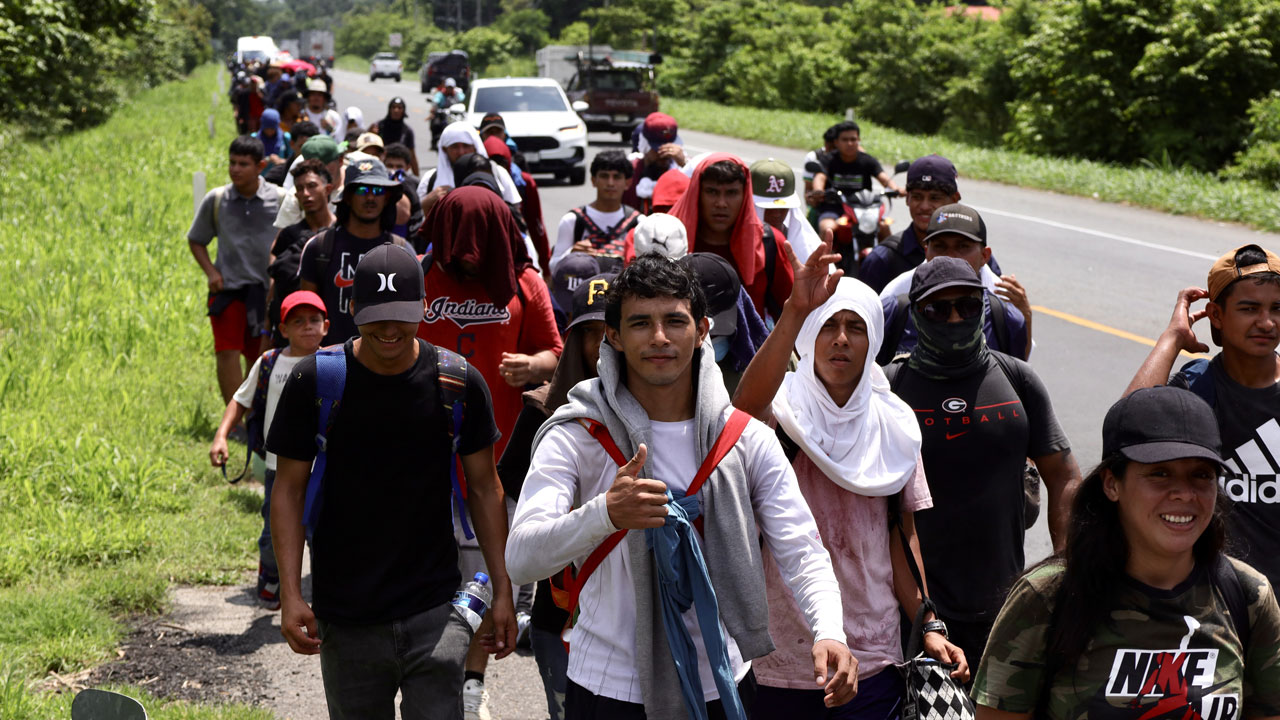
Last week saw much gnashing of teeth and rending of garments among American voters and Trump administration officials watching the “Fey Esperanza” migrant caravan march out of Honduras into Mexico, reportedly en route to smash a hole through President Donald Trump’s mostly sealed Southwest Border.
But if this started as a rebel migrant caravan planning to throw itself upon Trump’s border as its predecessors violently did back in 2018 and 2019, those aspirations ended as soon as it crossed into Mexico. That’s because today’s caravans are not at all what people presumed about the Fey Esperanza group.
Some grace is due the many who did not know that Mexico’s government long ago converted and then harnessed the caravan model to serve its own domestic purposes of spreading foreign nationals around its territory more equally. These are government-escorted, permitted transit caravans whose purpose is to disperse migrants to other southern Mexico cities and towns nowhere near the U.S. border.
Fears expressed in the U.S. about the caravan reveal a glaring need for wider knowledge as to why the Fey Esperanza caravan was a “Boy Who Cried Wolf” event. But elected leaders, media, and influencers would be well served to know when a real rebel caravan is coming, as one almost certainly will in a couple of years, so they can call for action then.
Mexico’s Policy of Controlled Dispersal
My assessment about Mexican caravans is based on experience traveling with the old rebel-style migrant caravans that aimed to crash the border back in 2018 and 2019 and the very new and different escorted transit caravans forming now.
I discovered these during a field research trip to Tapachula City just north of the Guatemala border in November 2024. The city of 400,000 is a major waystation and chokepoint on the Latin American migration trail exiting Guatemala.
TRENDING ARTICLES



Border hawk Trump had just been elected president, but open-borders dove President Joe Biden was still in office. Thousands of migrants in Tapachula were forming caravans and heading north, prompting American commentators to sound the alarm that the caravans intended to breach the U.S. border before Trump took office. I joined one of about a thousand north of Tapachula.
I was surprised to learn that the pundits were wrong.
The Mexican government was allowing these caravans to form so that its military and state police could inexpensively transfer them out of Tapachula and into other southern Mexican cities. The government scheme was (and still is) intended to relieve a growing humanitarian crisis in Tapachula, where shortages of work, food, and shelter had become critical. What I saw was a purposeful, government-controlled dispersal operation.
Influenced by Washington Policies
Why would Mexico volunteer to do any of this in the fourth year of Biden’s historic mass migration crisis when its central government under President Andres Manuel Lopez Obrador had let millions move on through largely unchecked?
The little-known answer is that, in December 2023 as I fully reported then, Biden’s emissaries initiated a quiet deal to have Mexico reduce the incoming U.S. border crowds because the social media video looked terrible for Democrats running in the 2024 presidential election campaign.
The simpatico progressive liberal Obrador, wanting a Democrat president, deployed 32,000 troops to block all roads leading out of Tapachula and southern states like Chiapas. Next, Mexico began aggressive, sustained roundups of undocumented foreign nationals in Mexican cities and towns along its northern border with the U.S. from Tijuana to Matamoros.
The soldiers and police forced tens of thousands from Mexico’s north onto jets and buses and shipped them to the Tapachula while thousands a day were still arriving from Guatemala.
Trump won the election in large part on Biden’s open border and, once inaugurated, demanded that Mexico’s new President Claudia Sheinbaum, also a progressive liberal, continue the blockades and border sweeps under threat of devastating trade tariffs.
How It Works
To prevent a humanitarian disaster and relieve Tapachula’s misery, the Sheinbaum government initially handed out “transit slips” and brought in buses to transport migrants to other Chiapas State cities and as far north as Mexico City. But demand outstripped the bus supply, so officials defaulted to the cheaper escorted foot caravans.
Whereas the caravans of old would violently break through security roadblocks, the Mexican military and police would surround this new kind of caravan in the front, back and all along its length and protect the marchers from predatory criminals. The security forces would gently direct them to turn down this or that road fork. Then at destinations, the security forces would deliver the compliant marchers to aid organizations and shelters and block them from further movement north.
While the many walkers I interviewed in late 2024 said sure they’d love to enter the United States someday, all told me they fully understood that Mexico’s government was to simply move them to other southern Mexican towns offering more work and sustenance while they waited for work and residency permits. The police and soldiers all confirmed the intercity transfer caravan policy and that it was a relatively new policy.
What to Look For
The Fey Esperanza caravan was hardly the first, but it attracted significant U.S. media attention because a major U.S. midterm election campaign is underway. In 2025 and so far in 2026, Mexico escorted at least another dozen intercity transit caravans to southern Mexican cities that drew no similar American media attention.
The telltale clue that these and the Fey Esperanza were controlled dispersal caravans not heading to the U.S. border: the Mexican security escorts.
A lot of Americans would not have known which kind of caravan they were seeing from video and naturally presumed it was en route to the U.S. border.
Indeed, the transit caravan was rapidly disintegrating during Oct. 3-4 weekend as per the routine.
The Trump administration was correct to noisily telegraph to Sheinbaum that she cannot let caravans reach the U.S. border and that migrants in them would face a tough confrontation if she let them through.
Deterrence signaling is still important.
Americans will probably see more of these caravans over Trump’s final two years because immigrants are still entering Tapachula from Guatemala and Mexican security forces are still rounding them up in the north and sending them south to Tapachula, according to Mexican media reporting.
But any caravans that will form and move north are benign and short-lived—for now. No one should again mistake these as a threatening challenge to the U.S., so long as Trump retains his tariff threat against Mexico to keep playing ball.
All bets are off once Trump leaves office in January 2029, no matter if a Republican or Democrat takes his spot. Look for caravans that might try their luck in the months before or after January 2029.
Those will not be benign.

Read the first chapter of The Woketopus right now for FREE
Today, even with President Trump’s victory, leftist elites have their tentacles in every aspect of our government.
The Daily Signal’s own Tyler O’Neil exposes this leftist cabal in his new book, The Woketopus: The Dark Money Cabal Manipulating the Federal Government.
In this book, O’Neil reveals how the Left’s NGO apparatus pursues its woke agenda, maneuvering like an octopus by circumventing Congress and entrenching its interests in the federal government.
You can read the first chapter of this new book for FREE in this eBook, The Woketopus: Chapter One using the secure link below.

The Daily Signal depends on the support of readers like you.
RELATED ARTICLES





Don’t miss the

Don’t miss the signal