
Climate change will soon arrive before the U.S. Supreme Court, and with it the progressive Left’s most ambitious effort yet to impose Green New Deal socialism on an unwilling public.
Dozens of blue states and affluent hippie towns are demanding tens of billions of dollars from U.S. energy companies for alleged climate harms. These audacious lawsuits, dressed up as local disputes, are a concerted effort to weaponize the courts against the companies that produce the fuel Americans depend on every day.
The Supreme Court will hear argument in one of these cases, Suncor Energy (U.S.A.) Inc. v. v. County Commissioners of Boulder County, on the first day of its new term in October.
I anticipate the court will make quick work of climate tort claims. Our constitutional design makes clear that national problems demand national answers. Local officials in Boulder County have no power to impose Green New Deal-style policies on the entire country.
The Framers gave Congress authority over questions of national and interstate scope, and global carbon emissions fall squarely within that category. But Boulder’s suit reaches even further, far beyond its borders and into states like Wyoming and Texas. In doing so, it tramples on a founding principle of our republic: that no one state may regulate another.
But as I warned in an amicus brief that I filed in Suncor earlier this year, the climate Left has many contingency plans, and the justices should see them clearly. The case now before the justices relates to more traditional tort claims, like nuisance and trespass, which seek to make the energy industry pay for the alleged local effects of worldwide greenhouse gas emissions. But climate plaintiffs in other jurisdictions are pursuing alternate routes, including accusing energy companies of misleading the public about climate change. Other left-wing climate lawyers have gone even further, suing these companies for wrongful death or arguing energy executives should be prosecuted for murder.
TRENDING ARTICLES


Their logic starts with consumer protection laws, which police hidden fees, defective products, and false advertisements that manipulate purchasers. “Does the product work as advertised?” is the nub of the law in this area.
Gasoline, diesel, and natural gas heat our homes and power our cars. They work as advertised, and the climate plaintiffs don’t seriously argue otherwise. Instead, they argue the companies peddled “misinformation,” pointing to vague corporate slogans about cleaner energy, net-zero ambitions, and donations to trade associations.
Such aspirational statements cannot form the basis of a deception claim, and they lack the required connection to a specific sale. The debate over fossil fuels has played out in public for decades, and no consumer has ever filled up his tank because of a company’s comments about the climate. Moreover, if local governments can recast past policy debates as fraud, no one who speaks on a contested issue is safe from being sued for it.
Ultimately, the climate plaintiffs aren’t looking out for regular people. They’re pursuing ideological goals, whatever the cost to your energy bill, the price at the pump, or your standard of living. The alleged knock-on harms that preoccupy the plaintiffs are a strained but familiar attempt to convert a public policy dispute into a consumer fraud issue. Actual consumers, who face higher costs and fewer product options, are absent.
That brings me to the real risk in Suncor. It’s easy to imagine an opinion from the Supreme Court that tosses climate torts while suggesting the plaintiffs may have other causes of action. Such statements, meant to communicate modesty, are routine in Supreme Court opinions. But here, climate trial lawyers would exploit that language and construe it as official sanction for their fraud cases.
The Supreme Court must recognize that the climate lawyers behind these cases are policy entrepreneurs, not ordinary litigants. Climate litigators are extremely well-funded, and dragging energy companies into years of expensive litigation will accomplish their goals of driving up the cost of producing energy. And they are already moving beyond their tort and fraud claims to more radical theories.
In Washington state, trial lawyers workshopped the first-ever “climate wrongful death” case. This extraordinary lawsuit alleges a woman was killed by a heat wave traceable to energy production (in fact, the decedent drove hundreds of miles through scorching temperatures in a car with no air conditioning). In July, a state judge allowed that case to move closer to trial. Still, some climate litigators go further and argue energy executives should be prosecuted for murder.
Whether through tort, fraud, wrongful death, or criminal charges, the climate plaintiffs will stop at nothing to advance their agenda. When the justices write their opinion in Suncor, they should close the door firmly on climate lawfare and leave the activists driving this campaign nothing to pry it back open.
We publish a variety of perspectives. Nothing written here is to be construed as representing the views of the Daily Signal.
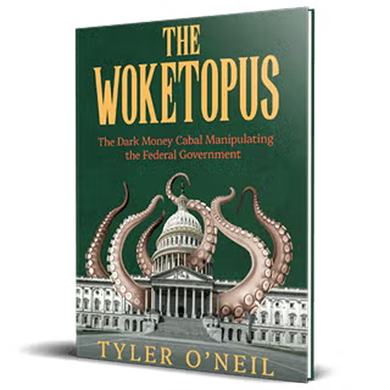
Read the first chapter of The Woketopus right now for FREE
Today, even with President Trump’s victory, leftist elites have their tentacles in every aspect of our government.
The Daily Signal’s own Tyler O’Neil exposes this leftist cabal in his new book, The Woketopus: The Dark Money Cabal Manipulating the Federal Government.
In this book, O’Neil reveals how the Left’s NGO apparatus pursues its woke agenda, maneuvering like an octopus by circumventing Congress and entrenching its interests in the federal government.
You can read the first chapter of this new book for FREE in this eBook, The Woketopus: Chapter One using the secure link below.




The Daily Signal depends on the support of readers like you.
RELATED ARTICLES




Don’t miss the

Don’t miss the signal