
Why Every State Should Study the Election Laws in Tennessee and Florida
For years, election officials and lawmakers in Tennessee have been quietly doing the hard work of strengthening their election system. This week, that effort earned national recognition.
Tennessee finished first in The Heritage Foundation’s 2026 Election Integrity Scorecard, receiving 87 points and claiming the top ranking among all 50 states and the District of Columbia.
The result did not happen overnight.
Heritage’s scorecard evaluates election laws and safeguards across more than 50 best practices in 15 categories. Tennessee’s success reflects years of work identifying vulnerabilities, improving procedures, and enhancing protections designed to promote secure, accurate, and transparent elections.
Arkansas, Alabama, Louisiana, and Florida rounded out the top five. While Tennessee’s achievement deserves attention, Florida’s journey may be the most instructive story on the list.
No state better demonstrates the value of reform than Florida.
TRENDING ARTICLES



Twenty-six years ago, Florida became synonymous with election dysfunction. The disputed 2000 presidential election exposed serious weaknesses that triggered weeks of recount battles, legal challenges, and national uncertainty. Images of punch-card ballots and “hanging chads” became a symbol of a system that had failed to inspire public confidence.
Florida could have accepted that poor reputation and continued to languish as the laughingstock of American elections. Instead, state leaders went to work.
Beginning in 2001, Florida enacted sweeping reforms that eliminated punch-card voting systems, improved recount procedures, established standards for provisional ballots, and made numerous other changes designed to strengthen election administration. The work continued year after year, regardless of whether election issues were dominating national headlines. That remarkable turnaround is proof that states are not defined by past mistakes. They are defined by whether leaders are willing to identify problems, make reforms, and continue improving year after year.
Consider what Florida’s fifth-place ranking represents. Twenty-six years ago, the state’s election system was under a national microscope for all the wrong reasons. Today, Florida ranks among the top five states in the country for election integrity.
That should serve as an important reminder for every state. We do not have to settle for mediocrity.
Election integrity is an ongoing process. States that perform well today do so because they consistently look for weaknesses, address them, and adapt to new challenges.
Yet, states that lag behind are not locked into their current positions. Florida’s transformation demonstrates that meaningful improvement is possible when policymakers commit themselves to the task.
That is also why Heritage’s scorecard matters. It offers voters, lawmakers, and election officials a common standard for measuring progress. Rather than relying on partisan talking points or political rhetoric, Americans can examine the same framework used to evaluate every state and see where improvements are needed.
That kind of benchmarking can also help states learn from one another. A state that performs poorly in one category does not need to reinvent the wheel; it can look to jurisdictions that have already adopted stronger procedures, study what worked, and adapt those reforms to its own laws and election system.
Tennessee should be proud of reaching the top spot, but 87 out of 100 is also a reminder that first place is not the finish line. The broader lesson extends beyond a single ranking.
Florida has shown that a struggling election system can become a national leader, while Tennessee has shown that sustained effort can produce first-place results. As Heritage prepares to place greater emphasis on enforcement, proof-of-citizenship requirements, election fraud investigations, and compliance audits in future rankings, states across the country have an opportunity to improve further.
The question is not whether election systems can be strengthened. Tennessee and Florida have already answered that.
The question is whether other states are willing to do the work.
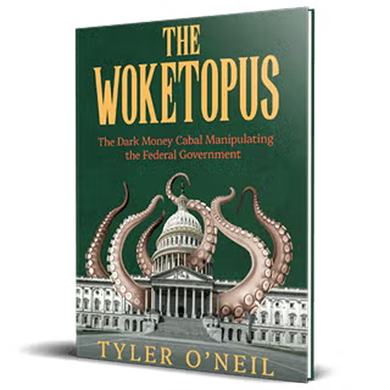
Read the first chapter of The Woketopus right now for FREE
Today, even with President Trump’s victory, leftist elites have their tentacles in every aspect of our government.
The Daily Signal’s own Tyler O’Neil exposes this leftist cabal in his new book, The Woketopus: The Dark Money Cabal Manipulating the Federal Government.
In this book, O’Neil reveals how the Left’s NGO apparatus pursues its woke agenda, maneuvering like an octopus by circumventing Congress and entrenching its interests in the federal government.
You can read the first chapter of this new book for FREE in this eBook, The Woketopus: Chapter One using the secure link below.


The Daily Signal depends on the support of readers like you.
RELATED ARTICLES





Don’t miss the

Don’t miss the signal