
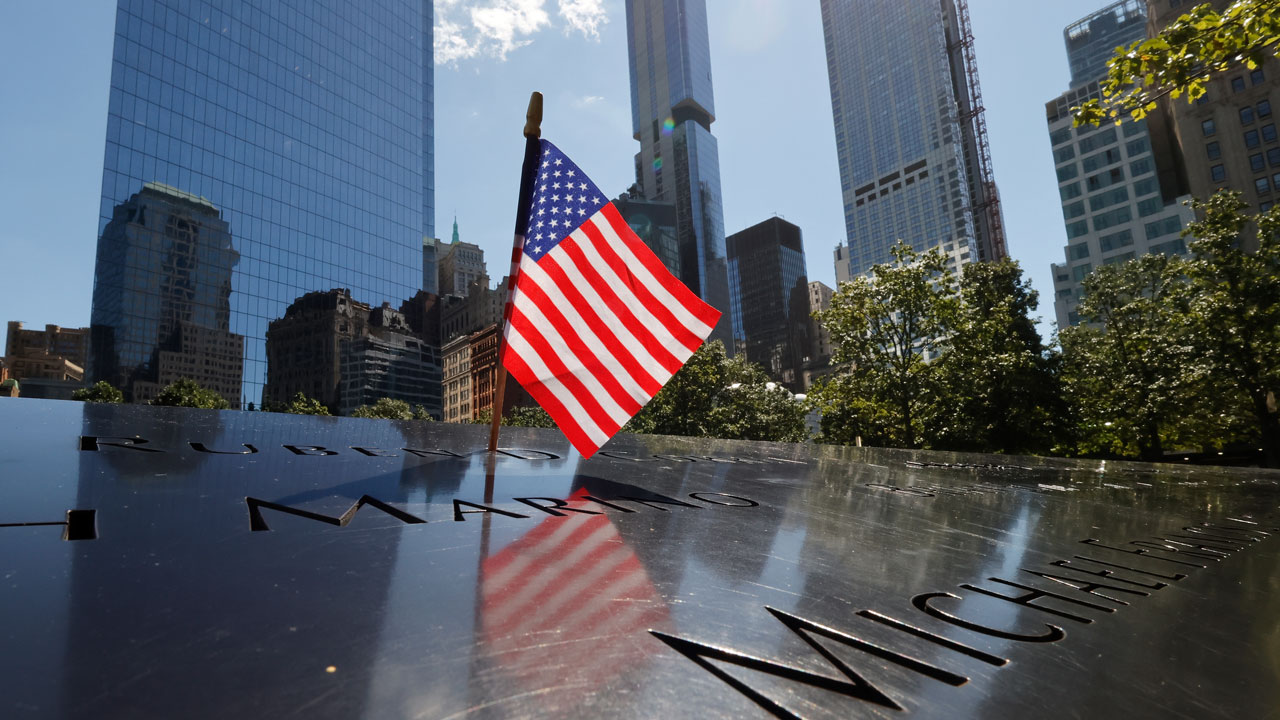
I was born two years before Sept. 11, 2001. I belong to the first generation of Americans for whom the attacks on the World Trade Center and the Pentagon are not a personal memory. Because I do not remember the morning itself, the television images, or the atmosphere of fear and uncertainty that settled over the country, I know Sept. 11 as history.
But the history myself and those of my generation inherited did not end on that day. In some respects, it had only begun.
Twenty-five years after 9/11, the face of Islamic violence looks like a truck driven into a crowded street, a knife attack on a train, and a church attacked and burned. It has meant the consequential transformation of our nation through migration, parallel communities, Sharia courts, and the growing political influence of Islamist movements. Globally, it has meant the rise of the ISIS caliphate, the Oct. 7 attacks by Hamas, and the massacre of innocent people worldwide.
On this anniversary, there is a great deal to reflect upon, including the assumption that the principal problem that led to planes flying into buildings was terrorism rather than the ideology that produces it.
If we have learned anything since, it should be that this assumption is dead wrong.
Islam is both a political and religious ideology, and jihadism is one violent manifestation of that ideology, as well as a command to its adherents.
TRENDING ARTICLES



Immediately after the 9/11 attacks occurred in his address to the nation, President George W. Bush reduced the problem to terrorism. And though the United States has since developed an impressive capacity to disrupt terrorist plots, we have become increasingly reluctant to examine the broader political and civilizational claims of the ideology from which those plots emerge.
Six days after the attacks, on Sept. 17, 2001, Bush visited the Islamic Center of Washington and declared, “The face of terror is not the true faith of Islam. That’s not what Islam is all about. Islam is peace.”
This became shorthand for a much broader proposition: that Islam itself had essentially no bearing on the terror inflicted on our country.
One of the best pieces of evidence for the opposite of what Bush stated at the time can be found in Osama bin Laden’s “Letter to America,” which explicitly answers the question of why behind the attacks. There is no mistaking the way they view American foreign policy as bound up with anti-Islamic ideology. It also answers the question, “What are we calling you to, and what do we want from you,” saying, “the first thing that we are calling you to is Islam.”
Fifteen years after the 2001 attacks, the ISIS propaganda magazine Dabiq published an article titled “Why We Hate You and Why We Fight You.”
ISIS, which grew out of al-Qaeda, explicitly rejected the proposition that jihadist hostility toward the West was primarily a response to American foreign policy. It vividly defined disbelief in Islam as the primary reason for its hatred of Westerners and argued that this hatred would persist even if Western military intervention ceased:
“We hate you, first and foremost, because you are disbelievers; you reject the oneness of Allah … and you indulge in all manner of devilish practices. … Furthermore, just as your disbelief is the primary reason we hate you, your disbelief is the primary reason we fight you, as we have been commanded to fight the disbelievers until they submit to the authority of Islam, either by becoming Muslims, or by … living in humiliation under the rule of the Muslims. … We hate you because your secular, liberal societies permit the very things that Allah has prohibited …
“[W]e’ve made it our mission to fight off your influence and protect mankind from your misguided concepts and your deviant way of life. … What’s important to understand here is that although some might argue that your foreign policies are the extent of what drives our hatred, this particular reason for hating you is secondary … The fact is, even if you were to stop bombing us, imprisoning us, torturing us, vilifying us, and usurping our lands, we would continue to hate you because our primary reason for hating you will not cease to exist until you embrace Islam.”
Subsequent issues of Dabiq were titled “A Call to Hijrah,” referring to spreading jihad with immigration, and “The Failed Crusade,” declaring that the Islamic state would one day conquer Rome, threatening to “break [the] crosses” of infidels and sell and trade their women and to establish an Islamic state over the whole world.”
In the words of Islamists themselves, the conventional formulation that they simply hate our freedoms, as Bush stated in his address to the nation directly after the attacks, is incomplete.
Since 9/11, despite increasing evidence for the incompatibility of the Islamic worldview with Christian, Western society, Americans have been increasingly pressured to demonstrate tolerance by suspending judgment and adhering to lofty, feel-good sentiments that all regions are equal.
One decade after the height of the ISIS caliphate and its publication of “Why we Hate You,” the limitations of the post-9/11 framework have become even clearer.
There have still been tragic terror attacks where Islam is minimized or omitted from public discussion. At the same time, large-scale immigration from Muslim-majority countries has contributed to a major breakdown in social cohesion and safety: the prioritization of mosques over churches, parallel societies that natives do not risk entering, infiltration of Islamic propaganda in curricula, and avowed Islamists elected to public office.
Battling and reversing these changes will not be successful without a real recognition of what we are up against, which hinges ultimately on ideology.
The great irony of the post-9/11 period is that America’s leadership simultaneously overestimated and underestimated the threat.
We overestimated what could be accomplished through military intervention and nation-building in societies whose political traditions were profoundly different from our own. At the same time, we underestimated the ideological dimension of the conflict by treating jihadism principally as a security problem. Differently said, we spent considerably less intellectual energy understanding the foreign ideology behind terrorism.
Twenty-five years later, the central lesson should be that terrorism was one manifestation of a much larger ideological challenge.
The larger question looms of whether Islamist political movements will continue to gain influence within Western societies. If we ignore those who have spent decades telling us why they hate us, what they oppose, and what they intend to build in its place, it is very likely they will.
We publish a variety of perspectives. Nothing written here is to be construed as representing the views of the Daily Signal.
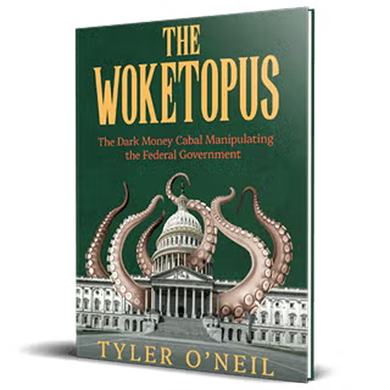
Read the first chapter of The Woketopus right now for FREE
Today, even with President Trump’s victory, leftist elites have their tentacles in every aspect of our government.
The Daily Signal’s own Tyler O’Neil exposes this leftist cabal in his new book, The Woketopus: The Dark Money Cabal Manipulating the Federal Government.
In this book, O’Neil reveals how the Left’s NGO apparatus pursues its woke agenda, maneuvering like an octopus by circumventing Congress and entrenching its interests in the federal government.
You can read the first chapter of this new book for FREE in this eBook, The Woketopus: Chapter One using the secure link below.



The Daily Signal depends on the support of readers like you.
RELATED ARTICLES





Don’t miss the

Don’t miss the signal