
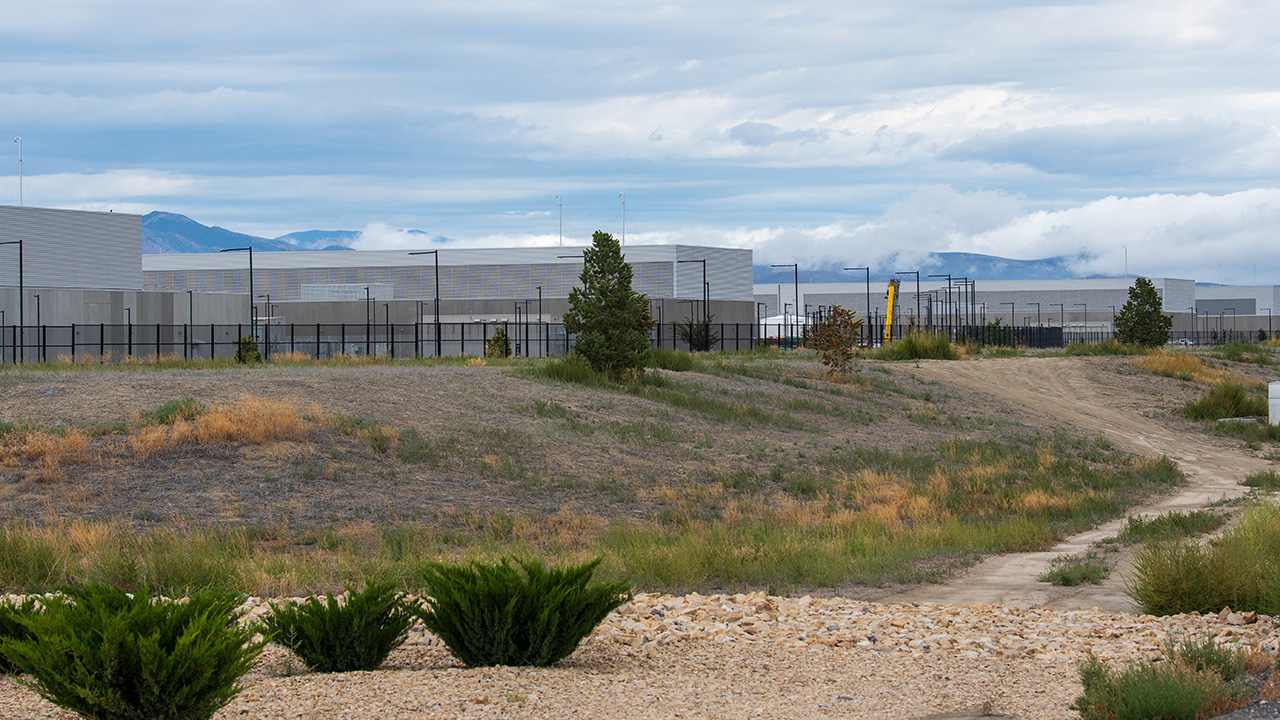
Data centers have become widely unpopular with the American people, but some experts say it is up to Big Tech, not the president, to improve public opinion.
President Donald Trump has been outspoken in his support for data centers, posting on Truth Social Monday that those who oppose data centers want to be “backwards and poor.” But 7 in 10 Americans oppose the construction of data centers in their community, according to a May 13 Gallup poll. Some Republican candidates, including Texas GOP gubernatorial nominee Ken Paxton and Michigan GOP gubernatorial nominee Mike Rogers, have distanced themselves from data centers.
Former White House chief strategist Steve Bannon said it’s incumbent on the “Big Tech oligarchs,” not the president, to make the case for data centers. He echoed Treasury Secretary Scott Bessent, who said Wednesday that “the industry has done a terrible job, terrible job of explaining themselves.”
“The Big Tech oligarchs, the guys driving AI, did a terrible job,” Bannon told the Daily Signal. “They came in to try to muscle local communities, and particularly since President Trump’s strongest base is in exurban and rural communities, that’s where they were really the ugliest, and they haven’t made their case, and they particularly haven’t made their case at the local level about the economics of this, and the energy of this, and the water of this, and the manifestation of what these things are going to be used for.”
Bannon said he is “adamantly opposed” to data centers unless “they can make a very compelling case about not just the construction of them in the first part, but over time, what happens? What’s their use? What’s it going to be used for?”
Big Tech has turned some of the president’s strongest supporters, MAGA voters in rural areas, against data centers, he said.
TRENDING ARTICLES



“They just come in and think their money and their political muscle is going to is going to drive things, and guess what? It has not,” he said. “This is a 80/20 issue or an 85/15 issue at the local level, and so I think that it’s incumbent upon them.”
Nathan Leamer, executive director of the pro-AI advocacy group Build American AI, thinks the administration’s public relations about data centers have been sufficient.
“The Ratepayer Protection Pledge was a huge step in the right direction there, and I think they’ve been pretty active on social media related to it,” he said.
At the end of July, 23 governors signed Trump’s pledge to protect everyday Americans from the energy costs associated with data centers. The move was praised by AI skeptics and advocates alike.
Leamer said Interior Secretary Doug Burgum, Energy Secretary Chris Wright, and even Vice President JD Vance have made compelling pitches for data centers.
“I think probably 99% of the backlash to data centers has come in areas where building a data center means higher utilities and higher electricity for the people on the ground,” Vance said Monday.
He said data centers “should be putting power back into the grid, not taking it out. And if that is happening, I don’t think the data centers are that controversial. It’s when the utility bills get so much higher; that’s when it’s a real problem.”
A prominent AI advocate said data centers have far more benefits than drawbacks, but they have a messaging problem. She said people’s concerns lie primarily with AI as a whole, rather than with the construction of data centers.
“Part of the repercussions or backlash against data centers is people feel so powerless over the impact that tech has had on their lives, with their kids, with chatbots, with you know all of the uncertainty that this is how they’re exerting control,” the advocate said.
She said AI companies need to bridge the gap between the idea of a data center and what they can provide for communities who want them.
“People are clearly upset, and they have a right to be upset because no one has told them a compelling argument for them,” the advocate said.
But she said that is starting to shift, as more people are sharing the benefits of data centers in communities.
For instance, the Innovation Council posted on X about a Pennsylvania data center that is offering $10,000 checks to residents as part of its community benefits package.
Taylor Budowich, president of the council and former Trump deputy chief of staff, said Trump has done a great job highlighting how data centers can bolster communities.
“President Trump is doing an excellent job of listening to people’s concerns—his Ratepayer Protection Pledge ensures that Americans won’t see higher electric bills from data centers—while leveling with them about the truth,” he told the Daily Signal.
“And the truth is that data centers, when done right, are an economic lifeline to the towns that other politicians would like to pretend don’t exist,” he added.
Budowich provided the example of Quincy, Washington, population 8,500, where data centers have paid for their own power and covered 57% of property taxes. This has allowed Quincy to build a new hospital, high school, library, and aquatic center, he said.
“The poverty rate in Quincy went from 29% down to 6%,” he said. “The more responsive data centers are to their local communities, and the more that we tell the stories of data centers done right, the more the American people will realize the wisdom of the president’s vision.”
White House spokesman Davis Ingle said Trump “will continue leveraging the data center boom to deliver real benefits for working families and small businesses.”
“President Trump’s bold leadership is turning data centers into engines of growth and opportunity for communities across the country that want them, all while cementing America’s dominance over China in the global AI race,” he said in a statement to the Daily Signal. “By requiring data centers to pay for their own power, water, and utilities, the President has ensured the American people never foot the bill for private companies’ profits.”

Read the first chapter of The Woketopus right now for FREE
Today, even with President Trump’s victory, leftist elites have their tentacles in every aspect of our government.
The Daily Signal’s own Tyler O’Neil exposes this leftist cabal in his new book, The Woketopus: The Dark Money Cabal Manipulating the Federal Government.
In this book, O’Neil reveals how the Left’s NGO apparatus pursues its woke agenda, maneuvering like an octopus by circumventing Congress and entrenching its interests in the federal government.
You can read the first chapter of this new book for FREE in this eBook, The Woketopus: Chapter One using the secure link below.




The Daily Signal depends on the support of readers like you.
RELATED ARTICLES





Don’t miss the

Don’t miss the signal