
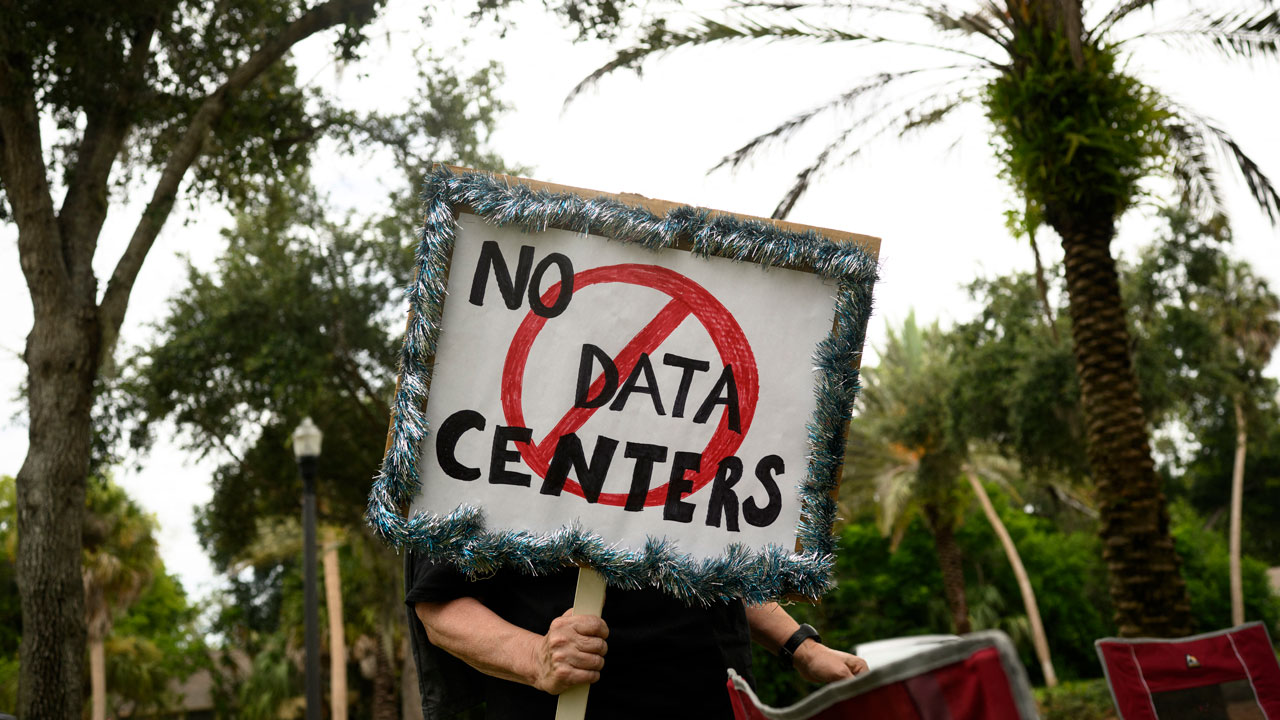
Data centers are about as popular as cancer right now, and my latest battleground polling proves it.
In Wisconsin, the consummate swing state, approval for data centers falls to an abysmal 19% overall. Even worse details emerge from the poll crosstabs and a comparison to polling from the same period late last year.
This TIPP Insights polling for the League of American Workers shows that the governor’s showdown in the Badger State is a horse race, with Democrat nominee David Crowley leading Republican nominee Tom Tiffany by a mere +2%, 43%-41%, within the margin of error for the poll.
In such a tight race for governor, the unpopularity of data centers can quickly become the determinative factor in the contest.
On the GOP side, Tiffany pledges to protect rural Wisconsin from boneheaded “green” energy projects such as wasteful solar and wind, and further promises that data centers will only be built with full local control and approval.
By contrast, Crowley totally embraces the green energy scam and welcomes a rush of new data centers so long as they follow his “Beyonce” approach to “bring your own clean energy,” as his acronym.
TRENDING ARTICLES



But what about the views of regular voters in this heartland state?
Well, the details of this new poll reveal that only 11% of independent voters have a positive view of data centers. In a tight swing state, these unaffiliated voters will almost surely decide the winner. Even among Democrats in Wisconsin, 70% disapprove of data centers.
Perhaps even more revealing on this issue is the trend in Wisconsin over the last year. I also surveyed Wisconsin last November, using the same polling firm.
Just 10 months ago, 47% of Wisconsin voters approved of data center projects and only 36% disapproved.
So, in just under a year, the disapproval number has nearly doubled and the approval number has plunged by more than half. For young Gen Z voters, the collapse in support is even more stark: from 39% approval last November to a scant 9% right now.
What’s going on here?
Well, clearly the data center debate has turned into a larger referendum on Big Tech generally, as well as the growing chasm between the concentrated economic elites and the frustrated masses. As such, this controversy stokes powerful populist flames, and for good reason.
When economically stressed Americans see the haughty oligarchs of tech take to the airwaves and brag about their million-dollar watches, while demanding data centers in some of the most pristine and irreplaceable natural areas of America, the popular revolt is warranted and predictable.
For those of us on the populist Right, we are naturally pro-development and want a growing economy that primarily benefits workers and Main Street prosperity.
Clearly, more data centers are needed, and automation is hardly some fad. But Heritage Foundation chief Kevin Roberts stated the case well: “I’m with the skeptics on these AI data centers. Not because I’m against data centers, but because Big Tech is running roughshod over local communities instead of working with them on the real trade-offs.”
So, for the benefits to outweigh the negatives for the public, and for comically tone-deaf tech titans to find cultural and political buy-in, here is what’s necessary:
1. Some humility/contrition—Big Tech has dumped upon regular Americans for decades now. The industry systemically exploits the private data of the masses for the incredible gains of a credentialed elite. Even worse, the industry engaged in massive abuses of the rights of citizens, especially those with conservative views, through coordinated censorship, particularly during the era of the COVID-19 panic.
2. Show the public the money—the benefits to local communities of data centers must be lavish and front-loaded. Citizens deserve huge investments in local resources, massive, lasting breaks on taxes and utilities, plus equity options for locals in the companies driving the projects. Give the people a piece of the pie—or continue to decline into electoral oblivion.
3. Place the centers strategically—any gorgeous natural landscape or productive farmland area must be 100% off-limits. These centers should mostly go to depressed urban/suburban areas and primarily be in underused industrial parks that are perfect for such giant buildings.
4. Find better messengers—never send Kevin O’Leary, or similar folks, in front of the cameras again to sell these projects.
5. Sign binding public pledges—agree that you will never again censor the free-speech rights of any American, and certainly not based on their partisan or religious beliefs, under penalty of severe economic repercussions.
The good news for the Tech oligarchs is that the “America First” crowd is not anti-development.
With the right incentives for citizens and way better public relations, the industry can start to regain the confidence of the people. The radical Democratic Socialists of America leftists also hate tech, but for very different reasons. That crowd merely thrives on the sin of envy, and they only want to expropriate from the successful.
In contrast, the patriotic populist movement simply seeks a just economic approach, one that recognizes the societal dangers of an ever-increasing concentration of economic and political power.
We want private enterprises to soar in America, properly channeled to distributism, subsidiarity, and the constant pursuit of the common good. The data center debate can be resolved if these principles are pursued.


Read the first chapter of The Woketopus right now for FREE
Today, even with President Trump’s victory, leftist elites have their tentacles in every aspect of our government.
The Daily Signal’s own Tyler O’Neil exposes this leftist cabal in his new book, The Woketopus: The Dark Money Cabal Manipulating the Federal Government.
In this book, O’Neil reveals how the Left’s NGO apparatus pursues its woke agenda, maneuvering like an octopus by circumventing Congress and entrenching its interests in the federal government.
You can read the first chapter of this new book for FREE in this eBook, The Woketopus: Chapter One using the secure link below.



The Daily Signal depends on the support of readers like you.
RELATED ARTICLES





Don’t miss the

Don’t miss the signal