
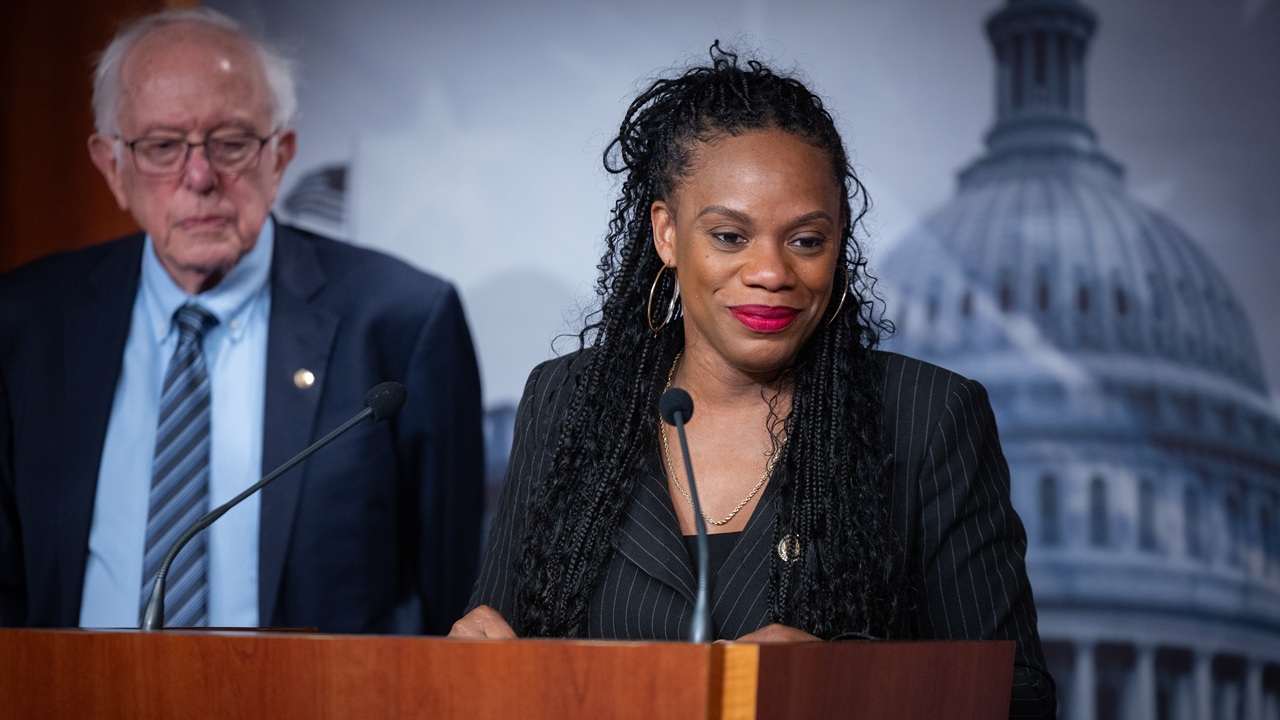
PITTSBURGH—The rise of the Democrat Left in Pittsburgh did not happen overnight. It was built over years through patient organizing, disciplined recruiting, and a clear-eyed focus on the races that mattered most: low-turnout primaries where entrenched power was vulnerable.
Mik Pappas’ 2017 race for Pennsylvania’s 31st Magisterial District judge offered an early hint that the local Democrat establishment was losing its grip on some of the contests it had once taken for granted. He was underfunded, openly aligned with the Democratic Socialists of America, and not expected to mount a serious challenge. This made his win all the more instructive.
That pattern became more visible as Sara Innamorato pressed her own challenge to the old guard, with Summer Lee soon following in another race against a familiar political name. By 2018, the pattern was hard to miss: In Allegheny County, disciplined organizing and a willingness to take on entrenched families were beginning to alter the balance of power from the inside.
While Pittsburgh learned early, the rest of the Democratic Party is still catching up. The Left did not prevail by accident. It targeted winnable contests, built its infrastructure carefully, and understood that in deep-blue places, primaries are often where political power is really decided.
That is why the movement kept winning even when establishment Democrats assumed old names, old endorsements, and old habits would still be enough to hold the line.
The result is a Democratic Party in Pittsburgh that no longer resembles the one that governed here for generations.
TRENDING ARTICLES



Ed Gainey’s rise showed that the movement had moved beyond protest politics and into citywide power. Gainey won the Democrat primary for mayor of Pittsburgh in 2021. Matt Dugan’s countywide Democrat primary win in 2023 over sitting District Attorney Stephen Zappala reinforced the point that progressives now know how to build coalitions across the region.
Gainey would later lose in yet another Democrat primary in 2025, this time to more moderate Democrat Corey O’Connor. Dugan would lose to Zappala in the general election in 2023 when he ran as a Republican.
But the message did not change: The far Left is no longer on the fringe here. Rather, it is part of the governing coalition of activists. Sometimes it is the governing impulse itself.
That matters because Pittsburgh’s version of this story unfolded before Alexandria Ocasio-Cortez’s 2018 primary win in New York made national headlines. The post-Occupy Left, and the broader rise of younger activist Democrats more willing to challenge establishment candidates, was already taking shape in Pittsburgh before AOC became the movement’s best-known face.
What AOC did, along with Zohran Mamdani in New York, was not to start the movement so much as popularize it. Her 2018 victory gave the Left a vivid, easy-to-understand example of a grassroots challenger beating an entrenched incumbent. But the organizing model had already been developing in places like Pittsburgh and across the broader progressive wing of the Democratic Party.
That same dynamic is showing up elsewhere, including Maine, where a DSA-friendly Senate campaign briefly looked like a serious challenge before it collapsed under scandal and intraparty pressure.
The lesson is not that every progressive insurgency wins. It is that this style of politics—anti-establishment, activist-driven, and organized around primaries—has become a durable force in Democratic contests far beyond Pittsburgh.
The deeper question now is not whether the Left can win; it already has. It is whether these new leaders can govern in a way that satisfies the activists who powered them without convincing everyone else that ideology will always outrun competence, compromise, and growth.
And of course, the elephant in the room is socialism, which has never fit easily within an American republic whose constitutional order is built on pluralism, private property, and limited government.
Across the democratic world, socialism has repeatedly fallen short of its promises, too often trading liberty and prosperity for central control, the erasure of the middle class, and steep economic decline.
If the larger Democratic Party decides to adopt socialism to their platform heading into the 2028 presidential contests, either out of fear of that fraction of their party or because they now accept it as a norm, they will face a larger backlash from voters than they saw in 2024.
COPYRIGHT 2026 CREATORS.COM
We publish a variety of perspectives. Nothing written here is to be construed as representing the views of the Daily Signal.


Read the first chapter of The Woketopus right now for FREE
Today, even with President Trump’s victory, leftist elites have their tentacles in every aspect of our government.
The Daily Signal’s own Tyler O’Neil exposes this leftist cabal in his new book, The Woketopus: The Dark Money Cabal Manipulating the Federal Government.
In this book, O’Neil reveals how the Left’s NGO apparatus pursues its woke agenda, maneuvering like an octopus by circumventing Congress and entrenching its interests in the federal government.
You can read the first chapter of this new book for FREE in this eBook, The Woketopus: Chapter One using the secure link below.


The Daily Signal depends on the support of readers like you.
RELATED ARTICLES




Don’t miss the

Don’t miss the signal