
America lost a great patriot just as she prepared to celebrate her 250th birthday.
Daniel Oliver died on June 26, 2026, after a life spent in the vineyards of the conservative movement—as a lawyer, editor, public servant, Reagan administration official, chairman of the Federal Trade Commission, chairman of National Review, leader and trustee of conservative institutions, friend and student of William F. Buckley Jr., and, above all, a man who believed that ideas were meant to govern conduct, not merely decorate speeches.
That timing is hard to miss. In a season when the country is being asked to look backward with reverence, Oliver’s life asks us to look forward with responsibility. Anniversaries can become exercises in nostalgia. The American founding was never that. It was an act of offense—moral, civic, political, and institutional—against illegitimate power.
And in Oliver’s case, the story carries a striking historical symmetry. The Oliver family was present at one of the earliest flashpoints of the American Revolution—not on the patriot side, but on the other side of the crowd.
In 1765, Andrew Oliver, the Massachusetts stamp administrator, was hanged and burned in effigy under Boston’s Liberty Tree during a protest against the Stamp Act. Eleven years before the Declaration of Independence, ordinary citizens were already acting on the principle that government exists to serve the people, not the reverse.
The Liberty Tree was more than the site of a protest. They did not wait for permission to exercise liberty; they exercised it. Before there was a Declaration of Independence, there were citizens behaving as though they already owned the republic they were determined to build.
TRENDING ARTICLES



That is the inversion at the heart of the American experiment. Throughout history, government stood above the people. Authority flowed downward. The Founders turned that relationship on its head. Sovereignty belonged to the people, who delegated limited authority to government—not the other way around. Public officials are public servants because the American people are the ultimate boss.
Daniel Oliver understood that instinctively.
He was a true believer with an operator’s discipline—a patrician gentleman of persistent cheer and mordant humor. He never lost sight of first principles, but he also kept his eye on the prize: whether liberty was actually advancing. He measured success not by speeches, conferences, policy papers, or even isolated legislative victories, but by the bottom line that ultimately mattered—whether Americans were becoming freer.
That is why his observation still resonates: “If you have a losing game, you change it.” It was a philosophy of leadership.
Oliver refused the false comfort of moral victories. He refused to let the movement celebrate tactical victories while losing strategically. Winning elections mattered. Passing reforms mattered. But they mattered because they served a larger objective: winning the long war for liberty.
For Oliver, playing offense was all about accountability. It was the discipline of seeing things as they are, rather than as we’d like them to be, and having the courage to act accordingly. It meant resisting discouragement without indulging delusion. It meant rejecting complacency, changing strategy when necessary, and refusing to mistake activity for achievement.
Playing offense is about applying pressure rather than feeling it. It means setting the terms, forcing the bureaucracy to react instead of dictating to citizens, and refusing to let the administrative state define the battlefield.
Why Offense Is Not Optional
If Americans want to understand why the country is hungry for conservatism on offense, they need only compare America at 150 with America at 250.
According to the Office of Management and Budget’s Historical Tables, federal outlays grew from roughly $3.5 billion in 1926 to more than $7.4 trillion today. In raw terms, the federal budget is now more than 2,000 times larger than it was a century ago—an increase of more than 200,000%.
The bureaucracy grew alongside the confiscation of earnings and unrestrained spending.
As cited by the Federal Register’s agency index, the modern administrative state now encompasses 448 agencies and quasi-federal units with authority to publish regulations and notices. By comparing that figure with roughly 30 major federal entities in 1926, the scale of modern federal administration becomes unmistakable: more than 400 additional federal entities with regulatory, administrative, or public-notice authority compared with the America that celebrated its 150th birthday.
As noted by the Congressional Research Service, the number of final federal rules published each year is generally in the range of 3,000 to 4,500, according to the Office of the Federal Register. That means the administrative state does not merely exist; it acts, year after year, rule after rule, notice after notice, expanding the number of decisions made somewhere other than in families, businesses, churches, schools, neighborhoods, and states.
Americans do not need to study public administration to understand what these numbers mean. They experience them every day. More agencies means more rules. More rules mean more compliance costs. More compliance costs mean fewer decisions made by citizens and communities—and more decisions made by administrators, regulators, and offices most Americans will never see.
The growth is not merely financial. It is governmental.
Washington grew 2,000-fold in the past century. America’s population has not grown 2,000-fold. American freedom has not expanded 2,000-fold. Economic opportunity has not increased 2,000-fold. Yet federal spending has grown on that order of magnitude, and the machinery around that spending has grown with it.
For generations, conservatives have often measured success by slowing the rate of growth. The American people, however, are asking a different question: Why should government continue growing at all?
The answer offered by Washington for too long is that every failure requires another program, another department, another office, another regulator, another appropriation.
The answer offered by the American founding was the opposite: Government should be limited, because people are capable of governing much of their own lives.
That is why the debate today is not fundamentally about budgets, but self-government.
A united people that could challenge the British Empire under a Liberty Tree should not believe itself incapable of challenging a bureaucracy of 448 agencies. A united people who declared independence from the most powerful government on earth should not accept as permanent every federal institution created over the last hundred years.
The question before America at 250 is not whether government can be managed more efficiently. The question is whether government can once again be made meaningfully smaller.
Oliver understood this problem long before most conservatives were willing to admit it. Speaking at the Philadelphia Society’s 50th anniversary in 2014, he offered a remarkably candid assessment of the modern conservative movement. Looking back to the founding of the modern conservative movement in 1955, he acknowledged the victories that deserved celebration: deregulation, tax cuts, welfare reform, and victory in the Cold War. But he refused to confuse moments of progress with an altered trajectory.
“I think it’s fair to say, with a few upticks, it’s been downhill ever since.”
In saying this, Oliver was not denying success, but he was measuring outcomes. The victories were real. But many were temporary or incomplete. Deregulation did not fully stick. Tax reform taught conservatives the value of rate reduction, but those gains later narrowed. The Cold War was won, but the promised peace dividend remained unclear. Welfare reform mattered, but government continued to grow.
“Liberty has diminished over sixty years. That is a sobering thought.”
Oliver was explicit: despite those real victories, over time freedom had diminished. The conservative movement had been playing a losing game strategically—winning some battles while losing the broader war for liberty. Few other leaders were willing to say that out loud. Because he was, his words still cut through the temptation to comfort ourselves with partial victories while the broader architecture of centralized power continues to expand.
Oliver’s conclusion did not lead him to despair but to strategy.
Turning to a sports metaphor, he noted that in games like tennis and squash, “If you have a losing game, you change it.”
Of the conservative movement, he said, “We have been playing a losing game. We should consider changing our game.”
That sentence may be the most concise explanation of why the American Right finds itself where it does today. The American people are not demanding a more energetic defense of the status quo; they are demanding results. They are demanding reform equal to the size of the challenge. They are demanding institutions willing to use power to reverse the growth of power.
What Daniel Oliver Conserved and What We Must Recover
Against the tumult of recent decades, many on the Right are asking an important question: What should conservatives conserve? Oliver’s career offers the answer.
He did not conserve passivity, and he did not conserve institutional etiquette for its own sake. He conserved a fighting faith in ordered liberty.
At National Review, he helped steward an institution built to challenge the dominant assumptions of its age. In the Reagan administration, he used public authority to advance free markets and resist cartelized power. At the FTC, he was not content to occupy a chair; he used the chair. Across other institutions he served—The Heritage Foundation, The Philadelphia Society, Pacific Research Institute, and others—he lived as though ideas gained dignity when they were applied.
That is an inheritance worth claiming. We must retain not merely a memory of Daniel Oliver but his method: Know what you believe, say it plainly, build institutions around it, and then use those institutions to produce results.
That is also the bridge from the Liberty Tree to today. The patriots of 1765 did not stifle their grievance. They turned conviction into action. The modern conservative movement must do the same.
This is especially urgent because the American Left is no longer merely wrong on policy. Increasingly, it is animated by ideas hostile to the American constitutional order itself—hostile to limited government, private property, national sovereignty, ordered liberty, the family, and the inheritance of the American founding.
There is a reason democratic socialists now prevail in major Democratic Party primaries and govern some of our largest cities. There is a reason ideas once confined to faculty lounges, activist circles, and fringe publications now appear in party platforms, school systems, prosecutors’ offices, corporate departments, and city halls. The Left may be exhausted intellectually, but it still occupies positions of power. Ideas that cannot produce human flourishing can still prevent it when attached to institutions.
That is why the familiar media comparison between the Tea Party and today’s socialist surge is so dishonest. The tea party was a revolt in favor of the founding: no taxation without representation, limited government, spending discipline, constitutional accountability, and the right of citizens to restrain centralized power. The socialist surge is a revolt against the founding: against the limits, habits, and moral architecture that make self-government possible.
To treat these as equivalent is not balance. It is evasion.
A movement that understands the stakes cannot be embarrassed by offense. It cannot apologize for using lawful power to restore constitutional government. It cannot accept a political culture in which conservatives are expected to win elections and then behave as caretakers of the very machinery they were elected to dismantle.
Power, Properly Used
Power matters. Admitting this fact is not a concession to cynicism but a recognition of reality. The American founding was not only a philosophical event; it was an institutional one. The Constitution was designed because liberty needs structure, authority needs limits, and principles need levers.
The late President Ronald Reagan understood this. He trusted the American people, translating complicated questions into moral clarity. He challenged the notion that government’s failures were proof of its need for more power. He reminded Americans, on Oct. 27, 1964, in his nationally televised address, “A Time for Choosing,” that they were citizens, not clients of a permanent bureaucracy.
“This is the issue of this election: Whether we believe in our capacity for self-government or whether we abandon the American revolution and confess that a little intellectual elite in a far-distant capitol can plan our lives for us better than we can plan them ourselves.
“You and I are told increasingly we have to choose between a left or right. Well I’d like to suggest there is no such thing as a left or right. There’s only an up or down — [up] man’s old-aged dream, the ultimate in individual freedom consistent with law and order, or down to the ant heap of totalitarianism. And regardless of their sincerity, their humanitarian motives, those who would trade our freedom for security have embarked on this downward course.”
President Donald Trump’s political rise revealed the same public hunger in a different register. He tapped into it over the course of multiple election cycles and took to the stage in Milwaukee to accept, for the third time, the Republican nomination for president.
“Your expectations are not big enough. They’re not big enough. It is time to start expecting and demanding the best leadership in the world, leadership that is bold, dynamic, relentless, and fearless. We can do that.
“We are Americans. Ambition is our heritage. Greatness is our birthright.”
In this speech, Trump named something millions already knew. Institutions had lowered expectations to protect themselves from accountability. The public wanted not better management of decline, but a recovery of national confidence.
That is the opening before us at America’s 250th year. We are presented with the choice between managed decline and disciplined renewal. The choice is whether conservatives will merely preserve the forms of a movement or actually recover a movement’s purpose.
We Stand on Their Shoulders
Oliver’s challenge was not merely analytical. It was moral.
Reflecting on earlier generations gathered in the rooms and institutions that shaped modern conservatism, Oliver’s life reminds us of a simple truth: “We stand on their shoulders.”
And because we stand on their shoulders, we inherit responsibilities.
We stand on the shoulders of the Founders who gathered beneath the Liberty Tree.
We stand on the shoulders of those who signed the declaration, preserved the Union, and defeated the ideologies that sought—and seek still today—to subordinate the individual to the state.
We stand on the shoulders of William F. Buckley and Reagan, of Edwin Feulner and Milton Friedman, of Alexander Hamilton and Friedrich Hayek, and of generations of Americans who understood that liberty survives only when citizens assume responsibility for it.
Gratitude is not enough.
Celebration is not enough.
Nostalgia is not enough.
We have a responsibility to act.
What Comes Next: Playing Offense as Fidelity to the Founders
The future of conservatism is not custodial. It is offensive in the founders’ sense: applying enduring truths to present dangers with urgency, courage, and measurable results.
That means a permanent offense against the administrative state. It means policies designed not merely to slow the growth of government but to reduce its reach. It means states as laboratories of restoration, not afterthoughts to Washington. It means institutional accountability, not institutional deference. It means treating families, communities, churches, businesses, and citizens as the center of American life—and government as their servant.
It also means rejecting lowered expectations. The American people are not asking for a conservative movement that explains why failure is complicated. They are asking for one that can deliver success. They are asking for more freedom, more self-government, more accountability, more courage—in short, more America.
Playing big means being ambitious, audacious, entrepreneurial, clear-eyed, and relentlessly focused on changing the nation’s trajectory—not merely influencing the next news cycle. It means judging success by the state of liberty, not merely the state map—the long term, not merely the midterms.
Oliver embodied that combination. He was a gentleman with a competitor’s instinct who understood that ideas deserve more than admiration; they deserve victory. He refused to accept winning battles while losing the war for freedom.
This, perhaps, is Oliver’s final gift to the movement. His passing near America’s 250th birthday demands a decision. We can honor him by praising the institutions he served, and we can honor him more fully by making them worthy of the moment he helped prepare.
Last week, in Greenwich, Connecticut, movement leaders—and frankly heroes—gathered with the large, extended Oliver family to honor Daniel—to pay respects to a man who helped build, steward, fund, and guide institutions across the conservative movement.
They gathered because his life mattered. But they also gathered because his words still matter.
Two hundred and sixty-one years ago, an Oliver hung in effigy beneath the Liberty Tree. Two hundred and fifty years ago, Americans declared independence from the most powerful government on earth. Twelve years ago, Daniel Oliver challenged a movement to tell the truth about itself.
He reminded us that, despite real victories, liberty had diminished over time. He reminded us that victories, while important, had often proven temporary or strategically incomplete. He reminded us that we had been playing a losing game—and that if we were playing a losing game, we should change it.
Many of us have heeded those words and know that Oliver would celebrate the good news before us:
- Federal government departments—Education and USAID—are being shut down.
- The U.S. federal civilian workforce has dropped to its lowest since around 1966.
- The IRS workforce, which peaked at more than 100,000 employees under President Joe Biden, has shrunk more than 25% with more reductions forecast.
- We are seeing an explosion of entrepreneurship and small business activity, according to U.S. Census Bureau data. 2025 saw record new business applications—most than 5.5 million—and early 2026 applications are running 17–25% ahead of that pace.
Many of us know he would tell us we must still change our game and keep pressing. That’s how we at Heritage think about the task before us.
We are not content merely to describe the growth of government. We seek to reverse it.
We are not content merely to write about liberty. We seek to defend it.
We are not content merely to observe the contest. We are on the field, executing an offense.
That offensive posture has taken concrete form: active ownership in private-sector companies so they can flourish rather than bend to ideological coercion; a legal action center designed not merely to study policy but to defend liberty in court; work in the states; technical legislative implementation as well as ideas; and a movement increasingly willing to measure success not by papers published, conferences held, or speeches delivered, but by whether Americans are actually freer.
This is fidelity to the intellectual inheritance Oliver cherished.
The question is not whether conservatism is correct. The question is whether liberty advances, whether self-government grows stronger, and whether the next generation inherits more freedom than we did.
The Tree of Liberty did not grow because it was left alone. It grew because it was defended before victory was certain. It grew because citizens acted before permission was granted. It grew because Americans understood that liberty must be exercised or it will be lost.
We stand on the shoulders of giants.
The obligation is not only to admire them but to continue their work.
We have changed our game. We are on offense. And we are committed to leaving the next generation an America that is freer than the one we inherited.

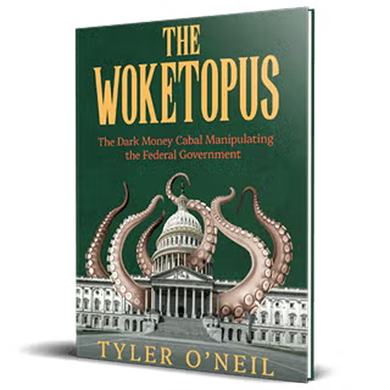
Read the first chapter of The Woketopus right now for FREE
Today, even with President Trump’s victory, leftist elites have their tentacles in every aspect of our government.
The Daily Signal’s own Tyler O’Neil exposes this leftist cabal in his new book, The Woketopus: The Dark Money Cabal Manipulating the Federal Government.
In this book, O’Neil reveals how the Left’s NGO apparatus pursues its woke agenda, maneuvering like an octopus by circumventing Congress and entrenching its interests in the federal government.
You can read the first chapter of this new book for FREE in this eBook, The Woketopus: Chapter One using the secure link below.



The Daily Signal depends on the support of readers like you.
RELATED ARTICLES



Don’t miss the

Don’t miss the signal