The Congressional Budget Office, Like the Rest of Washington, Is Not Perfect
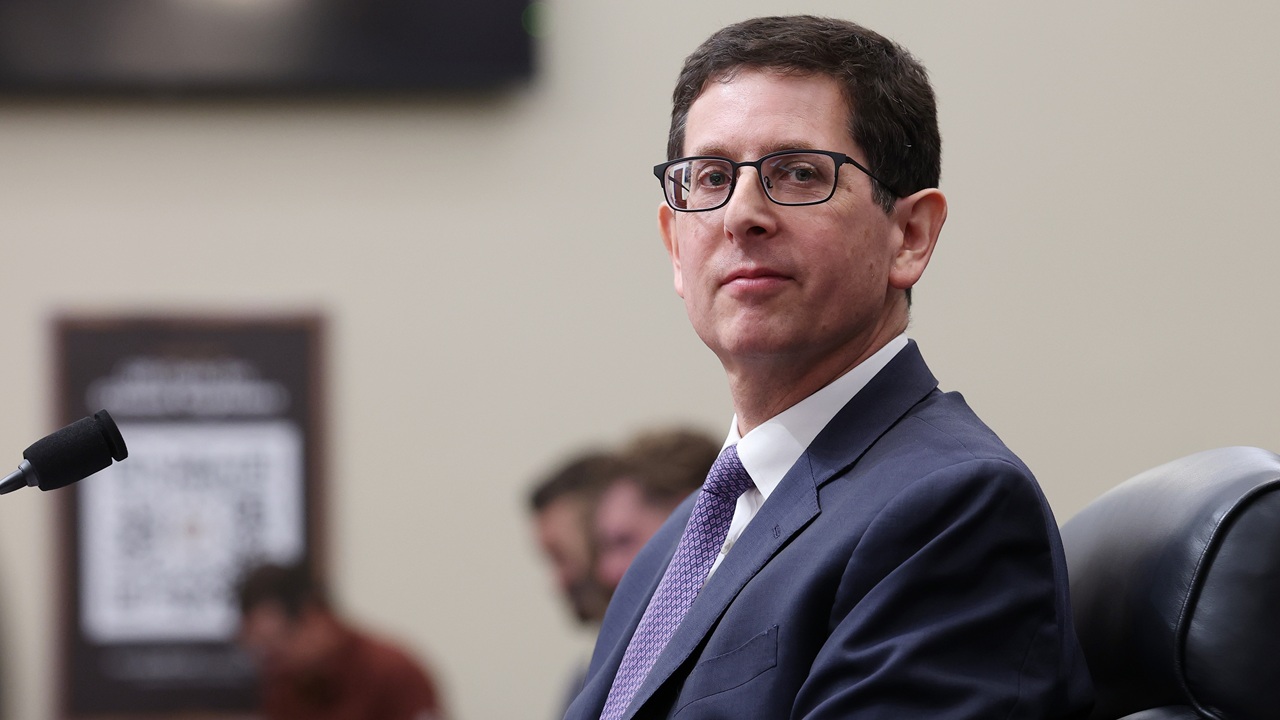
How many taxpayer dollars could additional anti-fraud measures save?
The Congressional Budget Office can’t give a straight answer. Yet to anyone who’s paid attention to the deluge of fraud cases uncovered, it’s obvious that the answer is “plenty.”
CBO says it’s unclear how much money such an investment could save. It has a habit of including the costs of anti-fraud provisions in its estimates while failing to include the savings. When it does provide estimates of savings, they are often substantially below what is expected by members of Congress, which helps explain the general sense that CBO has lost credibility with its primary client.
CBO has made errors estimating high-profile legislation this century, and always in the same direction.
It understates the costs from liberal tax and spending bills, and it also understates the savings from conservative initiatives to rein them in.
When CBO scored the Affordable Care Act, it estimated that the law would reduce the deficit by $118 billion. One of Medicare’s public trustees rebuked the CBO, calling it out for double-counting certain Medicare savings and missing a minimum of $340 billion. Republicans on the Senate Budget Committee released a retrospective analysis in 2014 that showed a $300 billion swing from that initial CBO estimate, with the ACA adding $131 billion to the deficit.
TRENDING ARTICLES

When Congress passed the Inflation Reduction Act, CBO claimed it would reduce the deficit by $58 billion, but it had seriously underestimated the costs. Legislators believed they were passing a measure that would save the country money, but CBO two years later clarified that the Inflation Reduction Act would cost about $428 billion more than estimated.
These mistakes aren’t flukes either. The Foundation for Government Accountability reported, “In every single baseline estimate produced by CBO from February 2014 to July 2021, CBO underestimated total federal Medicaid costs in 2023 by a median of nearly 19 percent.”
The foundation also notes that in 2009, when Congress was changing the food stamp program, actual costs ended up being double what CBO projected, as was also the case with COVID-19 relief legislation.
CBO’s losing streak can be attributed in part to failed methodological processes. It uses Keynesian multipliers that only account for the positives of increased government spending. In its scoring of the One Big Beautiful Bill Act, it didn’t acknowledge improper Medicaid or Obamacare enrollments. It also doesn’t always rely on dynamic scoring, the process that considers all the economic impacts of legislation.
CBO has a history of significant mistakes. We hope that this history will not extend to the fraud issue.
Its history of understating savings from conservative proposals will undermine whatever pronouncement it makes. And when that likely low estimate is released, it will be difficult to square with large-scale examples of abuse and mismanagement.
The wonks at the CBO are likely going to tell Americans not to believe their lying eyes.
Famously, in Minnesota, an organized crime ring made up mainly of Somalis ended up with nearly $250 million in government funds. Minnesota, unfortunately, is just the beginning of the story.
Arizona was defrauded out of an estimated $2.8 billion in a single fraud scheme. Fraudsters would set up fake “sober living homes,” facilities designed to help addicts in need, fill them with eligible patients, seemingly using coercion in some cases, and bill Medicaid for unprovided services. So far, Arizona has indicted 280 people.
Organized welfare fraud has become a normal occurrence. California, Ohio, and New York all have their own crises. The welfare system is so vulnerable that even foreign criminals are getting in on the action.
Operation Gold Rush found that an international crime ring submitted $10.6 billion worth of fraudulent claims to Medicare, Medicaid, and other health care benefit programs and stole the identities of more than a million Americans. Fortunately, they were stopped midway through their plans and only received $941 million in taxpayer money.
The stubborn truth is that welfare fraud has become a lucrative business conducted by organized criminal cartels. It’s no longer simple, unjustifiable markups by authentic recipients, but gangs of thieves systematically exploiting program vulnerabilities to raid America’s Treasury.
Many times, even when perpetrators are caught, they had been successful for years, buying luxury goods, mansions, and boats. In the case of Minnesota, fraudsters have sent money back to Somalia, with some seemingly ending up in the hands of terrorists. America desperately needs to focus on combating fraud. Could it be any more obvious?
CBO has a history of incorrect predictions, but it is especially incorrect about this. Congress needs to take more action against waste, fraud, and abuse, and Congress’ scorekeeper should provide appropriate accounting of the effects of those actions.

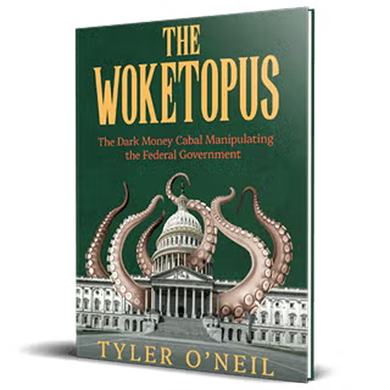
Read the first chapter of The Woketopus right now for FREE
Today, even with President Trump’s victory, leftist elites have their tentacles in every aspect of our government.
The Daily Signal’s own Tyler O’Neil exposes this leftist cabal in his new book, The Woketopus: The Dark Money Cabal Manipulating the Federal Government.
In this book, O’Neil reveals how the Left’s NGO apparatus pursues its woke agenda, maneuvering like an octopus by circumventing Congress and entrenching its interests in the federal government.
You can read the first chapter of this new book for FREE in this eBook, The Woketopus: Chapter One using the secure link below.



The Daily Signal depends on the support of readers like you.
RELATED ARTICLES



Don’t miss the

Don’t miss the signal